Beyond ‘Sit’ and ‘Stay’: Advanced Dog Tricks for Mental Stimulation
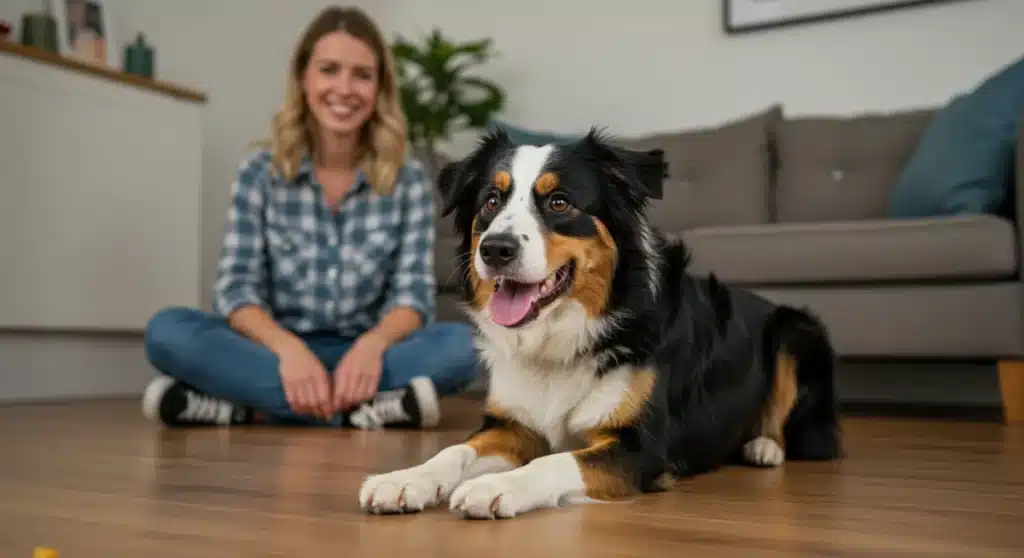
Teaching your US dog advanced tricks beyond basic commands is crucial for providing essential mental stimulation, preventing boredom, and fostering a stronger, more engaged relationship.
Are you ready to take your dog’s training to the next level? Moving beyond ‘sit’ and ‘stay’: 5 advanced tricks to teach your US dog in 2025 for mental stimulation is not just about showing off; it’s about enriching your furry friend’s life. These sophisticated commands challenge their minds, build confidence, and deepen the incredible bond you share, making for a happier, more engaged companion.
The Importance of Mental Stimulation for Your Dog
Just like humans, dogs thrive on mental engagement. While physical exercise is vital, a dog’s cognitive abilities also need regular workouts to prevent boredom, reduce destructive behaviors, and maintain overall well-being. Mental stimulation can be as crucial as physical activity for a balanced and happy canine.
A lack of mental challenges can lead to a variety of behavioral issues, such as excessive barking, chewing, digging, or even anxiety. By introducing advanced tricks, you’re not just teaching commands; you’re providing an outlet for their intelligence and natural problem-solving instincts. This engagement helps to tire them out mentally, often more effectively than a long walk alone.
Why Basic Commands Aren’t Enough
While ‘sit’, ‘stay’, and ‘come’ are foundational, they often become rote exercises once mastered. Advanced tricks, however, require more complex thought processes and sequential understanding. This pushes your dog to think critically, adapt, and learn new associations, keeping their brain active and engaged.
- Prevents boredom and restlessness.
- Reduces common behavioral problems.
- Enhances cognitive function and memory.
- Strengthens the bond between dog and owner.
Investing time in mental stimulation through advanced training provides immense benefits for your dog’s psychological health. It transforms training sessions from simple obedience into engaging, collaborative problem-solving exercises.
Trick 1: “Find It” – Advanced Scent Work
The “Find It” command, when taken to an advanced level, taps into your dog’s incredible sense of smell, providing a deeply satisfying and mentally challenging activity. This isn’t just about finding a hidden treat; it’s about discriminating scents and locating specific items, mimicking real-world detection work.
To begin, start with a high-value treat your dog loves and place it in an obvious spot while they watch. Say “Find it!” and encourage them to get it. Gradually increase the difficulty by hiding the treat in less obvious places, then in different rooms, and eventually outdoors. The key is to make it a positive and rewarding experience, building their confidence with each successful find.
Building Complexity in Scent Detection
Once your dog understands the basic “Find It” command, you can introduce specific object identification. Start by scenting a particular toy or item with a unique smell (e.g., a few drops of essential oil on a cotton ball hidden inside a toy, used consistently for that item). Hide this item among others and ask your dog to “Find the [item’s name]!” This requires them to use their nose not just to find something, but to find a *specific* something.
- Start with easy hides, gradually increasing difficulty.
- Use a consistent cue for the target item.
- Practice in various environments to generalize the skill.
- Always end on a positive note with success and praise.
Advanced scent work is incredibly enriching, as it utilizes a dog’s primary sense in a focused, purposeful way. It’s a fantastic way to burn mental energy and can be adapted for dogs of all ages and physical abilities, making it an inclusive activity for many US dog owners.
Trick 2: “Clean Up” – Object Retrieval and Organization
Imagine your dog putting away their own toys! The “Clean Up” trick involves teaching your dog to pick up specific items and place them into a designated container, such as a toy box. This trick is not only incredibly useful for maintaining a tidy home but also provides significant mental stimulation through a multi-step process.
Start by teaching your dog to pick up a single toy on command. Use a clicker or verbal marker when they touch the toy with their mouth, then reward. Once they reliably pick up the toy, introduce the toy box. Hold the toy over the box and encourage them to drop it in, marking and rewarding when the toy lands inside. Gradually move the toy further from the box, asking them to pick it up and then carry it to the box.
Mastering the “Clean Up” Sequence
The next step is to generalize this behavior to multiple toys and different locations. Lay out a few toys and cue your dog to pick up one, then guide them to the box. Repeat until they understand the sequence. You can also name each toy, asking them to “Clean up the ball” or “Put away the rope,” adding another layer of cognitive challenge.
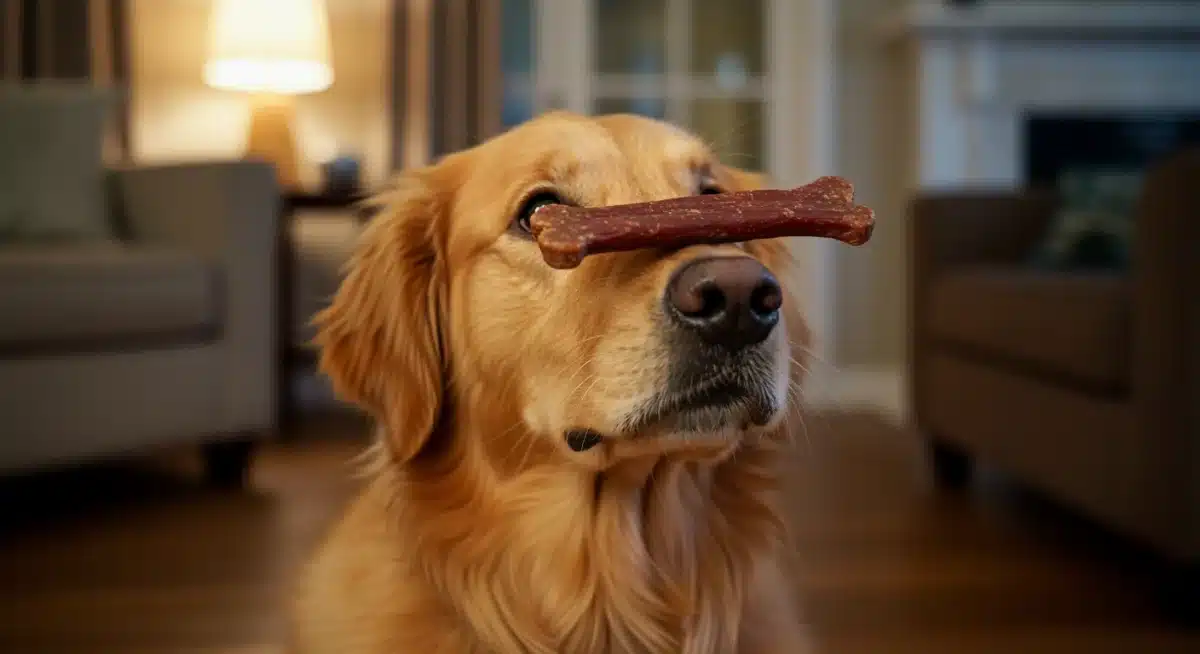
This trick builds on basic retrieval but adds the element of independent decision-making and task completion. It requires focus, memory, and an understanding of sequential actions, making it highly engaging for intelligent breeds and even those who just love to please.
- Break the trick into small, achievable steps.
- Use positive reinforcement consistently.
- Practice regularly in short, fun sessions.
- Gradually increase the number of items and distance to the box.
Teaching your dog to “Clean Up” transforms a chore into a fun, interactive game, reinforcing their problem-solving skills and obedience in a practical way.
Trick 3: “Go To Mat” – Advanced Place Training
While “Go To Mat” might sound simple, taking it to an advanced level involves teaching your dog to go to their designated spot regardless of distractions, duration, or distance. This trick is invaluable for managing your dog’s behavior in various situations, from visitors at the door to mealtime, and even in public places. It provides a sense of security for your dog and control for you.
Begin by making the mat a highly positive place. Toss treats onto the mat, praise your dog when they step on it, and reward them for lying down. Once they understand that “Mat” means going to their spot, start adding duration. Ask them to stay on the mat for a few seconds, then gradually extend the time. Use a release cue like “Okay!” to signal when they can leave.
Extending “Go To Mat” with Distractions and Distance
The true challenge comes with introducing distractions. Start with mild distractions, like walking past them, then increase to more stimulating events, such as someone ringing the doorbell or another person walking by with food. Simultaneously, practice sending your dog to their mat from increasing distances, eventually from another room. The goal is for them to reliably go and stay on their mat until released, no matter what is happening around them.
- Start in a quiet environment, gradually adding noise and activity.
- Reward heavily for remaining on the mat during distractions.
- Practice from varying distances to generalize the command.
- Always use a clear release cue to avoid frustration.
An advanced “Go To Mat” command is a powerful tool for impulse control and self-regulation. It provides mental structure for your dog, teaching them patience and focus in exciting or stressful situations, which is particularly beneficial in a busy US household.
Trick 4: “Weave Poles” – Canine Agility Introduction
Weave poles are a cornerstone of dog agility, offering an incredible full-body and mental workout. This trick involves your dog navigating a series of poles in a serpentine pattern, requiring coordination, focus, and precise body control. It’s a fantastic way to build confidence and channel their energy into a structured activity.
You can start with just a few poles (3-6) spaced wider apart than in competitive agility. The most common method involves luring your dog through the poles with a treat, guiding them in the correct “weave” motion. Reward them enthusiastically each time they complete the pattern. The key is to make it a fun game, not a chore.
Developing Fluid Weave Pole Technique
As your dog becomes comfortable with the luring, gradually fade the lure, using your body language and verbal cues to guide them. You can also start closing the spacing between the poles to standard agility distances. Introduce speed gradually, encouraging them to move through the poles with increasing pace and enthusiasm. This trick demands intense concentration and physical precision.
- Begin with wide spacing and few poles, using a lure.
- Gradually reduce pole spacing and fade the lure.
- Incorporate verbal cues and body language.
- Celebrate every successful weave to build motivation.
Weave poles are an excellent way to introduce your dog to the world of agility, providing complex physical and mental demands that satisfy their natural desire to move and problem-solve. It’s a highly rewarding activity for both dog and owner, fostering teamwork and athleticism.
Trick 5: “Get a Drink” – Practical Service Command
Teaching your dog to “Get a Drink” is a fantastic example of a practical service command that provides immense mental stimulation. This trick involves your dog retrieving a specific item (like a water bottle or a bowl) and bringing it to you, or even demonstrating the understanding of getting water from a dispenser. It’s a multi-step process that combines object recognition, retrieval, and understanding a practical need.
Start by teaching your dog to retrieve a specific, easy-to-carry item, such as a plastic water bottle. Once they reliably bring it to you on command, introduce the concept of the “drink.” You can do this by having them retrieve the bottle when you’re clearly thirsty, or by showing them how to nudge a water dispenser button (if applicable and safe for your dog).
Advancing the “Get a Drink” Command
To advance this trick, you might teach them to retrieve a bowl and bring it to you, or even to a designated water source. For highly intelligent dogs, you could train them to open a low-lying cupboard with their nose to get their own water bowl, bring it to you, wait for you to fill it, and then drink. This requires a chain of behaviors and a deep understanding of the command’s purpose.
- Begin with simple retrieval of a “drink” item.
- Associate the command with the act of drinking or providing water.
- Introduce multi-step actions, like opening a cupboard or bringing a bowl.
- Reward generously for successful completion of the sequence.
A practical command like “Get a Drink” not only makes life easier but also provides significant mental challenge. It empowers your dog to perform a helpful task, boosting their confidence and solidifying their role as a valuable member of the family.
| Advanced Trick | Mental Stimulation Benefit |
|---|---|
| “Find It” (Advanced Scent Work) | Engages primary sense of smell, sharpens discrimination, and problem-solving. |
| “Clean Up” (Object Organization) | Develops sequential thinking, object recognition, and practical task completion. |
| “Go To Mat” (Advanced Place Training) | Enhances impulse control, focus, and ability to manage distractions. |
| “Weave Poles” (Agility Intro) | Improves coordination, body awareness, and rapid decision-making in sequence. |
Frequently Asked Questions About Advanced Dog Tricks
Most dogs can start learning advanced tricks once they have mastered basic obedience commands and are past their puppy stage, typically around 6-12 months old. The key is to ensure they have a solid foundation and are physically mature enough for certain activities like agility. Always tailor training to your dog’s individual capabilities.
Keep advanced trick training sessions short, typically 5-10 minutes, especially when starting out. Dogs learn best in brief, focused bursts. Multiple short sessions throughout the day are more effective than one long session, preventing boredom and maintaining your dog’s enthusiasm for learning. Always end on a positive note.
If your dog seems uninterested, try different types of rewards, such as high-value treats, favorite toys, or enthusiastic praise. Ensure the training environment is free of distractions and that you’re making the process fun and positive. Break tricks into smaller, easier steps, and celebrate every small success to build confidence and motivation.
Yes, absolutely. Advanced tricks provide significant mental stimulation and a constructive outlet for your dog’s energy. This can often reduce behavioral problems stemming from boredom, anxiety, or lack of purpose, such as destructive chewing, excessive barking, or digging. It helps redirect their focus positively.
While some tricks like agility weave poles might be more physically demanding for certain breeds or sizes, most advanced tricks can be adapted. Scent work, place training, and object retrieval are highly adaptable for nearly all dogs, regardless of breed, age, or physical ability. Always consult with a vet for any physical concerns.
Conclusion
Moving beyond the fundamental “sit” and “stay” offers a world of enrichment for your US dog. By engaging them with advanced tricks like sophisticated scent work, practical retrieval, focused place training, dynamic agility introductions, and helpful service commands, you’re investing in their mental health and overall happiness. These activities not only provide crucial mental stimulation but also solidify the incredible bond you share, resulting in a more confident, well-behaved, and joyful canine companion. Embrace the journey of advanced training, and watch your dog thrive.