New Pet Integration: 7-Day Strategy for Harmony in US Homes
New Pet Integration: A 7-Day Strategy for US Households to Prevent Conflict (PRACTICAL SOLUTIONS)
Bringing a new pet into your home is an exciting time, filled with dreams of harmonious companionship and endless cuddles. However, the reality can sometimes be a bit more challenging, especially if you already have existing pets. The successful integration of a new animal, whether it’s a puppy, kitten, or an older rescue, requires careful planning, patience, and a strategic approach. This is particularly true for US households, where pet ownership is high, and the desire for all furry family members to get along is paramount. A poorly managed introduction can lead to stress, anxiety, territorial disputes, and even aggression, potentially jeopardizing the well-being of all animals involved and causing significant distress for their human companions. The key to preventing these conflicts lies in understanding animal behavior and implementing a structured, gentle, and positive new pet integration strategy.
Many pet owners underestimate the complexity of introducing a new animal. It’s not just about letting them meet; it’s about creating an environment where they can gradually acclimate to each other’s presence, establish boundaries, and ultimately form a bond. This comprehensive 7-day new pet integration strategy is designed to guide US households through this critical period, providing practical, actionable steps to minimize stress and maximize the chances of a peaceful, loving multi-pet home. We’ll delve into preparation, initial introductions, managing interactions, and fostering long-term harmony, ensuring that your new family member becomes a cherished part of the pack without causing undue stress or conflict.
Prepare to transform potential anxiety into a joyful experience for everyone. By following this detailed guide, you’ll be equipped with the knowledge and tools to navigate the delicate process of new pet integration, setting the stage for a calm, happy, and integrated household. Let’s embark on this journey to a harmonious multi-pet home together, focusing on positive reinforcement and understanding the unique needs of each animal involved in the new pet integration process.
Understanding the Importance of a Structured New Pet Integration
The concept of new pet integration goes far beyond a simple meet-and-greet. It’s a delicate dance of scents, sounds, body language, and establishing a new social order. Animals, much like humans, thrive on routine and predictability. The introduction of a new member disrupts this established order, potentially triggering instincts related to territory, resources, and social hierarchy. Without a structured new pet integration plan, existing pets may feel threatened or anxious, leading to defensive behaviors. New pets, on the other hand, can feel overwhelmed and insecure in an unfamiliar environment with dominant resident animals.
Consider the psychological impact: a resident pet might perceive the newcomer as a competitor for food, toys, attention, or even their human’s affection. This can manifest as growling, hissing, marking, or even direct aggression. For the new pet, the stress of a new home, new people, and new animal companions can be immense. They might hide, refuse to eat, or exhibit fear-based aggression. A structured new pet integration process acknowledges these potential stressors and aims to mitigate them by controlling the environment, managing initial interactions, and gradually increasing exposure in a positive manner. This proactive approach is crucial for preventing negative associations and fostering positive relationships from the outset, making the new pet integration a success.
Key Principles for Successful New Pet Integration
- Patience is Paramount: Rushing the process is the quickest way to failure. Every pet is an individual, and some will adapt more quickly than others.
- Safety First: Always prioritize the safety of all animals and people involved. Never leave pets unsupervised during initial stages.
- Positive Reinforcement: Associate the presence of the new pet with positive experiences (treats, praise, toys) for existing pets.
- Separate Spaces: Provide each animal with their own safe haven, food bowls, water, and resting areas.
- Scent Swapping: Animals rely heavily on scent. Allowing them to get used to each other’s smell before visual contact is vital.
- Controlled Introductions: Manage all initial face-to-face meetings, keeping them short, positive, and supervised.
- Never Force Interaction: Allow animals to approach each other at their own pace. Forcing them can build resentment or fear.
By adhering to these principles, US households can significantly increase the likelihood of a peaceful and successful new pet integration, paving the way for a happy, multi-pet family. This 7-day strategy is built upon these foundations, providing a step-by-step roadmap for your new pet integration journey.
Pre-Arrival Preparation: Setting the Stage for New Pet Integration (Before Day 1)
The success of your new pet integration begins even before your new furry friend steps paw into your home. Thorough preparation is key to minimizing stress for both your existing pets and the newcomer. This stage is about creating a safe, comfortable, and welcoming environment that facilitates a smooth transition and reduces potential triggers for conflict.
1. Establish Separate Spaces
Before the new pet arrives, designate a dedicated “safe room” for them. This room should be quiet, secure, and equipped with everything they’ll need: food, water, a comfortable bed, toys, and a litter box for cats or puppy pads for puppies. This separate space will be their sanctuary during the initial new pet integration phase, allowing them to decompress and get used to the new smells and sounds of your home without the added pressure of immediate interaction with resident pets. Ensure this room is off-limits to existing pets, at least initially.
2. Health Checks and Vaccinations
Ensure all pets are up-to-date on their vaccinations, deworming, and flea/tick prevention. A healthy pet is a happy pet, and you want to avoid any potential transmission of illness. Ideally, have your new pet checked by a vet before bringing them home, especially if they are coming from a shelter or rescue. This step is critical for the health and safety of all animals during the new pet integration.
3. Scent Swapping: The Invisible Introduction
Animals communicate heavily through scent. Before the new pet arrives, start scent swapping. Take a blanket or towel that smells like your new pet (ask the shelter/breeder for one) and place it in your existing pet’s area. Similarly, take an item with your existing pet’s scent and place it in the new pet’s designated room. This allows them to become familiar with each other’s scent in a non-threatening way, reducing the shock of a direct meeting. Repeat this several times over a few days leading up to arrival. This is a crucial, often overlooked step in new pet integration.
4. Resource Management
To prevent territorial disputes, ensure you have enough resources for all pets. This means separate food and water bowls, multiple beds, and an ample supply of toys. For cats, provide multiple litter boxes (general rule: number of cats + 1) in different locations. Feed existing pets and the new pet in their separate, designated areas to avoid any food aggression during the new pet integration process.
5. Update on Training and Obedience (Especially for Dogs)
If you’re introducing a new dog, ensure your existing dog is well-trained in basic obedience commands (sit, stay, come). This will be invaluable for managing interactions. Review these commands with your existing dog before the new pet arrives. This control will be essential during supervised introductions for effective new pet integration.
By meticulously preparing your home and existing pets for the arrival of your new companion, you lay a strong foundation for a harmonious new pet integration. These pre-arrival steps are not merely suggestions; they are vital components that significantly influence the success of the entire 7-day strategy.
The 7-Day New Pet Integration Strategy
Day 1: Arrival and Confinement – The Scent Introduction
On day one, the focus is entirely on minimizing stress and maximizing scent exchange without direct visual contact. Bring your new pet directly to their designated safe room. Keep the atmosphere calm and quiet. Allow them to explore their new space, find their food and water, and settle in. Avoid overwhelming them with too much attention from all family members at once.
For your existing pets, keep them away from the safe room initially. Continue scent swapping. You can also feed your existing pets near the door of the safe room, allowing them to associate the new pet’s scent with a positive experience (food). Do not allow them to interact directly through the door. The goal is a positive association with the smell, not a confrontation. Spend quality time with your existing pets, reassuring them that their routine and your affection remain unchanged. This initial confinement is vital for a smooth new pet integration.
Day 2: Controlled Scent and Sound Exposure
Today, you’ll slightly increase the exposure. Continue feeding all pets in their separate areas. If possible, swap bedding or toys between the new pet’s room and your existing pets’ areas multiple times throughout the day. This intensifies the scent familiarity. You can also allow the new pet to briefly explore a common area of the house (e.g., a hallway or living room) while existing pets are confined elsewhere. This allows the new pet to leave their scent and explore without pressure. Afterward, let your existing pets explore the same area, picking up the new scents. Ensure supervision during these exploration periods to prevent any accidents or unwanted behaviors. The emphasis remains on indirect new pet integration.
Day 3: Sight Without Contact – The Barrier Method
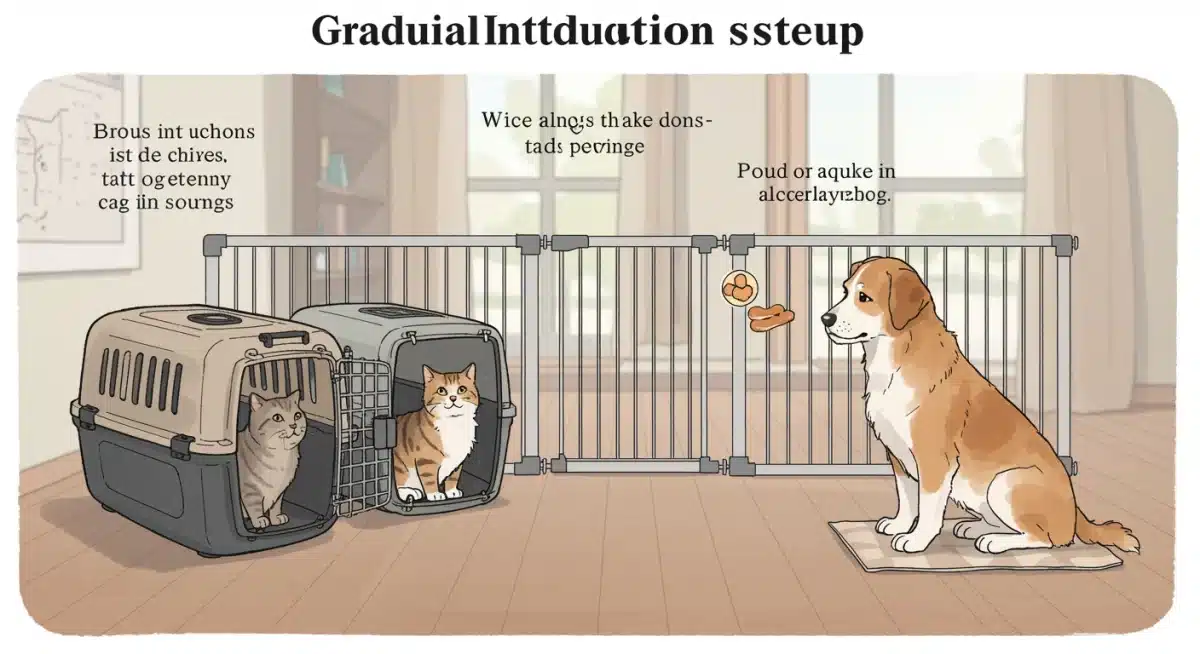
It’s time for the first visual introduction, but with a safe barrier. Use a baby gate (or two stacked for larger dogs) across the doorway of the new pet’s safe room, or choose a neutral common area where you can set up a sturdy barrier. The goal is for the animals to see each other without being able to make physical contact. Keep these sessions very short (5-10 minutes) and positive. Distract both animals with high-value treats or toys on opposite sides of the barrier. Watch for positive body language: relaxed posture, sniffing, curiosity. Immediately end the session if you see any signs of tension, growling, hissing, or lunging. These short, positive interactions are crucial for successful new pet integration.
Repeat these barrier sessions several times throughout the day, always ending on a positive note. Do not force interaction. If either pet seems stressed, revert to scent swapping for another day. This step is about building positive associations with the sight of the other animal.
Day 4: Supervised, Leashed & Controlled Introductions (Dogs) / Continued Barrier (Cats)
For Dog-to-Dog New Pet Integration:
If Day 3 went well, you can try a supervised, leashed introduction in a neutral territory, like a fenced backyard or a quiet park. Both dogs should be on leashes, handled by separate adults. Start by walking them parallel to each other at a distance, gradually decreasing the distance if they remain calm. Allow brief, supervised sniffing sessions. Keep the leashes loose to avoid tension. Reward calm behavior with treats and praise. Keep these sessions short (10-15 minutes) and end before either dog shows signs of stress. Never force interaction. Continue to feed separately and provide separate resting areas. This step is a significant milestone in new pet integration.
For Cat-to-Cat or Cat-to-Dog New Pet Integration:
Continue with barrier introductions. Cats often take longer to adjust. You can also try feeding them on opposite sides of the barrier, gradually moving the food bowls closer as they become more comfortable. Ensure both cats have escape routes and elevated perches. For cat-to-dog, keep the dog leashed and calm during barrier interactions, rewarding them for ignoring the cat or for calm observation. Never allow the dog to chase or harass the cat. Patience is key in this phase of new pet integration.
Day 5: Increasing Supervised Interactions
Assuming previous days have been positive, you can gradually increase the duration and frequency of supervised interactions. For dogs, allow for more off-leash time in a controlled environment, always with human supervision ready to intervene if necessary. Continue to reward calm and positive interactions. For cats, you might try removing the barrier for very short, highly supervised periods (e.g., 5 minutes), ensuring both have easy escape routes and high places to retreat to. Keep distractions (like high-value treats or toys) available to redirect attention if needed. Always end on a positive note, even if it means interrupting a peaceful moment. This slow, controlled exposure is vital for successful new pet integration.
Continue to feed pets separately and ensure they have their own beds and water bowls. Do not leave them unsupervised together at this stage.
Day 6: Integrating into the Household Routine
Today is about incorporating the new pet more fully into the family routine, always under supervision. For dogs, this might mean allowing them to be in the same room while you’re watching TV, playing, or working, with both dogs on their beds or calmly observing each other. For cats, if barrier-free interactions have been successful, you can allow them supervised access to more common areas together. Continue to provide separate resources and safe spaces.
Engage in parallel play: play with each pet individually in the same room, rewarding them for ignoring each other or for calm presence. This helps them understand they can coexist peacefully. Continue to watch for any signs of stress or aggression. Any step back is normal; just revert to the previous successful stage. Consistent positive reinforcement is key to solidifying the new pet integration.
Day 7: First Steps Towards Unsupervised Coexistence (With Caution)
By day seven, if all previous steps have been consistently positive, you might consider very short periods of unsupervised coexistence, but only under specific circumstances and with extreme caution. Start with just a few minutes, perhaps while you’re in the next room and can easily hear or see them. Gradually increase the time if they remain calm and peaceful. Never leave them unsupervised if there have been any signs of tension or aggression. For cats, ensure they always have vertical escape routes. For dogs, ensure all high-value items (food, favorite toys) are put away to avoid resource guarding. It’s often recommended to wait several weeks or even months before leaving pets completely unsupervised together, especially overnight or when you’re out of the house. This final step in new pet integration requires ongoing vigilance.

Troubleshooting Common New Pet Integration Challenges
Even with the best planning, challenges can arise during new pet integration. Knowing how to address them can save a lot of stress and prevent escalation.
Aggression or Fear
If you observe overt aggression (growling, hissing, fighting, lunging) or extreme fear (hiding, trembling, urinating inappropriately), immediately separate the animals and revert to an earlier stage of the new pet integration process (e.g., scent swapping or barrier introductions). Do not punish the animals, as this can worsen the behavior. Instead, focus on creating more positive associations from a distance. If aggression persists or is severe, consult a professional certified pet behaviorist or veterinary behaviorist. They can assess the situation and provide tailored guidance.
Resource Guarding
This is when an animal becomes possessive over food, toys, beds, or even human attention. To prevent this during new pet integration:
- Feed pets in completely separate rooms.
- Provide multiple, identical toys and beds to minimize competition.
- Ensure there are enough water bowls in different locations.
- Practice individual attention and training sessions with each pet to ensure they feel secure in their bond with you.
- Remove high-value items when pets are together until you are absolutely sure resource guarding is not an issue.
Ignoring Each Other
Sometimes pets simply ignore each other, which isn’t necessarily a bad thing. It often indicates tolerance. However, if you’re hoping for a more active friendship, continue to create positive shared experiences. Play games that involve both, reward calm coexistence, and ensure each pet has ample individual attention. Don’t force interaction; let their relationship develop naturally. This is a common phase in new pet integration.
Marking/Inappropriate Urination
This can be a sign of stress or territoriality. Ensure appropriate litter box access for cats (number of cats + 1, cleaned daily). For dogs, ensure frequent outdoor access. If marking occurs, thoroughly clean the area with an enzymatic cleaner. Revisit the separate spaces strategy, and consider using calming pheromone diffusers (like Feliway for cats or Adaptil for dogs) in common areas. Consult your vet to rule out any medical issues. Addressing this promptly is crucial for successful new pet integration.
One Pet is Overly Enthusiastic/Playful
An overly enthusiastic pet can overwhelm or scare a more timid newcomer. Manage interactions by keeping the energetic pet on a leash during supervised sessions or using baby gates to create a safe distance. Reward the enthusiastic pet for calm behavior and redirect their energy with appropriate toys or activities before introductions. Ensure the timid pet always has an escape route. This management is key for balanced new pet integration.
Long-Term Harmony: Beyond the 7 Days of New Pet Integration
The 7-day strategy is a powerful start, but new pet integration is an ongoing process. Building a truly harmonious multi-pet household requires continued effort, observation, and adaptability. Here are some strategies for fostering lasting peace and friendship:
Maintain Separate Resources
Even after pets seem to get along, it’s often best to continue providing separate food and water bowls, beds, and litter boxes. This reduces competition and stress, especially around high-value resources. Consider feeding pets in separate rooms indefinitely, or at least in separate, designated spots. This simple practice goes a long way in sustaining successful new pet integration.
Continue Supervised Playtime
Regularly engage in supervised playtime that involves both pets, if appropriate for their species and play styles. This could be a game of fetch with two balls for dogs, or a feather wand for cats while the dog calmly observes. Always end on a positive note. This helps them associate good things with each other’s presence.
Individual Attention is Crucial
Ensure each pet receives individual quality time and attention from you. This reassures them of their place in the family and prevents feelings of neglect or jealousy. One-on-one training, grooming, or just cuddle sessions can significantly reduce stress and improve overall well-being, contributing to a stable new pet integration.
Monitor Body Language
Become an expert at reading your pets’ body language. Subtle cues can indicate stress, discomfort, or potential conflict before it escalates. Learn the signs of a relaxed, happy pet versus a tense, anxious, or aggressive one. Early detection allows you to intervene and redirect before problems arise.
Consistency and Routine
Animals thrive on routine. Maintain consistent feeding schedules, walk times, and play sessions. Predictability helps reduce anxiety for all pets and reinforces a sense of security within the household during new pet integration.
Professional Help When Needed
If you encounter persistent challenges or signs of aggression that you cannot manage, do not hesitate to seek help from a certified professional dog trainer or veterinary behaviorist. They can offer tailored advice and behavioral modification plans to address specific issues, ensuring the long-term success of your new pet integration.
Remember, the goal is not necessarily for all pets to be best friends, but rather to coexist peacefully and comfortably. Some pets will form deep bonds, while others may simply tolerate each other. Both outcomes are acceptable as long as everyone feels safe and secure in their home. The journey of new pet integration is unique for every household, but with patience, consistency, and love, you can create a happy, multi-pet family.
Conclusion: A Harmonious Home Through Thoughtful New Pet Integration
The decision to bring a new pet into your US household is a significant one, and the subsequent new pet integration period is critical for establishing a peaceful and loving environment for all. By implementing this comprehensive 7-day strategy, you are not just introducing a new animal; you are actively shaping the dynamics of your multi-pet family, preventing conflicts, and fostering positive relationships from the very beginning. From meticulous pre-arrival preparations to controlled introductions and ongoing management, each step is designed to minimize stress and maximize the chances of success.
Remember that patience, observation, and positive reinforcement are your most powerful tools throughout the new pet integration process. Animals communicate differently than humans, and understanding their body language and natural instincts is paramount. While this 7-day plan provides a robust framework, be prepared to adapt and adjust based on the individual personalities and reactions of your pets. Some may progress faster, while others might need more time at certain stages. There is no one-size-fits-all timeline, and flexibility is key.
A successful new pet integration means more than just pets tolerating each other; it means creating a home where every animal feels secure, loved, and valued. By investing your time and effort in this structured approach, you are not only ensuring the well-being of your current and new pets but also enriching your own life with the joy of a harmonious, expanded family. Embrace the journey, celebrate the small victories, and watch as your thoughtful new pet integration efforts transform your household into a haven of companionship and contentment. Your dedication now will lay the foundation for years of cherished memories with all your furry family members.