Canine Body Language: 7 Cues US Pet Owners Must Know by 2026
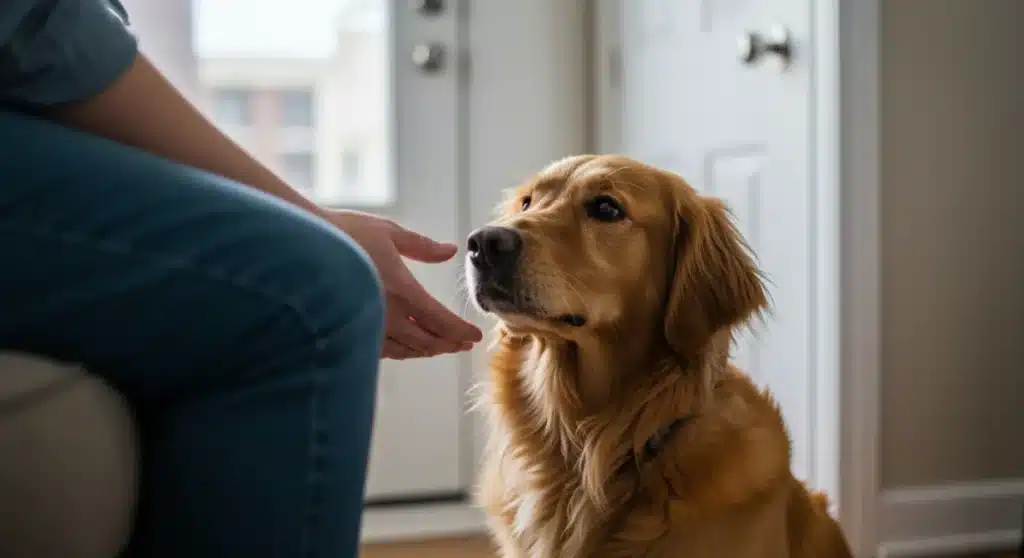
Understanding canine body language cues is crucial for US pet owners to foster better communication and strengthen their bond with their dogs, preventing misunderstandings and promoting well-being.
For every US pet owner, truly understanding their dog goes beyond basic commands; it involves decoding their silent language. By 2026, recognizing canine body language cues will be an indispensable skill, fostering deeper bonds and preventing potential issues. This guide offers practical solutions to interpret the subtle signals your dog sends every day.
The Silent Conversation: Why Body Language Matters
Dogs are masters of non-verbal communication, constantly using their bodies to express emotions, intentions, and needs. As pet owners in the US, our ability to interpret these cues directly impacts our dog’s well-being and our relationship with them. Misunderstandings can lead to stress, fear, or even aggression in our beloved companions.
Ignoring these signals can have significant consequences. A dog that is consistently misunderstood may develop behavioral problems, which can be challenging and costly to address. Conversely, a pet owner who is fluent in canine body language can anticipate their dog’s reactions, provide appropriate support, and create a safer environment for everyone.
Beyond the Bark: Decoding Canine Signals
While barks and whimpers are obvious, much of a dog’s communication happens visually. Their posture, facial expressions, tail movements, and even ear positions all contribute to a rich tapestry of information. Learning to read these signals as a whole, rather than in isolation, is key to accurate interpretation.
- Holistic View: Always consider all body parts in conjunction, as individual signals can change meaning based on context.
- Context is King: The environment and situation profoundly influence a dog’s communication. A tucked tail in a playful setting differs from one in a fearful situation.
- Individual Differences: Just like humans, dogs have unique personalities and communication styles. What’s typical for one dog might not be for another.
Ultimately, a deep understanding of canine body language fosters a more harmonious household. It empowers owners to respond proactively to their dog’s needs, enhancing trust and mutual respect. This foundation is critical for any effective training or behavioral modification efforts.
Tail Talk: More Than Just a Wag
The tail is often considered the most expressive part of a dog’s body, but its language is far more nuanced than a simple wag means happy. US pet owners need to move beyond this simplistic view to truly understand what their dog’s tail is communicating. The height, speed, and direction of the wag all carry significant meaning.
A high, fast wag often indicates excitement or arousal, but not necessarily happiness. It can also signify a dog that is on high alert or feeling anxious. Conversely, a low, slow wag, especially if the tail is tucked between the legs, is a clear sign of fear, submission, or insecurity. A tail held at a neutral position, with a relaxed, gentle wag, is typically a sign of contentment.
Interpreting Tail Positions and Movements
The arc and speed of a wag are crucial. A broad, sweeping wag that includes the hips usually points to a truly happy and friendly dog. However, a stiff, rapid wag held high might indicate a dog that is feeling threatened or about to react defensively. Understanding these subtleties can prevent misinterpretations that could lead to uncomfortable or even dangerous situations.
- High, Stiff Wag: Often indicates alertness, arousal, or potential aggression. The dog is assessing a situation.
- Neutral, Relaxed Wag: A sign of contentment and friendliness. The dog is comfortable in its environment.
- Tucked Tail: A clear indicator of fear, anxiety, or submission. The dog feels vulnerable.
- Slow, Gentle Wag: Can mean uncertainty or cautious interest. The dog is processing information.
Paying close attention to the tail’s position relative to the dog’s body and the speed of its movement provides invaluable insights into their emotional state. This helps owners respond appropriately, whether by offering reassurance, creating distance, or engaging in playful interaction. It’s a fundamental step in mastering canine communication.
Ear Expressions: A Window to Their Mood
Just like tails, a dog’s ears are incredibly communicative, offering a direct glimpse into their emotional state and intentions. The position of a dog’s ears, whether pricked forward, flattened back, or relaxed, provides vital clues that US pet owners should learn to recognize. Different breeds may have varying ear types, but the underlying principles of ear communication remain consistent.
Ears that are pricked forward and slightly turned to the side usually indicate curiosity or interest. The dog is focusing its attention on something in its environment. When ears are flattened tightly against the head, it’s a strong sign of fear, anxiety, or submission. This posture aims to make the dog appear smaller and less threatening. Relaxed ears, held naturally for the breed, suggest a calm and comfortable dog.
Decoding Ear Signals by Position
The subtle shifts in ear position can convey a wide range of emotions. For instance, ears that are pulled back but not fully flattened might indicate a dog that is feeling unsure or slightly uneasy, rather than outright fearful. Understanding these nuances allows owners to gauge their dog’s comfort level in various situations.
- Ears Forward and Up: Attentive, curious, or alert. The dog is focused on something specific.
- Ears Flattened Back: Fear, anxiety, submission, or discomfort. The dog feels threatened.
- Ears Slightly Back/Sideways: Unsure, uneasy, or feeling mild stress. The dog is assessing the situation cautiously.
- Relaxed Ears: Contentment, calm, or friendliness. The dog is at ease.
By observing ear positions in conjunction with other body language cues, pet owners can develop a more comprehensive understanding of their dog’s emotional landscape. This awareness is crucial for responding empathetically and appropriately, building a stronger relationship based on mutual understanding.
Eye Contact and Gaze: Understanding Their Focus
A dog’s eyes can convey a wealth of information, from affection to fear, and US pet owners should pay close attention to their dog’s gaze and eye contact. Unlike humans, direct, prolonged eye contact from a dog can sometimes be perceived as a challenge or threat, particularly by other dogs. However, with their trusted human, it often signifies a strong bond and attentiveness.
Soft, relaxed eyes with blinking often indicate a comfortable and affectionate dog. A dog that avoids eye contact or squints may be feeling submissive, fearful, or stressed. On the other hand, wide, staring eyes, especially when combined with a stiff body, can be a warning sign of aggression or heightened arousal. Understanding these distinctions is vital for safe and positive interactions.
What Their Gaze Reveals
The direction and intensity of a dog’s gaze offer crucial insights into their mental state. A dog that is constantly scanning its environment, avoiding direct eye contact, might be feeling overwhelmed or anxious. Conversely, a dog that frequently looks to its owner for guidance and reassurance displays a strong connection and trust.
- Soft Eyes, Blinking: Affection, relaxation, comfort. The dog is at ease.
- Averted Gaze: Submission, fear, or a desire to avoid conflict. The dog is trying to de-escalate.
- “Whale Eye”: The whites of the eyes are visible, often indicating stress, fear, or discomfort.
- Hard Stare: A sign of challenge, arousal, or potential aggression. The dog is feeling threatened or dominant.
Learning to differentiate between these eye signals helps owners gauge their dog’s emotional temperature. This allows for proactive intervention, whether it’s offering comfort, removing the dog from a stressful situation, or adjusting training methods to build confidence. Observing your dog’s eyes is a powerful tool for empathetic pet ownership.
Postural Pointers: Decoding the Whole Body
A dog’s overall posture provides a holistic view of their emotional state, acting as a crucial indicator for US pet owners. It’s not just about individual parts; the way a dog carries its entire body, from head to tail, tells a comprehensive story. A confident, relaxed dog will exhibit different body language than one that is fearful, playful, or aggressive.
A relaxed dog typically has a loose, fluid posture, with its weight evenly distributed and muscles not tensed. Its head will be held at a natural level, and its mouth might be slightly open in a relaxed pant. In contrast, a fearful or submissive dog will often try to make itself appear smaller, hunching its back, lowering its head, and possibly cowering. An aggressive dog, on the other hand, might try to appear larger, with a stiff, upright posture, hackles raised, and a direct, challenging stance.
Common Postural Cues to Observe
Understanding these full-body postures is essential for interpreting your dog’s intentions accurately, especially in social interactions with other dogs or unfamiliar people. Misinterpreting a stiff, high stance as mere confidence, for example, could lead to an unwanted confrontation.
- Relaxed Posture: Loose body, even weight distribution, head at natural height. Signifies comfort and contentment.
- Play Bow: Front end down, rear end up, tail wagging. An invitation to play, often seen before a chase or romp.
- Fearful/Submissive Posture: Hunching, lowering head, cowering, trying to appear small. Indicates anxiety or a desire to appease.
- Dominant/Aggressive Posture: Stiff body, hackles raised, direct stare, trying to appear large. A warning sign.
By observing your dog’s entire body posture, you gain a clearer picture of their emotional landscape. This comprehensive approach to canine body language allows for more nuanced reactions, strengthening your bond and ensuring your dog feels understood and safe in various situations.
Mouth and Muzzle Signals: Subtle but Significant
The area around a dog’s mouth and muzzle offers a surprising number of subtle yet significant signals that US pet owners should learn to interpret. These cues can range from a relaxed open mouth to a tightly closed one, lip licking, yawning, or even baring teeth. Each signal provides valuable insight into a dog’s comfort level, stress, or potential intentions.
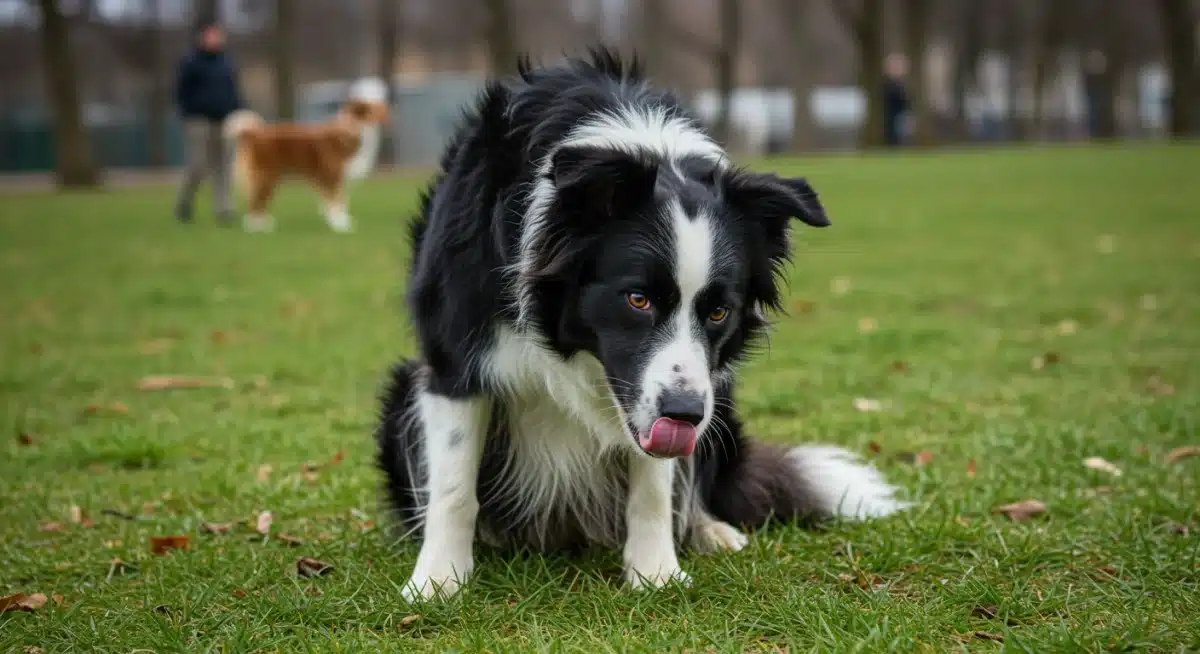
A relaxed dog often has a slightly open mouth, sometimes panting gently, with no tension in the lips. This indicates contentment and a sense of ease. Lip licking, when not associated with food, is a common appeasement signal or a sign of stress and anxiety. It’s an attempt to calm themselves or defuse a perceived threat. Yawning, outside of being tired, can also be a stress signal, indicating discomfort or an attempt to self-soothe.
Deciphering Mouth and Muzzle Cues
Understanding these subtle facial expressions is crucial for early detection of discomfort or stress, allowing owners to intervene before a situation escalates. For example, recognizing stress yawns can prompt you to remove your dog from an overwhelming environment.
- Relaxed Open Mouth/Gentle Pant: Contentment, happiness, comfort. The dog is at ease.
- Lip Licking (without food): Stress, anxiety, appeasement. The dog is feeling uneasy.
- Yawning (not tired): Stress, anxiety, self-soothing. The dog is uncomfortable.
- Tight Mouth/Pulled Back Lips: Tension, fear, or a warning. The dog is feeling threatened or defensive.
- Baring Teeth: An explicit warning, often preceding a bite. This is a serious sign of aggression.
Paying close attention to these mouth and muzzle signals allows pet owners to pick up on early warning signs of stress or fear, enabling them to respond proactively. This proactive approach not only improves the dog’s welfare but also enhances the safety of interactions with humans and other animals.
Vocalizations and Context: When Sounds Speak Volumes
While this guide focuses primarily on visual canine body language cues, it’s impossible to fully understand a dog without considering their vocalizations within context. For US pet owners, learning to differentiate between various barks, growls, whimpers, and howls, and understanding what they mean in specific situations, adds another layer to effective communication. A growl, for instance, is not always aggressive; it can be part of play or a warning.
A high-pitched, rapid bark often indicates excitement or an urgent desire for attention. A low, continuous growl, especially when combined with stiff body language, is a clear warning that the dog feels threatened and may be preparing to defend itself. Conversely, soft whimpers can signal pain, anxiety, or a plea for comfort. Howls are often used for communication over long distances or as a response to sirens.
Interpreting Vocal Cues with Body Language
The key to understanding vocalizations lies in combining them with the visual body language previously discussed. A playful growl during a tug-of-war game, accompanied by a relaxed body and play bow, is very different from a growl from a stiff, staring dog. The context and accompanying body language are paramount for accurate interpretation.
- High-Pitched Bark: Excitement, greeting, or attention-seeking.
- Low Growl: Warning, discomfort, or resource guarding. Always take seriously.
- Whimpers/Whines: Pain, anxiety, fear, or seeking comfort.
- Howls: Communication over distance, response to sounds, or separation anxiety.
- Playful Growl/Bark: Often accompanied by loose body language and a play bow, indicating an invitation to interact.
By integrating vocal cues with visual body language and understanding the surrounding context, US pet owners can achieve a truly comprehensive understanding of their dog’s communication. This holistic approach empowers owners to respond more effectively and build a stronger, more trusting relationship with their canine companions.
Practical Solutions for Better Communication
Beyond simply recognizing canine body language cues, US pet owners need practical strategies to apply this knowledge daily. Effective communication with your dog is a continuous process that involves observation, empathy, and consistent responses. Implementing these solutions will not only prevent misunderstandings but also deepen the bond you share with your furry friend, creating a more harmonious environment for everyone.
One of the most important practical solutions is to create a safe and predictable environment for your dog. A dog that feels secure is less likely to exhibit stress signals. This includes having a consistent routine, providing a quiet space for them to retreat, and ensuring they have access to adequate exercise and mental stimulation. These foundational elements significantly reduce anxiety and promote clearer communication.
Implementing Observational Habits
Making conscious observation a habit is crucial. Don’t just glance at your dog; actively watch their interactions, especially in new environments or with new people/animals. Record what you see and how your dog reacts. This builds a personalized understanding of their unique communication style.
- Daily Observation: Dedicate specific time each day to simply watch your dog’s interactions and behaviors without direct intervention.
- Contextual Awareness: Always consider the environment, other individuals present, and recent events when interpreting signals.
- Positive Reinforcement: Reward desired calm or relaxed body language to reinforce positive associations.
- Seek Professional Help: If you’re consistently struggling to understand your dog’s signals or if behavioral issues arise, consult a certified professional dog trainer or veterinary behaviorist.
Another key solution is to respond appropriately to the signals you observe. If your dog shows signs of stress, remove them from the situation or provide comfort. If they’re inviting play, engage with them. Your consistent and appropriate responses teach your dog that you understand and respect their communication, building immense trust and strengthening your relationship. This proactive approach is fundamental to responsible pet ownership.
| Key Cue | Meaning |
|---|---|
| Tucked Tail | Fear, anxiety, submission, insecurity. |
| Flattened Ears | Fear, anxiety, or discomfort. |
| Lip Licking | Stress, appeasement, or anxiety signal. |
| “Whale Eye” | Indicates fear, stress, or discomfort. |
Frequently Asked Questions About Canine Body Language
Understanding canine body language is crucial for US pet owners because it allows for clearer communication, strengthens the human-animal bond, and helps prevent misunderstandings that could lead to behavioral issues or safety concerns. It ensures a dog’s emotional and physical needs are met effectively, fostering a happier and healthier relationship.
A dog’s tucked tail typically indicates fear, anxiety, or submission. It’s a signal that the dog feels vulnerable or stressed in its current environment or situation. Owners should recognize this cue as a call for reassurance or removal from a perceived threat, rather than misinterpreting it as mere shyness.
Yes, absolutely. A wagging tail is not always a sign of happiness. The height, speed, and direction of the wag, along with other body language cues, determine its meaning. A high, stiff, rapid wag can indicate arousal or anxiety, while a broad, relaxed wag usually signifies contentment. Context is vital for accurate interpretation.
“Whale eye” occurs when a dog turns its head away but keeps its eyes fixed on something, revealing the whites of its eyes. It’s a significant stress signal, indicating that the dog is feeling uncomfortable, fearful, or anxious about a situation. Recognizing whale eye allows owners to intervene and reduce their dog’s stress.
To improve your ability to read your dog’s body language, practice daily observation, watch for clusters of signals rather than isolated cues, and learn to interpret them within context. Educational resources, videos, and consulting with professional dog trainers can also significantly enhance your understanding and communication skills.
Conclusion
Mastering the art of understanding canine body language is a journey, not a destination, but one that yields immense rewards for US pet owners. By recognizing the 7 crucial cues—from tail wags to ear positions, eye contact, overall posture, subtle mouth signals, and vocalizations within context—you unlock a deeper level of communication with your dog. This enhanced understanding not only strengthens your bond but also empowers you to meet their needs more effectively, ensuring their well-being and fostering a harmonious home environment. As we move towards 2026, this skill will become increasingly vital for every responsible pet owner.