
The Latest in Clicker Training: How US Experts Are Achieving 30% Faster Results (RECENT UPDATES, INSIDER KNOWLEDGE)
In the dynamic world of animal behavior and training, positive reinforcement has long been heralded as the gold standard. Among its many facets, clicker training stands out as a particularly effective and humane method. But what if we told you that US experts are now refining these techniques to achieve results up to 30% faster than ever before? This isn’t just about teaching a dog to sit; it’s about revolutionizing the way we communicate with and educate our animal companions, from household pets to exotic species in specialized environments. This comprehensive guide will delve into the cutting-edge strategies, scientific breakthroughs, and practical applications that are setting new benchmarks in the field of clicker training. Prepare to unlock insider knowledge that can transform your training approach and strengthen the bond with your animal.
The Evolution of Clicker Training: Beyond the Basics
Clicker training, at its core, is a method of animal training that uses a small mechanical device (the clicker) to emit a distinct sound, acting as a marker signal. This signal precisely communicates to the animal the exact moment it performs the desired behavior, followed immediately by a reward. This simple yet profound concept, rooted in B.F. Skinner’s operant conditioning, has been around for decades. However, what constitutes ‘expert’ clicker training today is far more nuanced and sophisticated than its initial applications.
US experts, particularly those working in highly demanding fields such as service dog training, wildlife rehabilitation, and even complex animal husbandry in zoos, have been at the forefront of pushing these boundaries. Their goal isn’t just compliance, but fostering enthusiastic participation, problem-solving skills, and a deep understanding (from the animal’s perspective) of what is being asked. The 30% faster results aren’t merely anecdotal; they are the product of meticulous data collection, behavioral analysis, and the integration of multidisciplinary scientific insights.
Understanding the ‘Why’ Behind the ‘How’
To truly grasp the advancements, we must first revisit the fundamental principles. The clicker acts as a ‘bridge’ between the behavior and the reward. It’s a secondary reinforcer that, through classical conditioning, becomes associated with a primary reinforcer (like a treat or praise). The precision of the click is paramount. Timing is everything; a click delivered even a fraction of a second too late can mark the wrong behavior, leading to confusion and slower learning.
Modern expert strategies emphasize not just timing, but also the context and consequence of the click. They understand that animals are constantly making associations, and every interaction contributes to their learning. This holistic view is a significant departure from older, more mechanistic approaches.
Key Strategies Driving 30% Faster Results
1. Advanced Shaping and Micro-Shaping
Shaping is the process of reinforcing successive approximations of a desired behavior. While basic shaping involves reinforcing a slightly closer attempt, US experts are employing ‘micro-shaping.’ This involves breaking down behaviors into incredibly tiny, almost imperceptible steps, reinforcing each one with a click and treat. For instance, instead of just clicking when a dog moves towards a mat, they might click for an eye glance, then a head turn, then a single paw movement, and so on. This minimizes frustration, keeps the animal engaged, and builds confidence rapidly.
The beauty of micro-shaping lies in its ability to build complex behaviors from the ground up, ensuring the animal is always successful. This constant success fuels motivation and drastically reduces the time it takes to achieve the final behavior. It’s like teaching a child to read by first praising them for recognizing a single letter, then two letters, then a word, rather than expecting them to read a sentence immediately.
2. High-Value Reinforcement Hierarchies
Not all rewards are created equal. Expert trainers create a hierarchy of reinforcers, understanding that an animal’s motivation for a particular reward can vary based on context, duration of training, and the difficulty of the task. High-value rewards (e.g., a piece of cooked chicken) are reserved for new, challenging, or particularly precise behaviors, while lower-value rewards (e.g., kibble) might be used for maintenance or already mastered tasks.
US experts meticulously observe their animals to identify their most potent motivators, which can include specific toys, types of praise, or even environmental access. By strategically deploying these high-value rewards, they maximize the impact of each click, accelerating the learning curve. This individualized approach ensures that the reinforcement is always compelling enough to drive rapid progress.
3. Variable Reinforcement Schedules for Maintenance
While continuous reinforcement (clicking and treating every time) is crucial during the initial learning phase, maintaining behaviors requires a shift to variable reinforcement schedules. This means not every correct response is clicked and rewarded. This unpredictability makes the behavior more resistant to extinction and keeps the animal guessing and engaged, much like a slot machine. The animal learns that persistence pays off, even if not every single attempt is rewarded.
However, the transition from continuous to variable reinforcement must be handled skillfully. Too early or too drastic a change can lead to frustration and a breakdown of the behavior. Experts understand the delicate balance, gradually shifting the schedule as the behavior becomes more fluent and reliable. This builds resilience and long-term retention, freeing up training time for new skills.
4. Stimulus Control and Generalization
Achieving a behavior is one thing; having the animal perform it reliably under various conditions and in different environments (generalization) is another. Experts systematically introduce distractions and change environments to solidify behaviors. They also focus on ‘stimulus control,’ ensuring the animal responds reliably to specific cues and not just to the general context of a training session.
This involves practicing behaviors in multiple locations, with different people, and amidst varying levels of distraction. Each successful generalization is a step forward, building the animal’s understanding that the cue means the same thing, regardless of the surrounding circumstances. This systematic approach ensures that behaviors are robust and applicable in real-world scenarios, a critical component for service animals or those in public settings.
5. Errorless Learning and Proactive Management
Traditional training often involves correcting mistakes. Modern expert clicker trainers strive for ‘errorless learning,’ where the environment and training setup are so carefully managed that the animal rarely has an opportunity to make a mistake. This is achieved through careful setup, prompt cues, and proactive management of potential distractions.
If an animal does make a mistake, instead of punishment, experts simply ignore the incorrect response and reset the situation to allow for another attempt, often making the task slightly easier. This prevents frustration, maintains a positive association with training, and keeps the animal eager to participate. The focus is always on setting the animal up for success, which dramatically speeds up the learning process by avoiding the need to ‘un-learn’ incorrect behaviors.
The Scientific Underpinnings: Why It Works So Well
The success of these advanced clicker training techniques isn’t just based on experience; it’s deeply rooted in neuroscience and behavioral psychology. The clicker’s distinct, novel sound triggers an orienting response in the animal, drawing its attention to the moment of reinforcement. This precise marking creates a clear, unambiguous signal that helps the animal form strong, accurate associations between its actions and the positive outcome.
Dopamine and Motivation
When an animal anticipates a reward, its brain releases dopamine, a neurotransmitter associated with pleasure and motivation. The click becomes a predictor of this dopamine release. Over time, the click itself can trigger a mini-dopamine rush, making the training process inherently rewarding and engaging. This neurochemical feedback loop is a powerful driver of learning and explains why animals trained with clickers often appear more enthusiastic and willing to participate.
Reduced Stress and Enhanced Cognitive Function
Unlike aversive training methods that rely on fear or discomfort, clicker training is inherently positive. This reduces stress hormones in the animal, which are known to impair cognitive function and learning. A relaxed, happy animal is a more effective learner. By minimizing stress, experts create an optimal environment for neuroplasticity – the brain’s ability to adapt and learn – leading to faster and more robust skill acquisition.
Building Communication and Trust
The clarity and predictability of clicker training build immense trust between the trainer and the animal. The animal learns that the trainer is a source of positive experiences and clear communication. This strong, positive relationship is a cornerstone of effective training and contributes significantly to the accelerated results seen by US experts. It transforms training from a chore into a collaborative, enjoyable activity for both parties.
Practical Applications: How to Implement Expert Strategies
For Pet Owners: Elevating Your Home Training
Even if you’re not a professional trainer, you can integrate these expert strategies into your daily interactions with your pet. Start by observing your animal closely. What are their highest-value rewards? Are you clicking precisely at the moment of the desired behavior? Break down behaviors into smaller steps than you think necessary. For example, when teaching ‘down,’ don’t just wait for the full lie-down; click for a head lower, then elbows touching the ground, then the full body.
Focus on setting your pet up for success. If they’re struggling, make the task easier, not harder. Use a quiet environment initially, then gradually introduce distractions. Remember, patience and consistency, combined with these refined techniques, will yield remarkable progress.
For Professional Trainers: Refining Your Craft
For those already in the field, the emphasis is on continuous learning and data-driven adjustments. Video recording training sessions can provide invaluable feedback on your timing and mechanics. Participate in workshops led by leading behavioral scientists and experienced clicker training experts. Explore advanced concepts like ‘behavior chains’ and ‘premack principle’ to layer complex behaviors efficiently.
Consider incorporating a ‘training log’ to track progress, identify plateaus, and adjust your shaping plan. Experiment with different types of markers (e.g., verbal markers, hand signals) in conjunction with the clicker for specific contexts. The pursuit of 30% faster results is an ongoing journey of refinement and innovation.
Case Studies: Success Stories from US Experts
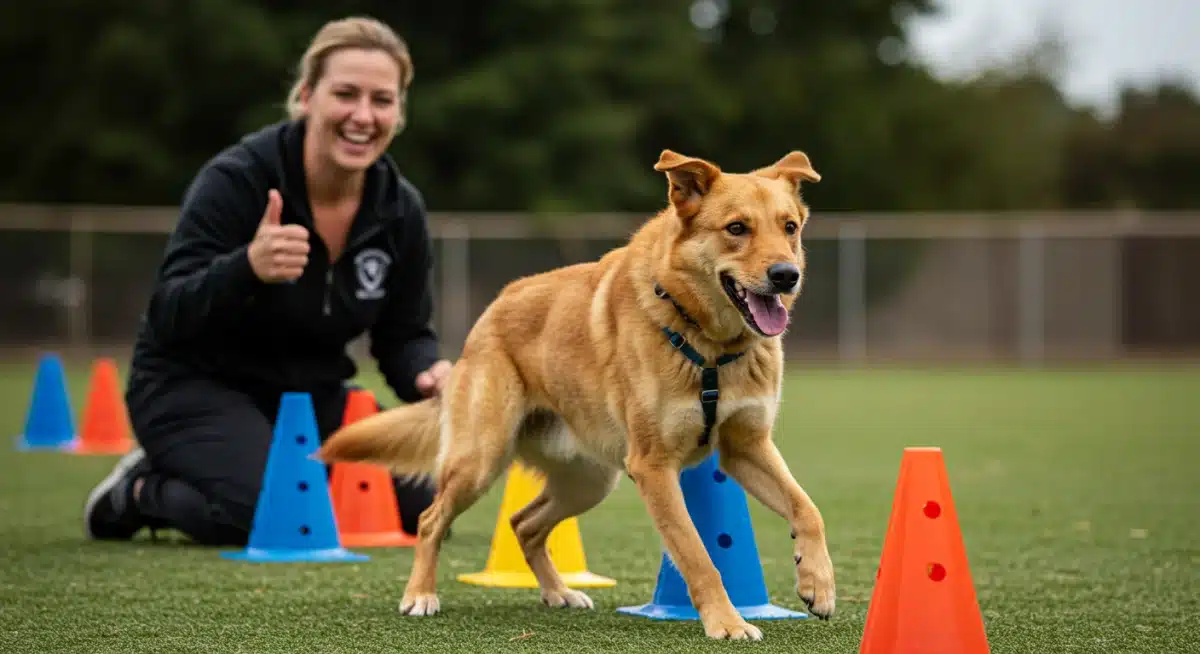
One notable example comes from a service dog organization in California, where they’ve reduced the average training time for complex tasks like retrieving dropped items or opening doors by several weeks. By meticulously micro-shaping each component of the behavior and using a dynamic high-value reward system, they’ve seen a significant reduction in the overall training period, allowing more dogs to be placed with individuals in need faster.
Another compelling case is from a marine mammal facility in Florida, where trainers are teaching intricate medical behaviors (like voluntary blood draws) to dolphins and sea lions with unprecedented speed. Their approach involves breaking down every tiny movement into separate, reinforceable steps, ensuring the animals are active, willing participants in their own healthcare, a testament to the power of precise positive reinforcement.
Common Pitfalls and How Experts Avoid Them
Even with the best intentions, trainers can inadvertently slow down progress. US experts have identified and actively mitigate several common pitfalls:
- Poor Timing: The most frequent error. Experts practice their clicker mechanics until timing is instantaneous and precise.
- Over-Reliance on Luring: While luring can be useful initially, experts fade lures quickly to prevent the animal from becoming dependent on them. The goal is for the animal to offer the behavior independently.
- Predictable Reinforcement: Always giving the same treat in the same way can lead to boredom. Experts vary rewards and delivery methods to keep the animal engaged.
- Ignoring Subtle Cues: Animals constantly communicate through body language. Experts are adept at reading these subtle signals, adjusting their approach based on the animal’s emotional state and understanding.
- Lack of Generalization: Training only in one environment leads to context-specific behaviors. Experts systematically plan for generalization from the outset.
- Frustration (Trainer or Animal): If either party is frustrated, the session is unproductive. Experts know when to end a session, take a break, or simplify the task to rebuild confidence.
The Future of Clicker Training: What’s Next?
The field of clicker training is continually evolving. Future advancements may include:
- Wearable Tech for Animals: Devices that monitor an animal’s stress levels or physiological responses to training, providing real-time feedback to trainers.
- AI-Powered Behavioral Analysis: Algorithms that can identify patterns in an animal’s learning, suggesting optimal shaping plans or identifying potential roadblocks.
- Virtual Reality Training: Creating simulated environments to practice complex behaviors or desensitize animals to specific stimuli in a controlled setting.
- Enhanced Understanding of Animal Cognition: Further research into how different species learn and process information will lead to even more tailored and effective training protocols.
The ongoing commitment to scientific inquiry and ethical practice by clicker training experts in the US ensures that these methods will continue to improve, fostering stronger bonds and more capable animal companions across the globe.
Conclusion: Empowering You with Expert Knowledge
The journey to achieving 30% faster results in clicker training is not about shortcuts, but about smarter, more precise, and more empathetic communication. By understanding and applying the advanced strategies employed by US experts – from micro-shaping and high-value reinforcement to errorless learning and systematic generalization – you can dramatically enhance your training outcomes. This insider knowledge empowers you to build a deeper connection with your animal, foster their problem-solving abilities, and enjoy the profound rewards of effective positive reinforcement.
Whether you’re a dedicated pet owner or a seasoned professional, integrating these cutting-edge techniques will not only accelerate learning but also enrich the training experience for both you and your animal partner. Embrace the science, refine your mechanics, and witness the transformative power of expert-level clicker training.