Recognizing early signs of feline kidney disease is crucial for prompt intervention and improving your cat’s quality of life, as timely diagnosis and treatment can significantly slow disease progression.
Has your beloved feline companion been acting a little off lately? Are you concerned about subtle changes in their behavior or habits? Understanding and actively seeking to identify the feline kidney disease early signs is paramount for their long-term health and well-being. This 2026 guide aims to empower pet owners with the knowledge needed for prompt intervention, potentially extending and improving the quality of life for your cherished cat.
Understanding feline kidney disease: a growing concern
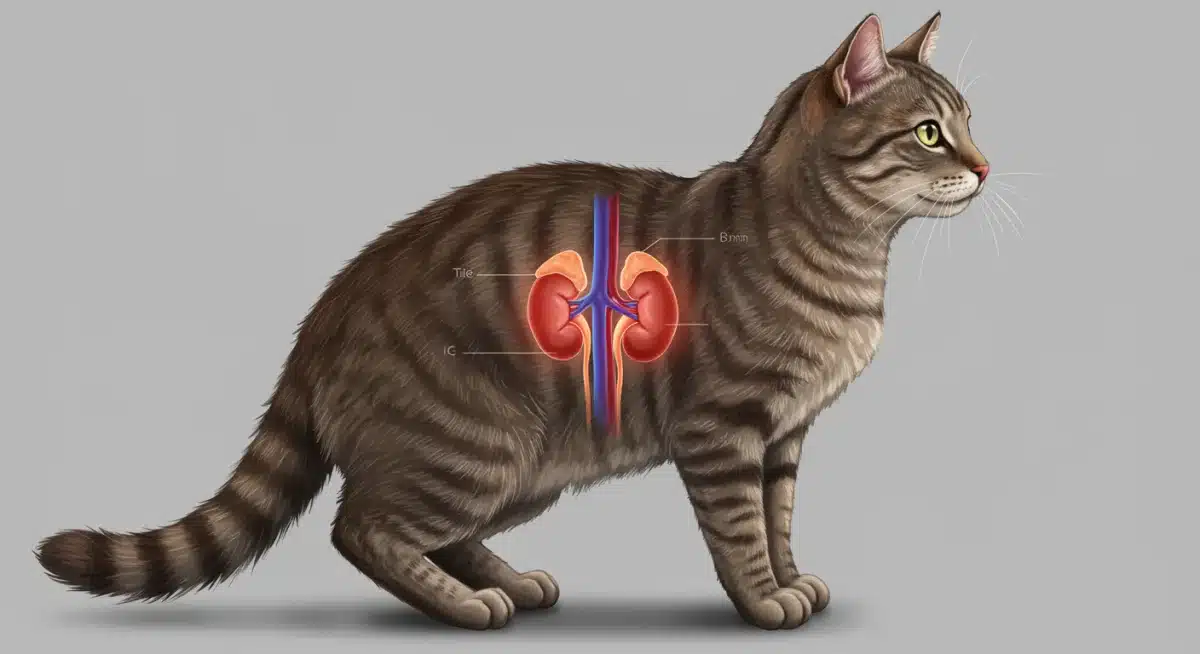
Feline kidney disease, also known as renal disease, is a common and often progressive condition affecting many cats, especially as they age. The kidneys play an essential role in filtering waste products from the blood, maintaining proper hydration, and regulating blood pressure. When kidney function declines, these vital processes are compromised, leading to a buildup of toxins in the body.
It’s important for cat owners to grasp the gravity of this condition. Unlike some other ailments that present with dramatic symptoms, kidney disease often progresses silently in its early stages, making early detection a significant challenge. By 2026, advancements in veterinary medicine have emphasized the importance of proactive screening and heightened owner awareness.
The prevalence of chronic kidney disease (CKD) in older cats is particularly high, with studies indicating that over 30% of cats over 10 years of age may be affected. This underscores the need for regular veterinary check-ups and vigilance for any changes in your cat’s health. Early recognition can mean the difference between managing the condition effectively and facing more severe complications.
Subtle behavioral shifts: key indicators to watch
Cats are masters at hiding illness, a trait rooted in their evolutionary history as both predator and prey. This makes identifying early signs of kidney disease particularly challenging. However, keen observation of subtle behavioral shifts can provide crucial clues. These changes might seem minor at first, but when viewed collectively, they can paint a clearer picture.
One of the most common early indicators involves changes in thirst and urination. An increase in both can be a red flag. Your cat might start drinking more water than usual, leading to more frequent trips to the litter box or producing larger clumps of urine. Conversely, some cats might show a decrease in appetite or pickiness with their food, which can also be an early sign.
Changes in drinking and urination habits
- Increased thirst (polydipsia): Noticing your cat drinking more often or from unusual sources.
- Increased urination (polyuria): More frequent litter box use, larger urine clumps, or accidents outside the box.
- Changes in urine color or odor: While less common in early stages, any noticeable difference should be reported.
Beyond these, lethargy or a general decrease in activity levels can also be an early sign. A cat that once loved to play might become more withdrawn, sleep more, or show less interest in their usual activities. These subtle shifts, while easily dismissed as normal aging, warrant closer investigation, especially in older cats.
Appetite and weight changes: silent warnings
A cat’s appetite and weight are often reliable indicators of their overall health. Any unexplained changes in these areas, particularly a decrease in appetite or noticeable weight loss, should prompt concern and veterinary consultation. These can be critical early signs of feline kidney disease.
Cats with early kidney disease may become finicky eaters, turning their noses up at food they once enjoyed. This partial anorexia can sometimes be intermittent, making it even harder to pinpoint. Over time, this reduced food intake inevitably leads to weight loss, which can be subtle at first but becomes more pronounced as the disease progresses.
Monitoring food intake and body condition
- Reduced appetite: A consistent decline in food consumption, even if slight.
- Food aversion: Refusing specific types of food or showing disinterest in meal times.
- Weight loss: A noticeable decrease in body mass, even if your cat is still eating some food.
It’s vital to monitor your cat’s weight regularly, perhaps by gently feeling their ribs and spine to assess their body condition. A cat losing weight without a clear dietary change or increased exercise should be examined by a veterinarian. Early intervention based on these observations can significantly impact the disease’s progression.
Coat quality and oral health: often overlooked symptoms
While changes in thirst, urination, and appetite are more commonly associated with kidney issues, alterations in coat quality and oral health can also serve as important, though often overlooked, early signs of feline kidney disease. These symptoms are a reflection of the body’s overall health and can indicate underlying systemic problems.
A healthy cat typically has a sleek, well-groomed coat. However, cats with kidney disease may experience a dull, unkempt, or matted coat. This can be due to dehydration, a general feeling of malaise that reduces their grooming efforts, or a build-up of toxins affecting skin and hair health. A noticeable decline in grooming habits is a strong indicator that something is amiss.
Oral health issues, such as bad breath (halitosis) or mouth ulcers, can also be associated with kidney disease. The accumulation of toxins, particularly urea, can lead to a distinct ammonia-like odor on the breath, often referred to as uremic breath. Ulcers in the mouth can cause pain and further contribute to a reluctance to eat. These symptoms, while potentially indicative of other issues, warrant immediate veterinary attention, especially when combined with other signs.
Paying close attention to these less obvious physical changes can provide valuable clues for early diagnosis. A comprehensive veterinary examination, including blood and urine tests, will help determine the root cause of these symptoms and guide appropriate treatment.
The role of routine veterinary check-ups in 2026
In the evolving landscape of pet care, routine veterinary check-ups have become more critical than ever, especially for the early detection and management of conditions like feline kidney disease. By 2026, advancements in diagnostic tools and a greater understanding of feline physiology have placed a stronger emphasis on preventative care. Annual or bi-annual visits are not just about vaccinations; they are comprehensive health assessments.
During these check-ups, veterinarians perform thorough physical examinations, which can reveal subtle indicators of illness that might go unnoticed at home. They will assess your cat’s weight, hydration status, coat condition, and oral health, among other things. More importantly, routine blood work and urinalysis are invaluable screening tools that can detect changes in kidney function long before clinical signs become apparent.
Essential diagnostic tests for early detection
- Blood chemistry panel: Measures kidney function indicators like creatinine and BUN (blood urea nitrogen).
- SDMA (Symmetric Dimethylarginine) test: A highly sensitive biomarker for kidney function, capable of detecting kidney disease earlier than traditional tests.
- Urinalysis: Evaluates urine concentration, protein levels, and presence of infection, all crucial for kidney health assessment.
- Blood pressure measurement: Hypertension is often associated with kidney disease and can exacerbate it.
The SDMA test, in particular, has revolutionized early detection of kidney disease in cats. It can identify kidney function decline when as little as 25% of kidney function has been lost, compared to traditional tests that only show changes when 75% of function is lost. Incorporating this test into routine senior pet panels is a standard practice by 2026, offering a significant advantage in early intervention. Regular veterinary visits are your cat’s best defense against the silent progression of kidney disease.
Prompt intervention strategies: what comes next?
Once feline kidney disease early signs are recognized and a diagnosis is confirmed, prompt intervention becomes the cornerstone of managing the condition. While kidney disease is not curable, its progression can often be slowed, and your cat’s quality of life significantly improved, with timely and appropriate treatment. The veterinary landscape in 2026 offers a range of strategies tailored to individual feline needs.
The first and often most critical step is dietary modification. Prescription renal diets are specifically formulated to reduce the workload on the kidneys by providing controlled levels of protein, phosphorus, and sodium, while also being highly palatable and energy-dense. These specialized diets are scientifically proven to extend the lifespan of cats with kidney disease.
Key intervention strategies
- Renal diet: Specialized formulas to support kidney function and reduce toxin buildup.
- Fluid therapy: Subcutaneous fluids administered at home can help maintain hydration and flush toxins.
- Medications: To manage symptoms like nausea, high blood pressure, and phosphorus levels.
- Regular monitoring: Consistent veterinary check-ups to track disease progression and adjust treatment.
Beyond diet, fluid therapy, either orally or subcutaneously, plays a vital role in maintaining hydration and helping the kidneys excrete waste products. Medications may be prescribed to manage associated symptoms such as nausea, vomiting, anemia, or high blood pressure, all of which commonly occur with kidney disease. Close collaboration with your veterinarian is essential to devise a comprehensive and evolving treatment plan that addresses your cat’s specific needs, ensuring the best possible outcome.
| Key Point | Brief Description |
|---|---|
| Increased Thirst/Urination | Early common signs, indicating kidneys struggle to concentrate urine. |
| Appetite Loss/Weight Decline | Subtle refusal of food and noticeable weight decrease are critical warnings. |
| Dull Coat/Bad Breath | Overlooked physical changes indicating systemic issues from toxin buildup. |
| Routine Vet Check-ups | Crucial for early detection via advanced diagnostics like SDMA tests. |
Frequently asked questions about feline kidney disease
The absolute earliest signs often include subtle changes in your cat’s water consumption and urination frequency. You might notice them drinking more water than usual or making more frequent trips to the litter box, producing larger volumes of urine. A slight decrease in appetite can also be an initial indicator.
Early diagnosis relies heavily on routine veterinary check-ups, which include blood tests and urinalysis. Specifically, the SDMA (Symmetric Dimethylarginine) test is highly effective at detecting kidney function decline much earlier than traditional markers like creatinine, often identifying issues when only 25% of kidney function is lost.
Absolutely. Dietary modification is a cornerstone of managing feline kidney disease. Prescription renal diets are formulated with controlled levels of protein, phosphorus, and sodium to reduce the workload on the kidneys and slow disease progression. These specialized diets have been shown to significantly improve a cat’s quality of life and longevity.
The prognosis for cats diagnosed with early kidney disease is generally much more favorable than for those diagnosed in advanced stages. With prompt intervention, including dietary changes, fluid therapy, and appropriate medications, many cats can maintain a good quality of life for several years. Regular monitoring is key to success.
While any cat can develop kidney disease, some breeds may have a genetic predisposition. For example, Persian, Abyssinian, and Siamese cats have been noted to have a higher incidence of certain types of kidney problems. However, age is the most significant risk factor, with older cats being far more susceptible regardless of breed.
Conclusion
Recognizing early signs of feline kidney disease is an act of profound care and responsibility for any cat owner. The subtle nature of these initial symptoms demands vigilance and a proactive approach, especially as our feline companions age. By understanding the behavioral changes, appetite shifts, and even less obvious physical indicators, alongside embracing routine veterinary check-ups incorporating advanced diagnostic tools like the SDMA test, we can significantly alter the trajectory of this common condition. Prompt intervention, guided by your veterinarian, offers the best chance at slowing disease progression, managing symptoms, and ensuring your beloved cat continues to enjoy a comfortable and fulfilling life for as long as possible. Your attentiveness today can lead to a healthier tomorrow for your cherished pet.