Bringing a new puppy into your home is an exciting, joyful experience, but it also comes with its share of responsibilities. Among the most critical initial tasks is successful puppy potty training. A well-potty-trained puppy leads to a happier household, fewer accidents, and a stronger bond between pet and owner. With 2026 upon us, pet parents in the US are constantly seeking the most effective and humane methods to ensure their furry friends learn proper bathroom etiquette quickly and efficiently. This comprehensive guide will delve into three popular puppy potty training methods: crate training, pee pad training, and outdoor training. We’ll compare their pros and cons, discuss their effectiveness, and provide practical tips to help you choose the best approach for your new family member.
Understanding the Basics of Puppy Potty Training
Before diving into specific methods, it’s essential to grasp the fundamental principles that underpin all successful puppy potty training. Puppies, much like human babies, need consistency, patience, and positive reinforcement to learn. Their bladders are small, and their control develops over time. Expecting immediate perfection is unrealistic and can lead to frustration for both you and your puppy.
Key Principles for Effective Potty Training:
- Consistency is Key: Stick to a regular feeding, watering, and potty schedule.
- Supervision: Keep a close eye on your puppy, especially during the initial stages, to catch signs of needing to go.
- Positive Reinforcement: Reward desired behavior immediately with praise, treats, or play.
- Accident Management: Clean up accidents thoroughly without scolding or punishing your puppy.
- Patience: Potty training takes time, and every puppy learns at their own pace.
The average puppy can usually hold their bladder for one hour per month of age, up to about 8-10 hours. So, an 8-week-old puppy can typically hold it for about two hours. This biological reality dictates the frequency of potty breaks you’ll need to provide, regardless of the method you choose for puppy potty training.
Method 1: Crate Training for Puppy Potty Training
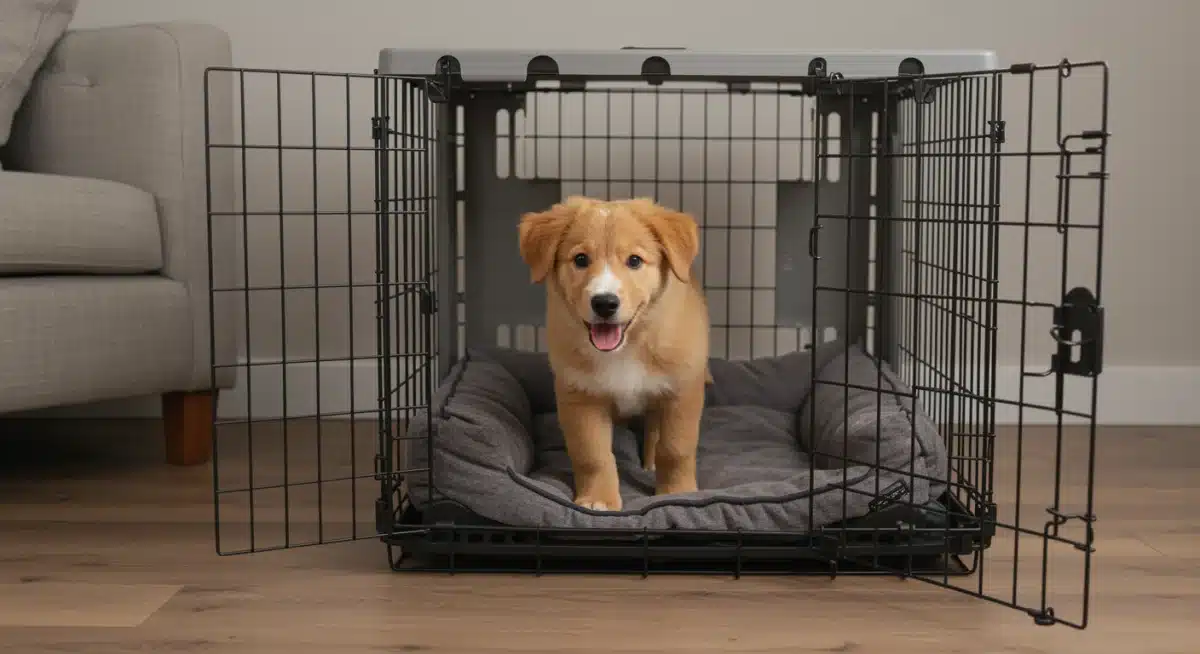
Crate training is one of the most widely recommended and effective puppy potty training methods, leveraging a dog’s natural instinct to keep their den clean. A crate, when used correctly, becomes a safe and comfortable space for your puppy, not a punishment tool.
How Crate Training Works:
The premise of crate training for puppy potty training is simple: a dog will naturally avoid soiling its sleeping area. By providing a crate that is just large enough for your puppy to stand up, turn around, and lie down comfortably (without extra space to relieve themselves in one corner and sleep in another), you encourage them to hold their bladder and bowels until they are let out.
Steps to Implement Crate Training:
- Introduce the Crate Positively: Make the crate inviting with soft bedding and toys. Never force your puppy in.
- Scheduled Potty Breaks: Take your puppy out of the crate and immediately to their designated potty spot (outside) at regular intervals – first thing in the morning, after waking from naps, after eating/drinking, and before bedtime.
- Reward Success: When your puppy eliminates in the correct spot, praise them enthusiastically and offer a high-value treat.
- Crate for Short Periods: Gradually increase the time your puppy spends in the crate.
- Never Use as Punishment: The crate should always be a positive place.
Pros of Crate Training:
- Highly Effective: Taps into a dog’s natural instincts, leading to faster results for puppy potty training.
- Develops Bladder Control: Encourages puppies to hold it for longer periods.
- Safety: Provides a secure space for your puppy when unsupervised, preventing destructive behavior or accidents.
- Travel Friendly: Makes future travel and vet visits easier if your dog is comfortable in a crate.
- Reduces Accidents: Significantly minimizes indoor accidents, especially overnight.
Cons of Crate Training:
- Requires Commitment: You must be diligent about scheduled potty breaks.
- Not for All Dogs: Some puppies may experience anxiety or distress in a crate, requiring extra patience and positive association work.
- Can Be Overused: Leaving a puppy in a crate for excessive periods can be detrimental to their physical and mental health.
- Initial Cost: Purchasing a suitable crate is an upfront expense.
Crate training is often combined with outdoor training, using the crate as a tool to manage the puppy’s environment and schedule, thereby reinforcing outdoor elimination. This combination is frequently cited as the gold standard for efficient puppy potty training.
Method 2: Pee Pad Training for Puppy Potty Training
Pee pad training, also known as paper training, involves teaching your puppy to relieve themselves on absorbent pads placed indoors. This method is particularly popular for owners living in apartments, those with limited outdoor access, or for very young puppies who cannot hold their bladder for long periods.
How Pee Pad Training Works:
The core idea of pee pad training is to designate an acceptable indoor spot for your puppy to eliminate. This can be a temporary solution or a long-term strategy, depending on your living situation and preferences. The pads often have an attractant scent to encourage use.
Steps to Implement Pee Pad Training:
- Designate a Potty Spot: Choose an easily accessible area for the pee pad, away from your puppy’s food, water, and sleeping area.
- Frequent Placement: Take your puppy to the pad frequently, especially after waking, eating, drinking, and playing.
- Reward Success: When your puppy uses the pad, praise them and offer a treat immediately.
- Clean Accidents Promptly: If an accident occurs off the pad, clean it thoroughly with an enzymatic cleaner to eliminate odors that might attract your puppy back to the same spot.
- Gradual Relocation (if transitioning outdoors): Once your puppy consistently uses the pad, gradually move it closer to the door, and eventually, outside.
Pros of Pee Pad Training:
- Convenience: Ideal for apartment dwellers, those with mobility issues, or during inclement weather.
- Reduces Outdoor Exposure: Useful for very young puppies who haven’t completed their vaccinations.
- Transitional Tool: Can serve as a stepping stone to outdoor training, especially for puppies with small bladders.
- Less Urgent Potty Breaks: Reduces the immediate pressure of having to rush outdoors every time your puppy needs to go.
- Easy Cleanup: Pads are designed for easy disposal and containment of waste.
Cons of Pee Pad Training:
- Can Confuse Puppies: Some puppies may struggle to differentiate between the pad and other similar surfaces (rugs, bath mats), leading to accidents on carpets.
- Prolongs Outdoor Training: If your ultimate goal is outdoor elimination, pee pad training can sometimes make the transition more challenging.
- Odor Issues: Even with absorbent pads, lingering odors can be a concern if not cleaned regularly.
- Cost: Ongoing expense of purchasing pee pads.
- Not a Permanent Solution for All: Many owners prefer their dogs to eliminate outdoors in the long run.
While pee pad training offers convenience, it’s crucial to consider your long-term goals for puppy potty training. If outdoor elimination is the ultimate objective, you’ll need a clear strategy to transition your puppy from pads to grass.
Method 3: Outdoor Training (Direct Potty Training) for Puppies
Outdoor training, or direct potty training, is arguably the most natural and common method, focusing solely on teaching your puppy to eliminate outside from day one. This method promotes good hygiene and provides puppies with regular outdoor exercise and sensory enrichment.
How Outdoor Training Works:
This method involves consistently taking your puppy to a designated outdoor potty spot every time they need to go. The emphasis is on teaching them that the only acceptable place to relieve themselves is outside, on grass or dirt.
Steps to Implement Outdoor Training:
- Establish a Routine: Take your puppy outside frequently and on a strict schedule – first thing in the morning, after every meal and drink, after naps, after play, and before bed.
- Designated Potty Spot: Always take your puppy to the same spot in your yard or a nearby park. The familiar scent will encourage them to go there.
- Use a Cue Word: As your puppy is eliminating, use a consistent cue word like “potty” or “go outside.”
- Immediate Reward: As soon as your puppy finishes, praise them enthusiastically and offer a treat. Then, bring them back inside or engage in some play time.
- Supervision Indoors: When inside, keep a close eye on your puppy. If you can’t supervise, put them in a crate or a puppy-proofed area.
Pros of Outdoor Training:
- Natural and Hygienic: Encourages puppies to relieve themselves in appropriate outdoor environments.
- Clear Expectations: Establishes a clear boundary between indoor and outdoor elimination.
- Promotes Exercise: Regular trips outside contribute to your puppy’s physical activity.
- Reduces Indoor Odors: Eliminates the need for indoor pee pads and associated smells.
- Stronger Bladder Control: Encourages puppies to hold it until they reach their outdoor spot.
Cons of Outdoor Training:
- Requires Constant Vigilance: Frequent trips outside, especially for young puppies, demand significant time and effort.
- Weather Dependent: Can be challenging during extreme weather conditions (rain, snow, heat).
- Risk of Outdoor Hazards: Puppies may be exposed to parasites, diseases, or other dangers before vaccinations are complete.
- Apartment Challenges: More difficult for owners in high-rise apartments without immediate yard access.
- Initial Accidents: Without a crate or indoor pad, accidents inside are more likely in the very early stages if not perfectly supervised.
Outdoor training is often the ultimate goal for most pet owners, as it integrates the puppy into the family’s routine and promotes a cleaner home environment. The key to its success is unwavering consistency and immediate positive reinforcement.
Comparing the 3 Popular Puppy Potty Training Methods: Which Delivers Results in 2026?
Now that we’ve explored each method individually, let’s conduct a comparative analysis to help you decide which approach is best suited for your household and your new puppy in 2026.
Effectiveness and Speed of Learning:
- Crate Training: Generally considered the most effective for rapid puppy potty training when implemented correctly. Puppies quickly learn to associate the crate with holding their bladder and the outdoors with elimination.
- Outdoor Training: Also highly effective, especially when combined with strict schedules and supervision. Results can be very quick if the owner is consistent.
- Pee Pad Training: Can be effective for teaching puppies an indoor elimination spot, but if the goal is outdoor elimination, it can sometimes prolong the overall training process.
Convenience for Owners:
- Pee Pad Training: Offers the most convenience for owners, as it reduces the urgency of immediate outdoor trips and is unaffected by weather.
- Crate Training: Provides convenience by allowing owners to contain their puppy safely when unsupervised, reducing the need for constant vigilance. However, it still requires frequent outdoor trips.
- Outdoor Training: Demands the most direct involvement and frequent trips outside, which can be less convenient, especially during bad weather or for owners with limited mobility.
Cost Implications:
- Pee Pad Training: Involves ongoing costs for purchasing pads, which can add up over time.
- Crate Training: Requires an initial investment in a quality crate, but this is typically a one-time expense.
- Outdoor Training: Generally the most cost-effective, as it requires minimal specialized equipment beyond a leash and collar.
Suitability for Different Lifestyles:
- Crate Training: Excellent for active individuals who want a well-behaved dog that can be safely left alone for reasonable periods or travel.
- Pee Pad Training: Best for apartment dwellers, individuals with limited yard access, or those who need a temporary solution for very young puppies or puppies who may struggle to get outside quickly.
- Outdoor Training: Ideal for owners with easy access to a yard or outdoor space and who are committed to frequent outdoor excursions.
Potential Challenges:
- Crate Training: Can be challenging if the puppy suffers from separation anxiety or is not properly introduced to the crate.
- Pee Pad Training: Risk of puppies developing a preference for indoor elimination or confusing pads with other household items.
- Outdoor Training: Requires significant time commitment and can be difficult in adverse weather conditions or for owners who work long hours.
Hybrid Approaches: Combining Methods for Optimal Puppy Potty Training
Many successful puppy potty training strategies involve a hybrid approach, combining elements from these methods to suit individual puppy needs and owner lifestyles. For instance:
- Crate & Outdoor Training: This is a very common and highly effective combination. The crate helps establish bladder control and provides a safe space, while scheduled outdoor trips reinforce the desired elimination spot.
- Pee Pad & Outdoor Training (Transitional): For very young puppies or those in apartments, starting with pee pads might be necessary. However, simultaneously working towards outdoor elimination by gradually moving the pads closer to the door and then outside can be a smooth transition.
- Crate & Pee Pad (Short-term): In rare cases, such as when an owner works long hours and cannot provide frequent outdoor breaks, a crate might be used during the day with a pee pad inside (if the crate is suitably sized for this, though this goes against the core principle of crate training for cleanliness). This is generally not recommended as a long-term solution as it can confuse the puppy.
The key is to be adaptable and observant. Every puppy is an individual, and what works perfectly for one might not be ideal for another. Adjust your strategy based on your puppy’s progress and behavior.
Essential Potty Training Tips for 2026 and Beyond
Regardless of the method you choose, these universal tips will significantly improve your puppy potty training success:
1. Establish a Consistent Schedule:
Puppies thrive on routine. Feed them at the same times each day, and take them out to potty immediately after waking, eating, drinking, and playing. A consistent schedule helps regulate their bodily functions and makes it easier for you to predict when they’ll need to go.
2. Supervise Closely:
During the initial stages of puppy potty training, your puppy should almost always be with you or in a controlled environment (crate, playpen). Watch for signs they need to go: sniffing, circling, whining, or heading towards the door. Intercept them gently and take them to their potty spot.
3. Positive Reinforcement is Paramount:
Never scold or punish your puppy for accidents. This only teaches them to fear you or to hide their accidents. Instead, celebrate successes! When your puppy goes in the right spot, immediately offer enthusiastic praise, a small, high-value treat, and perhaps a quick play session. This positive association makes them want to repeat the desired behavior.
4. Clean Accidents Thoroughly:
Use an enzymatic cleaner specifically designed for pet odors. Regular household cleaners might mask the smell for humans, but a puppy’s keen sense of smell will still detect it, encouraging them to eliminate in the same spot again.
5. Understand Your Puppy’s Signals:
Learn to recognize your puppy’s pre-potty signals. Some might whine, others might pace, and some might just suddenly stop playing and start sniffing the ground. The more you observe, the better you’ll become at anticipating their needs.
6. Limit Water Before Bed:
To help with overnight dryness, remove your puppy’s water bowl an hour or two before bedtime. Always ensure they have access to water throughout the day, though.
7. Be Patient and Persistent:
Puppy potty training is a marathon, not a sprint. There will be setbacks and accidents. Stay calm, be consistent, and remember that with time and patience, your puppy will learn.
8. Consider Professional Help:
If you’re struggling or your puppy is exhibiting unusual behaviors, don’t hesitate to consult a professional dog trainer or your veterinarian. They can offer tailored advice and rule out any underlying medical conditions.
Conclusion: The Best Potty Training Method for Your US Puppy in 2026
In 2026, the landscape of puppy potty training remains largely centered around the tried-and-true methods of crate training, pee pad training, and outdoor training. While each has its unique advantages and disadvantages, the most effective approach often involves a thoughtful combination tailored to your specific circumstances.
For most US households, a combination of crate training and consistent outdoor breaks is considered the most reliable and efficient path to a fully potty-trained puppy. It capitalizes on a puppy’s natural instincts, builds bladder control, and establishes clear boundaries between indoor and outdoor elimination.
However, if you live in an apartment, have limited outdoor access, or are dealing with a very young puppy, pee pad training can be an excellent transitional tool. Just be prepared for the effort required to eventually transition to outdoor pottying if that is your long-term goal.
Ultimately, the ‘best’ method for puppy potty training isn’t a one-size-fits-all answer. It’s the method you can implement most consistently, patiently, and positively. Focus on creating a predictable routine, rewarding good behavior, and understanding your puppy’s individual needs. With dedication and the right approach, you’ll soon have a well-adjusted, potty-trained companion, ensuring a clean and happy home for years to come.