Effective Leash Training: 4-Week Plan for US Dogs
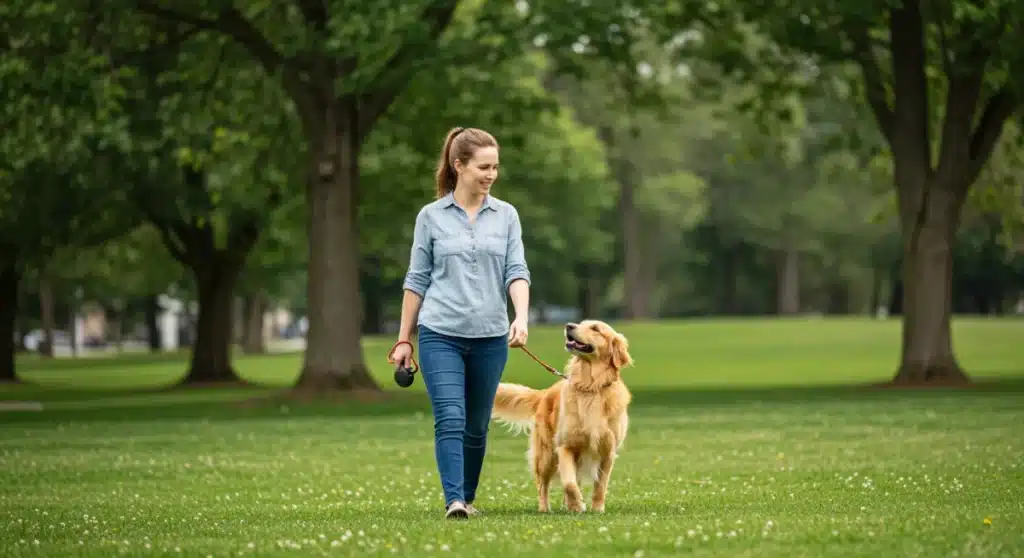
Implementing an effective leash training plan for US dogs involves consistent positive reinforcement, proper equipment, and a structured 4-week approach to transform pullers into polite walkers, enhancing both dog and owner enjoyment.
Are you tired of being dragged down the street by your enthusiastic, yet unruly, canine companion? Achieving effective leash training for your US dog doesn’t have to be a constant struggle. This comprehensive 4-week plan offers practical solutions to help your dog walk politely, making every outing a joy for both of you.
Understanding the Basics of Leash Training
Before diving into the 4-week plan, it’s crucial to grasp the fundamental principles that underpin successful leash training. This isn’t just about teaching your dog not to pull; it’s about fostering a positive relationship and clear communication.
Many owners mistakenly believe that a dog pulling on the leash is a sign of dominance or stubbornness. In reality, it’s often a natural consequence of a dog’s instinct to explore and move faster than their human counterpart. Understanding this helps shift the training approach from correction-based to positive reinforcement, which is far more effective and builds trust.
Choosing the Right Equipment
The equipment you use plays a significant role in your training success. While a standard collar and leash might seem sufficient, certain tools can make the process much smoother, especially for dogs prone to pulling.
- Front-Clip Harnesses: These harnesses discourage pulling by redirecting your dog’s momentum back towards you when they pull, making it physically uncomfortable for them to drag you forward.
- Head Halters: Similar to a horse’s halter, these give you control over your dog’s head, and where the head goes, the body follows. They are excellent for strong pullers but require careful introduction.
- Standard 6-Foot Leash: Avoid retractable leashes during training, as they teach your dog that pulling extends their range and can be dangerous. A fixed-length leash provides consistent communication.
It’s important to properly fit any equipment to ensure your dog’s comfort and safety. An ill-fitting harness or collar can cause chafing or even injury, making your dog associate walks with discomfort.
Ultimately, the goal of understanding these basics is to set both you and your dog up for success. By choosing the right tools and adopting a positive mindset, you lay a solid foundation for the weeks of training ahead, paving the way for enjoyable and stress-free walks.
Week 1: Foundations and Positive Association
The first week of our effective leash training plan focuses on building a strong, positive association with the leash and collar, and teaching your dog that walking beside you is rewarding. This initial phase is crucial for establishing good habits.
Start by simply introducing the collar and leash in a positive way. Don’t immediately go for a walk. Let your dog wear the collar for short periods around the house, rewarding them with treats and praise. The leash can be attached and dragged around briefly, under supervision, so they get used to the feeling without the pressure of a walk.
Introducing Leash Pressure and Release
One of the most important concepts to teach is the ‘pressure and release’ method. This isn’t about yanking the leash; it’s about applying gentle, consistent pressure and immediately releasing it the moment your dog yields to that pressure.
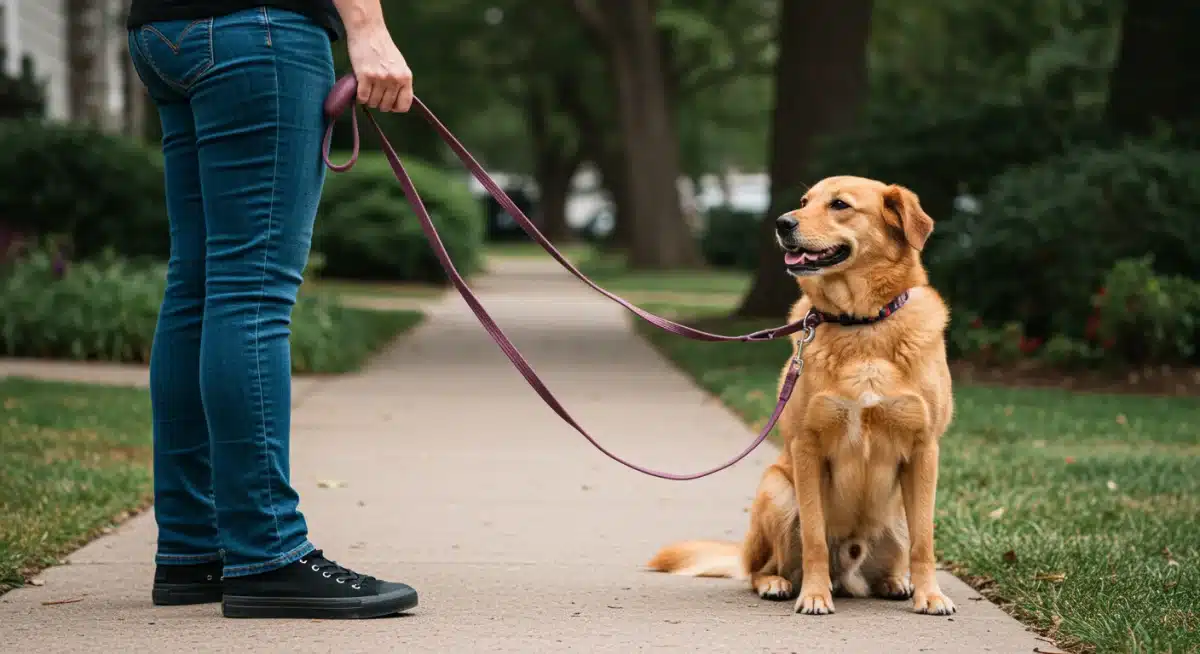
- Inside Practice: Begin inside your home or a quiet backyard. Put the leash on and take a few steps. The moment your dog pulls, stop moving. Wait for the leash to slacken, even for a second, then immediately say ‘yes!’ or ‘good!’ and reward them.
- Short Sessions: Keep these initial training sessions very short, perhaps 5-10 minutes, several times a day. Your dog’s attention span will be limited, and you want to end on a positive note.
- Lure and Reward: Use a treat to lure your dog into the desired position beside you. As they walk politely for a step or two, reward them. Gradually increase the number of steps before rewarding.
The key here is consistency. Every time your dog pulls, you stop. Every time they walk nicely or create slack in the leash, they get rewarded. This teaches them that polite walking gets them where they want to go, while pulling brings everything to a halt.
By the end of Week 1, your dog should be comfortable wearing their equipment and understand the basic concept that a loose leash leads to good things. This foundation will be essential for tackling more complex environments in the coming weeks.
Week 2: Controlled Walks and Distraction Management
With the foundations set, Week 2 is about transferring the loose-leash walking skills to more stimulating, yet still controlled, environments. This week introduces distractions gradually, helping your dog generalize their learning.
Begin by practicing in your driveway or a very quiet street with minimal distractions. Reiterate the ‘stop when they pull’ and ‘reward for slack leash’ techniques. As your dog shows consistency, slowly introduce minor distractions, such as a parked car or a neighbor’s fence.
Navigating Distractions Effectively
Distractions are a major challenge for many dogs. The key is to manage them rather than avoid them entirely. This involves proactive engagement and maintaining your dog’s focus.
- Pre-emptive Rewards: If you see a potential distraction approaching (another dog, a squirrel), immediately start rewarding your dog for staying focused on you and walking politely. High-value treats are essential here.
- Change Direction: If your dog becomes overly fixated or starts to pull towards a distraction, change direction abruptly. This breaks their focus and requires them to re-engage with you. Reward them when they follow.
- Short Leash Check-ins: Periodically, ask for a ‘watch me’ command or simply make eye contact and reward. This reinforces that you are the most interesting thing on the walk.
Remember that some days will be better than others. Dogs are individuals, and their ability to handle distractions will vary. Patience is paramount. If a particular distraction is too overwhelming, increase the distance or return to a less stimulating environment.
By the end of Week 2, your dog should be able to walk politely on a leash in moderately distracting environments, maintaining some focus on you. This progress indicates that they are beginning to understand the value of walking calmly by your side.
Week 3: Introducing Advanced Leash Manners and Duration
As your dog becomes more proficient in loose-leash walking in controlled settings, Week 3 focuses on increasing the duration of polite walking and refining their leash manners. This involves longer walks and introducing more varied environments.
Start extending your walk times, aiming for 20-30 minutes of consistent loose-leash walking. Continue to use high-value rewards for good behavior, but also start to vary the reward. Sometimes it’s a treat, other times it’s verbal praise, or even a brief moment to sniff something interesting as a reward for walking nicely to that spot.
Dealing with Common Leash Issues
Even with good progress, some common leash issues might still pop up. Addressing these proactively will solidify your dog’s training.
- Overtly Reactive Dogs: For dogs that bark or lunge at other dogs or people, increase distance from triggers. Use the ‘look at me’ command and reward heavily when they focus on you instead of the trigger. Consider professional help if reactivity is severe.
- Sniffing Everything: While sniffing is natural and good for dogs, excessive sniffing can disrupt a polite walk. Teach a ‘leave it’ command for things you don’t want them to investigate, and designate specific ‘sniffing zones’ during walks as a reward for good walking.
- Sudden Stops: If your dog suddenly stops, gently encourage them forward with a cheerful voice and a treat. Avoid dragging them, which can create negative associations.
This week is also a good time to practice ‘heel’ or ‘close’ commands if you desire a more formal walking position. Start in a quiet area, lure your dog to your side, say the command, and reward. Gradually fade the lure and rely on the verbal cue.
By the end of Week 3, your dog should be confidently walking politely on the leash for longer durations and in a wider range of environments, demonstrating improved manners even when faced with typical outdoor challenges.
Week 4: Real-World Application and Consistency
The final week of our effective leash training plan is dedicated to applying all the learned skills in real-world scenarios and ensuring consistency across all walks. This means taking your dog to busier places and continuing to reinforce good behavior.
Visit local parks, pet-friendly stores, or bustling sidewalks. The goal is not to overwhelm your dog but to expose them to a variety of situations where they can practice their polite walking skills. Remember to set them up for success; if a situation is too challenging, revert to an easier environment.
Maintaining and Advancing Leash Skills
Leash training isn’t a one-and-done process; it requires ongoing practice and reinforcement. Consistency is the bedrock of long-term success.
- Every Walk is a Training Opportunity: Treat every walk as a chance to reinforce good behavior. Don’t let your guard down, especially in the early stages.
- Vary Your Rewards: While treats are effective, start to incorporate other rewards like verbal praise, enthusiastic petting, or even a chance to play fetch at the end of a good walk.
- Practice in New Places: Continue to explore new walking routes and environments to generalize your dog’s skills. The more places they practice, the more reliable their polite walking will become.
Consider joining a local dog walking group or attending a group training class if your dog enjoys the company of other canines. This can provide valuable socialization and practice in a structured environment.
By the end of Week 4, your dog should be a reliable and polite walker in most situations, and you will have developed a strong communication system. This consistent practice will ensure that your dog continues to enjoy walks without dragging you along.
Troubleshooting Common Leash Training Challenges
Even with a structured plan, challenges can arise during leash training. Understanding how to troubleshoot these common issues can prevent frustration and keep your progress on track. Patience and adaptability are key.
One frequent problem is a dog regressing to pulling after initial progress. This often happens when owners become inconsistent with rewards or allow pulling in certain situations. Remember, every time your dog pulls and gets to move forward, that behavior is reinforced. Revert to stopping immediately every time the leash tightens.
Persistent Pulling and Reactivity
For dogs that continue to pull despite consistent efforts, re-evaluate your equipment and reward system. Are you using high-value enough treats? Is your timing precise? Sometimes, a different harness or head halter can make a significant difference, especially for strong breeds.
- Increase Reward Value: If your dog is ignoring treats, try higher-value options like cooked chicken, cheese, or hot dogs.
- Seek Professional Guidance: If reactivity or persistent pulling is overwhelming, don’t hesitate to consult a certified professional dog trainer. They can offer personalized strategies and identify underlying issues.
- Manage the Environment: If a specific environment is too stimulating, reduce exposure or increase distance from triggers. Gradual desensitization is more effective than forced exposure.
Another challenge can be your dog’s motivation. Some dogs are simply not food-motivated on walks. Experiment with toy rewards, praise, or even short bursts of play as a reward for good behavior. The goal is to find what truly motivates your dog.
Remember, troubleshooting is part of the training journey. It’s an opportunity to learn more about your dog and refine your approach. Stay positive, be consistent, and never give up on the goal of a pleasant walk.
Beyond the 4 Weeks: Maintaining Good Habits
Completing a 4-week leash training plan is a significant achievement, but it’s just the beginning. The real success lies in maintaining the good habits you’ve established. Leash manners, like any learned skill, require ongoing practice and reinforcement.
Integrate short training bursts into your daily walks. Even if your dog is walking perfectly, randomly reward them for being in the correct position or for checking in with you. This keeps the behavior strong and prevents it from fading over time.
Long-Term Strategies for Polite Walking
To ensure your dog remains a polite walker for years to come, consider these long-term strategies:
- Continue Socialization: Regularly expose your dog to different sights, sounds, people, and well-behaved dogs to help them remain calm and confident in various situations.
- Practice in New Locations: Continue exploring new parks, trails, and urban areas. Each new environment provides an opportunity to reinforce good manners and build your dog’s adaptability.
- Refine Commands: Work on advanced commands like ‘heel,’ ‘stay,’ and ‘wait’ at intersections. These commands enhance safety and control during walks.
- Be a Consistent Leader: Your dog looks to you for guidance. Maintain a calm, confident demeanor on walks, and be consistent with your expectations and rewards.
Remember that a well-behaved dog on a leash is not only a joy to walk but also a safer companion. It reduces the risk of accidents, conflicts with other dogs, and getting into dangerous situations. Your commitment to maintaining these habits will pay off immensely.
By consistently applying the principles learned over these four weeks and beyond, you and your dog will enjoy countless years of harmonious, stress-free walks, solidifying your bond and enhancing your shared experiences.
| Key Aspect | Brief Description |
|---|---|
| Equipment Choice | Selecting front-clip harnesses or head halters significantly aids in preventing pulling and improving control. |
| Positive Reinforcement | Reward loose-leash walking consistently with high-value treats and praise to build positive associations. |
| Consistency & Patience | Apply training rules uniformly across all walks and environments; progress takes time and consistent effort. |
| Distraction Management | Gradually introduce distractions, using pre-emptive rewards and direction changes to maintain focus. |
Frequently Asked Questions About Leash Training
While this plan is structured for 4 weeks, the actual time varies greatly depending on the dog’s age, previous experiences, breed, and individual learning style. Some dogs grasp it quickly, while others may require more extended practice and patience beyond the initial month.
For highly reactive dogs, increasing distance from triggers is crucial. Use high-value rewards for any focus on you, and consider consulting a certified professional dog trainer specializing in reactivity. They can provide tailored strategies and support to manage and reduce reactive behaviors.
It’s never too late! Older dogs can absolutely learn new behaviors, including polite leash walking. They might take a bit longer to unlearn old habits, but with consistent positive reinforcement and patience, significant progress can be made, leading to more enjoyable walks.
High-value, soft, and easily digestible treats are best. Examples include small pieces of cooked chicken, cheese, hot dogs, or commercially available training treats. The treat should be enticing enough to capture your dog’s attention even amidst distractions.
Leash chewing can be due to boredom, anxiety, or seeking attention. Redirect this behavior by offering a chew toy or a high-value treat when they start to chew the leash. Ensure they have adequate exercise and mental stimulation before walks to reduce anxiety.
Conclusion
Mastering effective leash training for your dog is a journey that yields immense rewards, transforming stressful walks into enjoyable shared experiences. By committing to this 4-week plan, focusing on positive reinforcement, selecting appropriate equipment, and maintaining unwavering consistency, you can teach your dog to walk politely and confidently by your side. Remember, every step you take together is an opportunity to strengthen your bond and enhance your shared experiences.