Puppy Potty Training: A 7-Day Intensive Schedule for Success
Bringing a new puppy home is an exciting and joyous occasion. Their playful antics, soft fur, and unconditional love can brighten any home. However, with the boundless joy comes the responsibility of teaching them good habits, and at the top of that list for many new pet parents is successful puppy potty training. It’s a critical step in integrating your furry friend into your family, ensuring a clean home, and building a strong bond based on trust and understanding.
The thought of puppy potty training can seem daunting, especially if you’re a first-time puppy owner. Accidents are inevitable, and the process requires patience, consistency, and a solid plan. But what if you could significantly accelerate the learning curve? What if you had a structured, intensive schedule designed to achieve house-training success in just seven days? This comprehensive guide will equip you with exactly that: a detailed 7-day intensive schedule for effective puppy potty training, along with crucial tips, common pitfalls to avoid, and expert advice to make the process as smooth and stress-free as possible for both you and your new companion.
Our goal is to help you establish a routine that your puppy can quickly understand and follow, minimizing accidents and fostering a positive association with their designated potty area. By the end of this intensive week, you should see significant progress, setting the foundation for a fully house-trained pup. Let’s dive into the world of successful puppy potty training!
Understanding Puppy Potty Training Fundamentals
Before we jump into the daily schedule, it’s essential to grasp the core principles behind effective puppy potty training. Understanding these fundamentals will not only make the 7-day plan more effective but also help you troubleshoot any challenges that may arise.
Consistency is Key for Puppy Potty Training
Puppies thrive on routine. They learn through repetition and predictability. When it comes to puppy potty training, consistency in your schedule, commands, and rewards is paramount. This means taking your puppy out at the same times every day, using the same designated spot, and consistently praising them for success. Any deviation can confuse your puppy and prolong the training process.
Positive Reinforcement
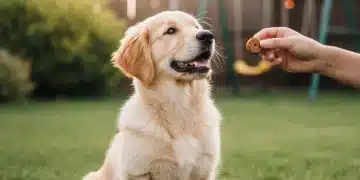
Never punish your puppy for accidents. Punishment can lead to fear, anxiety, and a reluctance to go to the bathroom in front of you, which can make puppy potty training much harder. Instead, focus on positive reinforcement. When your puppy eliminates in the correct spot, offer immediate praise, a high-value treat, and perhaps a quick playtime. This creates a positive association with the desired behavior.
Supervision and Confinement
During the initial stages of puppy potty training, constant supervision is crucial. An unsupervised puppy is an accident waiting to happen. Use crates, playpens, or leashes to keep your puppy close to you. This allows you to monitor their behavior for signs they need to go out (sniffing, circling, whining) and quickly intervene. When you can’t actively supervise, confine your puppy to a safe, puppy-proofed area or a crate.
Crate Training and Puppy Potty Training
Crate training is an invaluable tool for puppy potty training. Most puppies naturally avoid soiling their sleeping area. A properly sized crate (just big enough for them to stand up, turn around, and lie down) can help them hold their bladder and bowels for longer periods. It also provides a safe den where they can feel secure. Never use the crate as punishment.
Understanding Puppy Bladder Control
A general rule of thumb is that a puppy can hold their bladder for approximately one hour for every month of their age, up to about 8-9 hours. So, a 3-month-old puppy can typically hold it for about 3 hours. This is a guideline, not a strict rule, and individual puppies will vary. Always err on the side of taking them out more frequently than you think they need, especially during intensive puppy potty training.
Choosing a Potty Spot
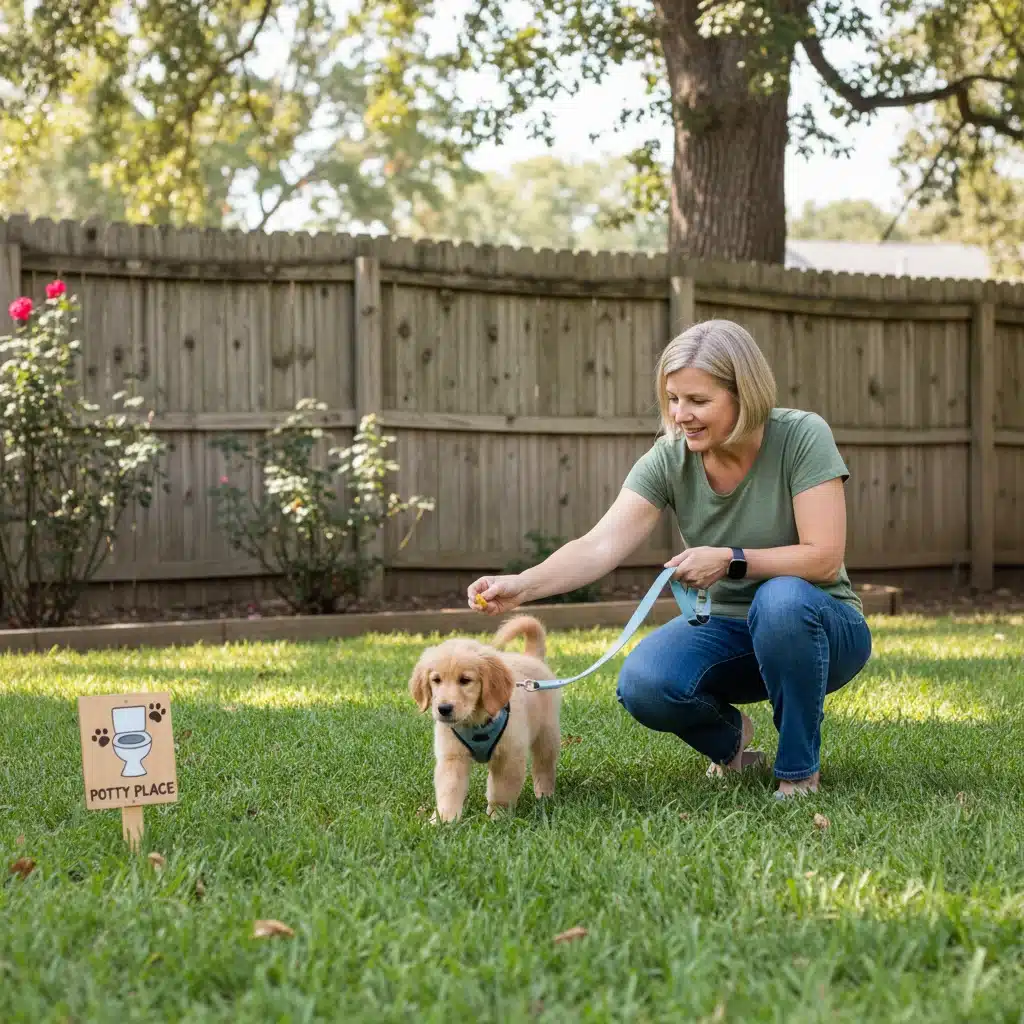
Designate a specific outdoor spot for your puppy to eliminate. Taking them to the same spot each time helps them associate that area with going to the bathroom. This also helps you clean up more easily and monitor their success.
Preparing for Your 7-Day Puppy Potty Training Intensive
Before Day 1 begins, gather your supplies and mentally prepare for a week of dedication. Successful puppy potty training requires your full commitment.
Essential Supplies:
- Crate: Appropriately sized.
- Leash and Collar/Harness: For walks to the potty spot.
- High-Value Treats: Small, soft, and irresistible for rewards.
- Enzyme Cleaner: Crucial for cleaning up accidents to eliminate odors that attract your puppy back to the same spot.
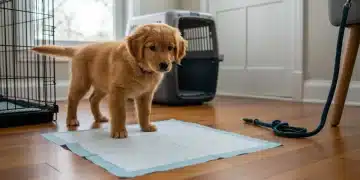
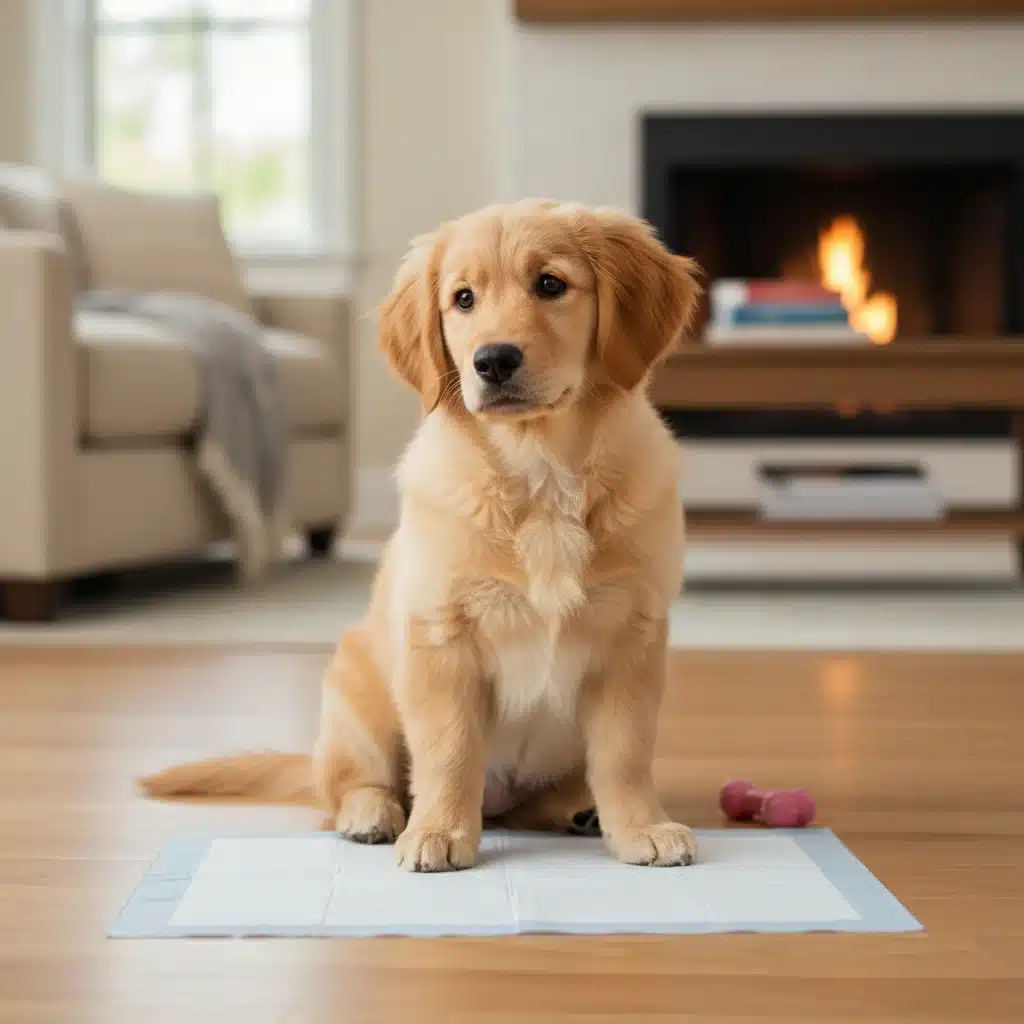
- Puppy Pads (Optional): Some trainers prefer not to use them to avoid confusion, but they can be useful for emergencies or specific circumstances. If using, place them consistently.
- Pet-Safe Cleaning Supplies: For general clean-up.
- Water Bowl: Keep fresh water available, but manage access before bedtime.
Mental Preparation:
- Patience: This is the most important tool. Accidents will happen.
- Consistency: Stick to the schedule as much as humanly possible.
- Positive Attitude: Your puppy will pick up on your mood. Keep it upbeat!
- Time Commitment: The first week requires significant time and attention.
- Family Involvement: Ensure everyone in the household is on the same page regarding the training plan.
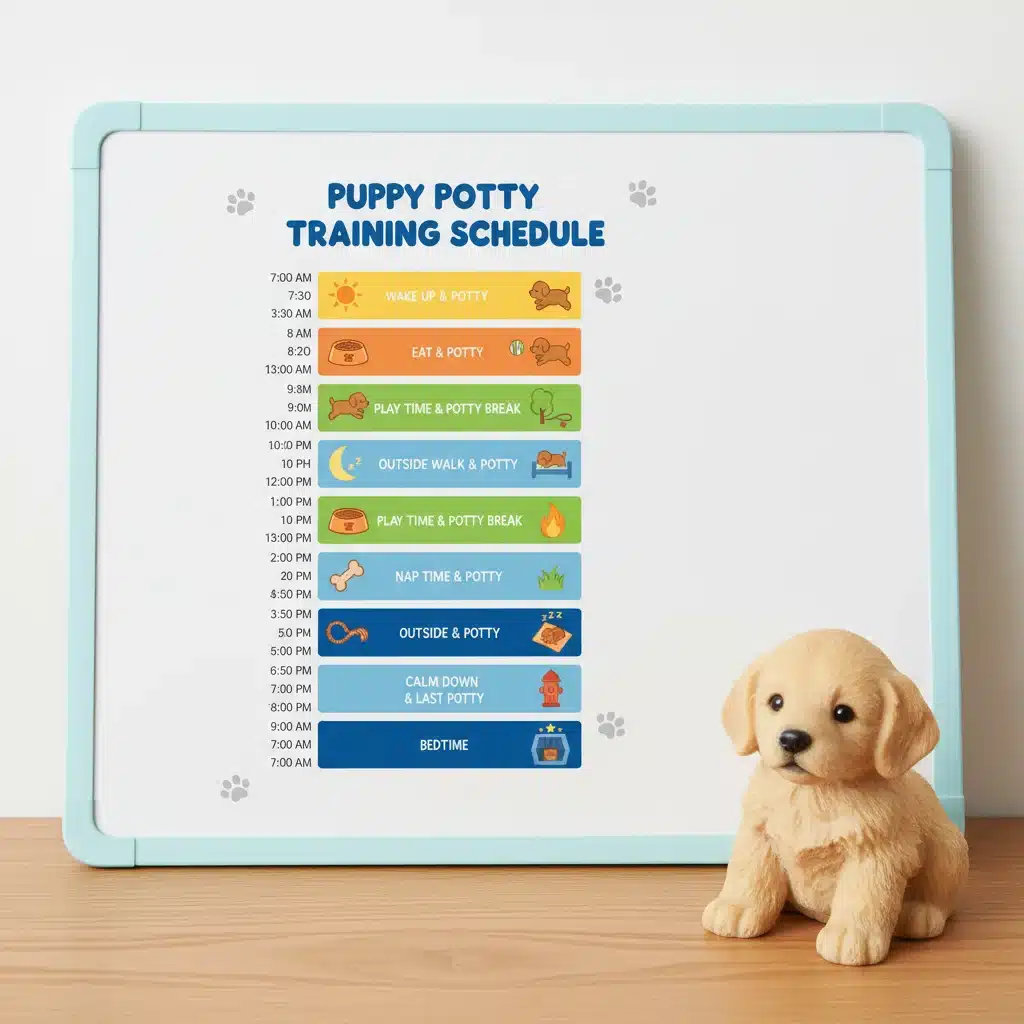
The 7-Day Intensive Puppy Potty Training Schedule
This schedule is designed for a typical 8-12 week old puppy. Adjust timings based on your puppy’s age, breed, and individual needs. The key is the frequency and consistency.
Day 1: Establishing the Foundation of Puppy Potty Training
The first day is all about setting the stage and introducing the routine. Your puppy might be overwhelmed by a new environment, so keep it calm and positive.
- Morning (Upon Waking): Immediately take your puppy outside to their designated potty spot. Use a consistent phrase like “Go potty” or “Do your business.” Wait patiently. When they go, praise enthusiastically and give a treat.
- After Breakfast: About 10-15 minutes after eating, take them out again. Their digestive system is stimulated by food.
- Every 30-60 Minutes: Throughout the day, take your puppy out every 30-60 minutes, especially after naps, play sessions, and during transitions.
- After Playtime: A vigorous play session can stimulate the bladder and bowels.
- Before Bedtime: The very last thing before crating them for the night.
- Middle of the Night: For young puppies, set an alarm to take them out once or twice during the night.
- Supervision: Keep your puppy on a leash attached to you or in a confined, puppy-proofed area when indoors.
- Accidents: If an accident happens, clean it thoroughly with an enzyme cleaner. Do not scold.
Day 2: Reinforcing the Routine
Today is about reinforcing the behaviors learned on Day 1. Your puppy is starting to get the idea.
- Repeat Day 1 Schedule: Maintain the same frequent potty breaks.
- Focus on Cues: Pay close attention to your puppy’s cues for needing to go (sniffing, circling, whining at the door). Interrupt these behaviors by immediately taking them outside.
- Extend Outdoor Time (Slightly): Allow a few extra minutes outside to ensure they fully empty their bladder and bowels.
- Consistent Commands: Always use your chosen potty command.
- Positive Interruptions: If you catch your puppy about to have an accident indoors, clap your hands or make a noise to interrupt them, then immediately scoop them up and take them outside. Reward heavily if they finish outside.
Day 3: Building Independence
Your puppy should be showing more understanding today. We’ll start building a little more independence while maintaining supervision.
- Slightly Longer Intervals (if successful): If your puppy has been consistently going potty outside, you can try to extend the indoor time between breaks by 15-30 minutes, but only if you’re confident they can hold it.
- Crate Time: Continue using the crate for naps and nighttime. Ensure it’s a positive experience.
- Freedom with Supervision: Allow short periods of supervised freedom in a puppy-proofed room, but be ready to intervene at any sign of needing to go.
- “Go Potty” Command Association: Continue to use your command. Your puppy should start associating the phrase with the action.
Day 4: Solidifying Potty Training Habits
The habits are starting to solidify. Your puppy will likely be going to the door or giving clearer signals.
- Predictable Schedule: By now, your puppy should be anticipating the routine. Stick to it religiously.
- Increased Awareness: You should be keenly aware of your puppy’s pre-potty signals.
- Praise and Rewards: Keep the praise and high-value treats coming for every successful outdoor elimination.
- Nighttime Progress: You might be able to start extending nighttime stretches between potty breaks, but still be prepared for one middle-of-the-night outing for very young puppies.
Day 5: Testing Boundaries (Gently)
Today, we’ll gently test your puppy’s understanding and ability to hold it for slightly longer, but always with caution.
- Slightly Longer Intervals: If Day 4 was successful, try extending intervals between potty breaks by another 15-30 minutes. Monitor closely.
- Outdoor Distractions: If your puppy is easily distracted outside, try to minimize distractions during potty breaks. Go to the spot, wait for them to go, praise, then allow for a short play or sniff session.
- Consistency Across Family Members: Ensure everyone in the household is following the exact same routine and commands. Inconsistency can set back progress.
Day 6: Generalization and Confidence in Puppy Potty Training
Your puppy should be much more reliable now. The focus shifts to generalizing the behavior and building their confidence.
- Reinforce Positive Behavior: Continue to praise and reward every successful potty break.
- Fewer Accidents: By now, accidents should be rare. If they are still frequent, re-evaluate your supervision and frequency of outings.
- Observe and Learn: Continue to observe your puppy’s unique signals for needing to go. Each puppy is different.
- Prepare for the Future: Start thinking about how you’ll maintain this routine once the intensive week is over.
Day 7: Celebrating Success and Planning Ahead
Congratulations! By the end of Day 7, you should have a much more house-trained puppy. This day is about solidifying everything and making it a sustainable lifestyle.
- Maintain the Schedule: While the intensive week is over, don’t abandon the schedule immediately. Gradually lengthen intervals as your puppy matures and gains better bladder control.
- Continued Supervision: Continue to supervise your puppy indoors, especially when they are not in their crate.
- Stay Vigilant: Even a house-trained puppy can have an accident if they are sick, stressed, or left too long.
- Celebrate: Enjoy your cleaner home and your well-behaved puppy!
Troubleshooting Common Puppy Potty Training Challenges
Even with an intensive schedule, challenges can arise. Here’s how to address them:
Frequent Accidents Indoors
- Solution: Increase the frequency of outdoor potty breaks. You might be asking too much of your puppy too soon. Go back to basics: take them out every 15-30 minutes. Ensure you are supervising them constantly indoors.
- Check Crate Size: Is the crate too big? If so, they might be using one end as a bathroom.
- Thorough Cleaning: Are you using an enzyme cleaner for all accidents? If not, residual odors will attract them back.
Puppy Won’t Go Potty Outside
- Solution: Be patient. Stay outside for longer periods (10-15 minutes). If they don’t go, bring them inside and immediately crate them for 10-15 minutes, then try again. Repeat until successful.
- Minimize Distractions: Choose a quiet potty spot. If your puppy is too busy playing or sniffing, they might forget to go.
- Consistent Spot: Are you taking them to the same spot every time?
Excitement Urination
- Solution: This is common in young puppies. Keep greetings calm and low-key. Avoid overly exciting interactions immediately upon arriving home or waking up. Take them out immediately upon waking or when you arrive home, before any major interaction.
Submissive Urination
- Solution: Often triggered by fear or anxiety. Avoid staring at, towering over, or scolding your puppy. Approach them calmly, speak in a soft voice, and get down to their level. Build their confidence through positive experiences.
Regression in Puppy Potty Training
- Solution: If a previously house-trained puppy suddenly starts having accidents, first rule out medical issues with a vet visit. If medically clear, it could be stress, a change in routine, or a sign you’ve given them too much freedom too soon. Go back to the intensive schedule for a few days.
Advanced Tips for Long-Term Puppy Potty Training Success
Beyond the intensive week, these tips will help ensure lifelong house-training success for your puppy.
Gradual Freedom
Don’t give your puppy free run of the house too soon. Gradually increase their access to different rooms as they prove their reliability. Always supervise them in new areas.
Bell Training
Consider bell training! Hang bells on the doorknob leading to the outside potty area. Every time you take your puppy out, gently guide their paw to hit the bells. Eventually, they will learn to ring the bells to signal they need to go out.
Hydration Management
While fresh water should always be available, you can manage how much water your puppy drinks right before bedtime. Pick up the water bowl about 1-2 hours before their last potty break and crating for the night. This helps reduce nighttime accidents.
“Clean Up” Command
Teach your puppy a “clean up” or “go potty” command. This can be incredibly useful when you’re in a hurry or in an unfamiliar environment. Always reward them for responding to the command.
Socialization and New Environments
As your puppy grows, they will encounter new environments. Be prepared to reinforce potty training in these new places. Always take them out frequently when visiting friends, family, or going on trips.
Patience Through Adolescence
Just like human teenagers, adolescent dogs (roughly 6-18 months) can sometimes test boundaries or have temporary regressions in training. Stay patient and consistent, and revert to earlier training methods if needed. This phase will pass.
Professional Guidance
If you’re struggling despite your best efforts, don’t hesitate to consult a professional dog trainer or your veterinarian. They can offer personalized advice and rule out any underlying medical conditions.
The Benefits of Successful Puppy Potty Training
Investing this intensive week into puppy potty training yields numerous rewards:
- A Cleaner Home: No more unexpected messes to clean up, allowing you to enjoy your living space without constant worry.
- Stronger Bond: Successful training builds trust and understanding between you and your puppy. Your puppy learns to rely on you, and you learn to understand their signals.
- Reduced Stress: For both you and your puppy. Accidents can be frustrating; a house-trained puppy means less stress for everyone.
- More Freedom: As your puppy becomes more reliable, you can grant them more freedom within the home, knowing they will signal when they need to go out.
- Better Health and Hygiene: A puppy that consistently eliminates outside is generally cleaner and healthier.
- Easier Integration: A house-trained puppy is a joy to take to friends’ houses, on trips, and to various public places (where dogs are permitted).
Conclusion: Your Path to Puppy Potty Training Success
Puppy potty training is one of the most fundamental and rewarding aspects of bringing a new dog into your life. While it demands significant time, patience, and consistency, the intensive 7-day schedule outlined here provides a robust framework for success. Remember, every puppy is an individual, and some may pick it up faster than others. The key is to remain positive, consistent, and understanding.
By following this guide, implementing positive reinforcement, and being vigilant, you’ll be well on your way to a house-trained puppy and a harmonious home. The effort you put in during this crucial week will lay the groundwork for a lifetime of happy, clean, and loving companionship with your furry friend. Good luck, and enjoy the journey of successful puppy potty training!