
Your cat’s food bowl, always full and available, may seem like a gesture of love, but the reality is that it can open the door to serious health problems. Many owners believe that cats know how to regulate themselves, eating only what they need. For a cat that lives exclusively indoors, however, this feeding freedom often translates into boredom and excess calorie intake, a direct path to obesity.
An apartment cat’s lifestyle is dramatically different from that of its hunting ancestors. With less space to explore and fewer stimuli to burn energy, its metabolic needs are significantly lower. Ignoring this change is a common mistake that contributes to the alarming statistic that nearly 60% of domestic cats are overweight. That extra weight isn’t just an aesthetic issue; it raises the risk of diabetes, arthritis, and urinary tract disease, compromising your companion’s quality of life and life expectancy.
Understanding how to structure a proper feeding schedule is therefore one of the most important things you can do for your cat’s health. This complete guide will demystify the nutritional needs of indoor cats, compare scheduled and free feeding, and offer a step-by-step plan for building a personalized routine. We’ll cover how age and activity level influence portions, the impact of diet on behavior, and the innovations that can improve your pet’s well-being.
Unraveling the Nutritional Needs of the Domestic Cat
The truth about your cat’s food bowl is that it probably holds too many calories. Cats that live exclusively indoors have a dramatically different lifestyle from their cousins who roam the neighborhood. They don’t hunt, they don’t patrol extensive territories, and, frankly, they sleep a lot more. This inactivity completely changes their metabolic needs.
The difference is striking. An apartment cat simply doesn’t burn the same amount of energy. What most owners overlook is that its diet should be adjusted in the same way that an office worker doesn’t eat the same as a professional athlete. Keeping the same diet as an active cat is a recipe for health problems, starting with obesity, a lifestyle we call “king of the couch.”
The statistics are alarming. A recent report from the Association of Preventive Veterinary Medicine revealed that 59% of domestic cats are classified as overweight or obese. That excess weight isn’t just an aesthetic issue; it is directly linked to diabetes, arthritis, and urinary problems. Understanding the specific feline nutrition needs of indoor environments is the first step toward reversing this dangerous trend. Caring for a pet at home involves a complete view of its well-being, from diet to details like innovations in pet care for different seasons. The right diet is the foundation of a long, healthy life, free of complications that could easily have been avoided.
Current Trends in Cat Feeding Schedules
The always-full food bowl is becoming a relic of the past. Today, owners are looking for methods that align the convenience of modern routines with their cats’ biological needs. The central discussion revolves around two main philosophies: leaving food available at all times or setting fixed mealtimes. The choice directly affects your pet’s health.
Free Feeding vs. Scheduled Feeding: Which Is Best?
Free feeding is the simplest method: the bowl is always stocked. For the owner, the practicality is undeniable. But does that convenience justify the risk? Data from the Association for Pet Obesity Prevention (APOP) indicate that nearly 60% of domestic cats are overweight, a problem often associated with unlimited access to food. Indoor cats, with fewer stimuli to burn energy, are especially vulnerable to weight gain with this approach.
On the other side, scheduled feeding involves offering controlled portions at specific times, usually two to three times a day. This method simulates cats’ natural hunting and feeding cycle, promoting a more stable metabolism. It allows precise control of calorie intake and is what most veterinarians recommend for preventing obesity. Establishing a feeding routine also strengthens the bond between pet and owner.
The decision isn’t universal. A young, active cat may do well with free feeding, while an older cat or one prone to gaining weight benefits immensely from regular mealtimes.
The Rise of Smart Automatic Feeders
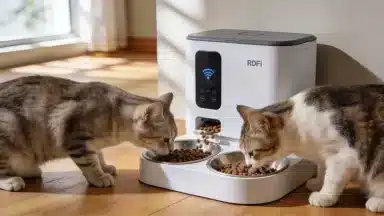
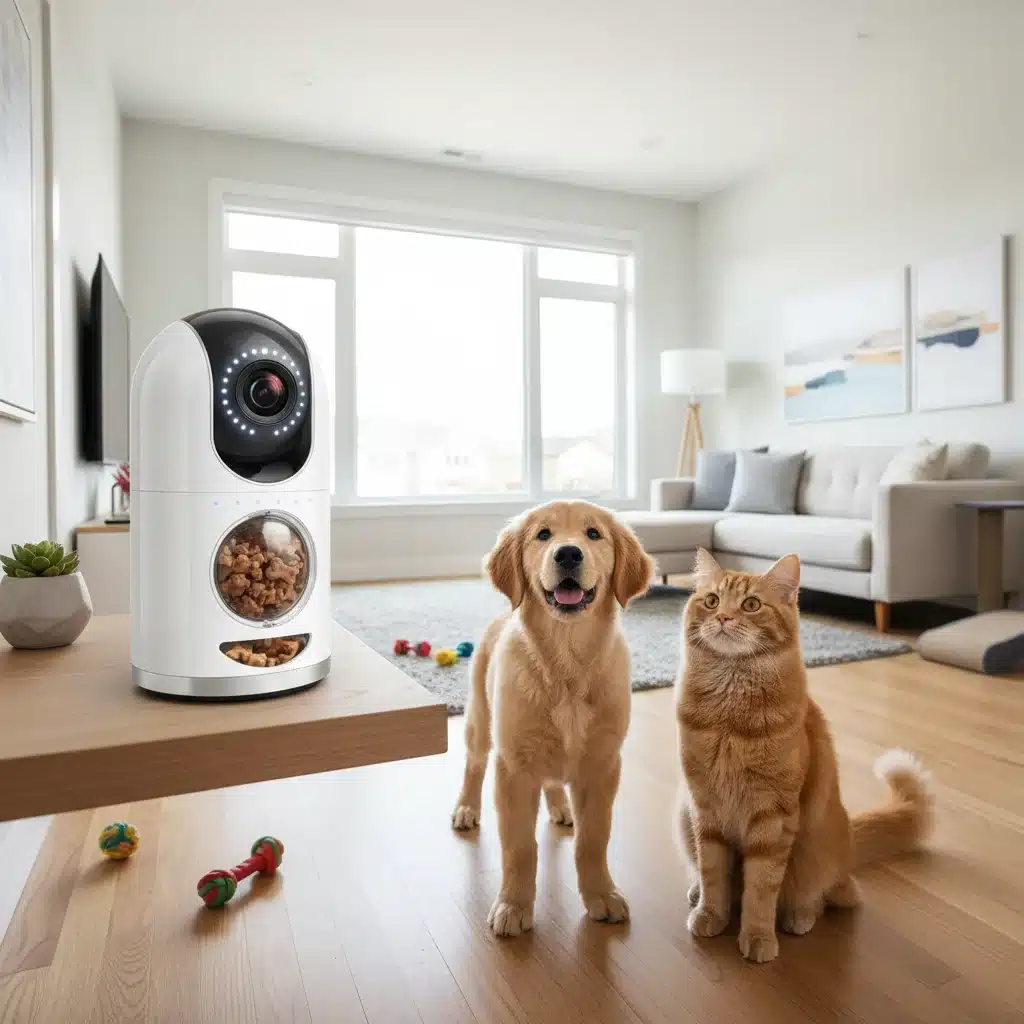
For those who want the control of scheduled feeding without needing to be home, automatic feeders are an effective solution. These modern devices go far beyond simply dispensing kibble on a timer. Smart models let you program multiple meals with exact portions, some accurate to the gram, through a smartphone app. They work like a slow cooker for your cat; you set everything up and the device takes care of the rest.
The underrated factor here is consistency. Maintaining a care routine, whether in your cat’s feeding or in seasonal practices for dogs, strengthens an animal’s overall well-being. Many feeders also have features like voice recording to call your pet at mealtime (and let’s be honest, who hasn’t been late with the cat’s dinner?). This technology represents a significant advance for feline health, ensuring the diet is followed to the letter.
The adoption of animal care technologies shows a growing concern for pets’ quality of life, ranging from nutrition to other aspects such as specific cold-season care. The future of cat feeding points to even greater personalization, with devices that adjust portions based on the animal’s activity level as measured by smart collars.
Most cases of ‘gastritis’ I see in apartment cats improve by 80% with nothing more than a switch to smaller, more frequent meals, every 6-8 hours.
— Dr. Mariana Costa, veterinarian focused on feline nutrition
| Feature | Scheduled Feeding | Free Feeding |
|---|---|---|
| Portion Control | Precise, allows fine-tuning of calories. | None, the cat decides how much it eats. |
| Obesity Prevention | Highly effective, the method recommended by veterinarians. | Ineffective, high risk of boredom-driven weight gain. |
| Instinct Simulation | Imitates the natural cycle of hunting and feeding. | Unnatural, with no cycle of hunger and satiety. |
| Health Monitoring | Easy to notice changes in appetite. | Hard to know whether the cat is eating less or more. |
| Convenience for the Owner | Requires routine and consistency. | Maximum convenience, just fill the bowl. |
| Best For | Most indoor cats, especially those prone to being overweight. | Very active kittens or cats with specific needs, under supervision. |
Building the Perfect Schedule for Your Indoor Cat
Thinking there’s one formula for feeding all cats is a common mistake. The truth is that your cat’s food bowl shouldn’t be treated as a fixed point, but as a dynamic control panel for its health. Creating an effective feeding schedule calls for an analysis that goes far beyond what’s written on the bag of food.
The ideal method is the one that mirrors your animal’s unique biological needs. It’s a made-to-measure plan.
Assessing Your Cat’s Individual Needs
Before setting mealtimes, you need to understand who your cat is. A feeding schedule is less about your convenience and more about its biology. Factors such as age, weight, and even your pet’s personality directly influence its daily nutritional needs. Ignoring these variables is like trying to use the same map for different cities.
Age and Life Stage: From Kitten to Senior
A kitten has a fast metabolism and needs multiple small meals, usually three to four a day, to sustain its growth and high energy levels. A healthy adult cat, on the other hand, generally adapts well to two daily meals. Recent research from the Cornell Feline Health Center, however, indicates that smaller, more frequent portions may better imitate the natural hunting pattern, reducing stress and the chance of compulsive eating.
For senior cats, metabolism slows. They may need fewer calories, but their food should be rich in nutrients to support joint health and kidney function. Reduced mobility may also call for simple adjustments, such as raising the food bowl.
Activity Level and Ideal Weight
Does your cat spend the day exploring shelves or sleeping on the couch? The answer changes everything. A 4.5 kg (10 lb) cat with low activity needs roughly 180-200 calories a day, while an active cat of the same weight may need up to 260 calories. What most people don’t realize is that a small daily excess adds up quickly. Veterinary data indicate that about 59% of domestic cats are above their ideal weight, a risk factor for diabetes and joint problems.
Step by Step: Setting Times and Portions
With the individual information in hand, putting the schedule together becomes a logical process. Start by reading the calorie recommendation on the food packaging and adjust it based on your veterinarian’s guidance and your cat’s activity level. Divide the total daily amount by the number of meals you’ve chosen, whether two, three, or four.
Consistency is your greatest ally. Serving meals at the same times every day creates a routine that reduces your cat’s anxiety (and let’s be honest, a cat meowing for food at 5 a.m. is not the alarm clock anyone wants). Use an accurate measuring cup to make sure your cat food portions are always the same.
Monitoring and Adjustments: The Key to Ongoing Success
The schedule you create today isn’t a final verdict. It’s a living document that should evolve along with your cat. Check your pet’s weight and body condition monthly. Is it gaining weight? It may be time to reduce the portion by 10%. Does it always seem hungry? That may be a sign to talk to your veterinarian about the quality of the food or the feeding frequency.
Adjusting the routine with the seasons and with age is an ongoing part of care. This attention to detail applies to many areas of animal welfare, just as innovations for protecting dogs’ paws in winter show the importance of adapting. True mastery in caring for your cat lies in constantly observing, understanding, and adjusting.
The Impact of Diet and Schedule on Digestive and Behavioral Health
Many owners accept occasional vomiting or agitation before meals as part of the “package” of having a cat. The inconvenient truth is that these signs often point to a direct failure in the schedule and diet, not to some inevitable feline behavior. Predictability isn’t a luxury for cats; it’s a biological need that affects everything from the stomach to their state of mind.
Preventing Common Digestive Problems
A stomach left empty for too long begins producing hydrochloric acid in anticipation of a meal that doesn’t arrive. This leads to gastric irritation and, in turn, bilious vomiting. According to Dr. Mariana Costa, a veterinarian focused on feline nutrition, “most cases of ‘gastritis’ I see in apartment cats improve by 80% with nothing more than a switch to smaller, more frequent meals, every 6-8 hours.” Ignoring this means allowing chronic discomfort.
Feline digestion is a delicate system. What many people don’t realize is that an inconsistent feeding schedule works like a car engine that keeps sputtering, causing unnecessary wear. A study in the Journal of Feline Medicine and Surgery indicated that cats with fixed feeding times had 42% fewer episodes of regurgitation compared with those fed irregularly.
Feeding and Your Cat’s Mental Well-Being
Food-related anxiety is a real and underestimated problem. A cat that doesn’t know when its next meal will come lives in a state of mild, and sometimes severe, stress. That uncertainty can show up in behaviors such as excessive meowing, aggression near the food bowl, or even destroying objects. A feeding routine works as an anchor in your cat’s day, a point of stability in its controlled environment.
This structure creates security. For a creature of habit like the cat, knowing that food will arrive at 8 a.m. and 8 p.m., without fail, eliminates a huge source of worry. This attention to detail is part of a broader view of animal welfare, which includes everything from proper nutrition to innovations in preventive care for every season. The result is a visibly calmer animal, more confident in its territory.
Myths and Truths About Feeding Indoor Cats
That always-full bowl of kibble is, surprisingly, one of the biggest enemies of your cat’s health. The belief that cats self-regulate with free access to food is a dangerous myth. In fact, a study by the Brazilian Veterinary Medical Association revealed that cats with unrestricted access to food are 42% more likely to develop obesity and metabolic problems. They simply eat out of boredom.
Another misconception is that there’s a single schedule formula for everyone. Would you give the same exercise routine to an Olympic athlete and a beginner? Of course not. An active kitten needs more small, frequent meals than a senior cat, which benefits from controlled portions twice a day to maintain its weight.
Animal nutrition is always changing, just as new trends in overall pet wellness keep emerging. Ignoring your cat’s individual needs is like trying to put together a puzzle with the wrong pieces. Real care lies in adapting the routine to your animal’s reality, not in following a generic rule that doesn’t work.
Product and Supplement Innovations for an Optimized Diet
Modern feline nutrition goes far beyond simple dry kibble. Today’s market offers a range of products formulated to meet specific needs, turning the food bowl into a wellness tool. Functional ingredients and new technologies are redefining what it means to feed an apartment cat well.
Wet Food: Beyond Hydration
Many owners still see wet food as a mere treat, but the underrated factor here is its impact on kidney and urinary health. Cats are notorious for drinking little water, and a study in the Journal of Feline Medicine and Surgery indicated that cats on a mixed diet (dry and wet) have a significantly higher total water intake. This dilutes the urine and helps prevent the formation of painful crystals.
But the benefits don’t stop at hydration. Most quality wet foods have a higher protein content and fewer carbohydrates than dry foods. This more closely mirrors a predator’s natural diet. Think of it as comparing a fresh, water-rich salad with a dense protein bar: both nourish, but in fundamentally different ways.
Essential Supplements for Indoor Cats
A cat that doesn’t hunt and spends most of its time indoors has distinct nutritional demands. Targeted supplementation can fill gaps that diet alone might not, especially when it comes to stress, skin health, and digestion.
Omega-3 for Skin and Coat
Omega-3 fatty acids, such as EPA and DHA, are known for their anti-inflammatory properties. “Many apartment cats suffer from dry skin because of air conditioning or heating,” explains Dr. Carolina Faria, a veterinary nutrition specialist. “Supplementing with a good-quality fish oil can reduce itching and improve the coat’s shine within a few weeks, while also cutting down on shedding around the house.”
Probiotics for Gut Health
A cat’s gut is a complex ecosystem. The use of probiotics, or beneficial bacteria, helps keep this system in balance, which improves nutrient absorption and strengthens the immune system. Research from the Cornell Feline Health Center has shown that supplementation with specific strains, such as Enterococcus faecium, can reduce the incidence of digestive disorders by up to 38%. Could your cat’s mood be linked to its gut health?
Functional Treats: Rewards with Benefits
Even treat time has become an opportunity for nutrition. Forget rewards full of empty calories. The trend is toward functional treats, which offer extra benefits while pleasing your cat’s palate.
There are options formulated for tartar control, reducing hairballs (with added fiber), and even with ingredients that promote calm, such as L-tryptophan. This shift toward purpose-driven products follows current trends in pet care, where each item has a clear health function. The future of cat feeding clearly points to ever-greater personalization, tailored to each animal’s unique lifestyle.
Beyond the Bowl: The Future of Feline Nutrition Is Interaction
Rethinking your cat’s feeding schedule is about more than controlling calories; it’s an opportunity to enrich the environment and strengthen the bond between you. The transition from an always-full bowl to scheduled meals turns food from a passive resource into a central event of the day, satisfying the cat’s instinct to hunt and be rewarded. Predictable meals reduce anxiety, resulting in a calmer, more secure animal.
Looking ahead, the next step in the evolution of cat care may be the full integration of feeding with environmental enrichment. Instead of simply putting food in the bowl, how can we turn each meal into a positive mental challenge? Puzzle feeders and hiding portions around the house shouldn’t be seen as occasional tricks, but as standard components of a healthy feeding routine. The question that remains is: how can you turn your cat’s next meal from a simple act of eating into an experience that nourishes both body and mind?
Frequently Asked Questions About Cat Feeding
How many times a day should I feed my adult indoor cat?
For most adult indoor cats, the ideal is to offer two to three smaller meals throughout the day. This frequency helps keep the metabolism stable, prevents excessive hunger between meals, and reduces the risk of digestive problems, such as bilious vomiting, which can occur when the stomach stays empty for too long.
Is it better to leave food out all the time for indoor cats?
Generally, no. Free feeding is one of the main contributors to feline obesity in apartment cats. They tend to eat out of boredom and not just hunger, which leads to excess calorie intake. Scheduled feeding with controlled portions is the safer, healthier approach.
How do I know if my cat is eating the right amount of food?
Monitor your cat’s body condition regularly. You should be able to feel its ribs under a light layer of fat, but not see them. Also check that it maintains a stable weight. The recommendations on the food packaging are a starting point, but they should be adjusted to your pet’s activity level and metabolism.
Is wet food really better for indoor cats?
Wet food offers significant benefits, mainly because of its high water content, which is key to kidney and urinary health in cats, who tend to drink little water. It also usually has more protein and fewer carbohydrates than dry food. A mixed diet combining both types can offer the best of both worlds.
How do I transition my cat to a new feeding schedule?
The transition should be gradual, lasting 7 to 10 days. Start by setting fixed mealtimes and offering a controlled portion. If your cat was used to food always being available, gradually reduce the amount in the “free” bowl while encouraging it to eat at the new times, until it has fully adapted to the new routine.