Mastering Dog Training: Essential Commands for New Pet Owners
Mastering Dog Training: Essential Commands for New Pet Owners
Bringing a new dog into your home is an incredibly exciting experience. Whether you’ve adopted a playful puppy or a wise older dog, establishing a strong foundation of communication and obedience is paramount. This isn’t just about having a ‘good dog’; it’s about building a trusting relationship, ensuring their safety, and making your life together more harmonious. For new pet owners, the world of dog training can seem daunting, but fear not! This comprehensive guide will walk you through the absolute dog training essentials: the ‘Sit,’ ‘Stay,’ and ‘Come’ commands. These aren’t just tricks; they are vital tools for managing your dog’s behavior, preventing dangerous situations, and fostering a deeper bond.
Understanding these dog training basics will empower you to communicate effectively with your furry friend. We’ll delve into the ‘why’ behind each command, the best techniques for teaching them, common pitfalls to avoid, and how to integrate them into your daily routine. By the end of this guide, you’ll feel confident and equipped to embark on a successful training journey with your beloved canine companion. Let’s get started on building a lifetime of good habits and happy memories!
Why These 3 Commands Are Your Dog Training Essentials
Before we dive into the ‘how,’ it’s crucial to understand ‘why’ ‘Sit,’ ‘Stay,’ and ‘Come’ are considered the foundational essential dog commands. These aren’t arbitrary requests; they are commands that directly impact your dog’s safety, your peace of mind, and their ability to integrate well into various environments. Mastering these basic dog obedience skills will open doors to more advanced training and a more enjoyable relationship with your pet.
The ‘Sit’ Command: The Foundation of Calmness and Control
The ‘Sit’ command is often the first thing people teach their dogs, and for good reason. It’s more than just getting your dog’s rear end on the ground; it’s a powerful tool for managing excitement, demanding attention, and initiating other behaviors. When your dog sits, they are in a more controlled and less reactive state. This command is invaluable in countless everyday situations:
- Greeting Guests: A dog that sits calmly when guests arrive is far more pleasant than one that jumps enthusiastically.
- Waiting for Food: Teaching your dog to sit before receiving their meal instills patience and good manners.
- Preventing Jumping: If your dog tends to jump on people, asking for a ‘Sit’ redirects that energy into a more appropriate behavior.
- Photo Opportunities: Want a great picture of your dog? ‘Sit’ is your go-to command.
- Impulse Control: The act of sitting requires a moment of self-control, which is a vital skill for any well-behaved dog.
Think of ‘Sit’ as the ‘pause’ button for your dog. It allows you to gain their attention and establish a moment of calm, which is crucial before moving on to other activities or commands. It’s a cornerstone of effective dog behavior training.
The ‘Stay’ Command: Safety and Patience
Once your dog understands ‘Sit,’ ‘Stay’ takes their obedience to the next level. ‘Stay’ teaches your dog to remain in a specific position (sit, down, or stand) until released. This command is critical for their safety and your control in various situations:
- Preventing Dashing Out: A solid ‘Stay’ can prevent your dog from bolting out an open door or gate into a dangerous street.
- Maintaining Position: It’s useful when you need your dog to wait while you open a car door, gather groceries, or simply need them to be out of the way for a moment.
- Public Etiquette: In public places, a ‘Stay’ allows your dog to remain calm and composed, making them a more welcome companion.
- Grooming and Vet Visits: A dog that can ‘Stay’ makes these often stressful experiences much easier for everyone involved.
- Building Patience: ‘Stay’ inherently teaches patience and impulse control, reinforcing the calm demeanor initiated by ‘Sit.’
The ‘Stay’ command is an extension of your control, giving you the ability to keep your dog safe and responsive even when you’re not right next to them. It’s a testament to good obedient dog training.
The ‘Come’ Command: The Ultimate Lifesaver
The ‘Come’ command, also known as ‘Recall,’ is arguably the most important command you can teach your dog. It’s not just about getting them to return to you; it’s about ensuring their safety in potentially life-threatening situations. A reliable ‘Come’ can literally save your dog’s life:
- Emergency Situations: If your dog slips their leash, gets out of the yard, or is heading towards danger (like a busy road or another aggressive animal), a strong ‘Come’ can avert disaster.
- Off-Leash Freedom: A trustworthy recall is essential for enjoying off-leash activities safely in appropriate areas.
- Preventing Nuisance Behaviors: If your dog is investigating something undesirable or bothering another person or animal, ‘Come’ allows you to intervene quickly.
- Strengthening Your Bond: A dog that comes willingly to you demonstrates trust and a strong connection.
A dog that reliably comes when called is a joy to be around and a dog that is much safer in the world. It is the pinnacle of effective dog safety training and a critical component of responsible pet ownership.
Getting Started: Essential Dog Training Principles
Before you even begin teaching specific commands, it’s vital to understand the underlying principles of successful dog training techniques. These principles will set you and your dog up for success and make the learning process enjoyable for both of you.
Positive Reinforcement: Your Best Friend in Training
The cornerstone of modern, humane, and effective dog training is positive reinforcement. This means rewarding your dog for desirable behaviors. When your dog does something you like, you immediately follow it with something they love – a treat, praise, a favorite toy, or a quick game. This makes them more likely to repeat that behavior in the future.
- Why it Works: Dogs are intelligent and motivated by what benefits them. If good things happen when they ‘Sit,’ they’ll want to ‘Sit’ more often.
- Avoid Punishment: Punishment, especially physical punishment, can lead to fear, anxiety, aggression, and a breakdown of trust. It teaches your dog what *not* to do, but not what *to* do, and can damage your relationship.
- Find High-Value Rewards: What motivates your dog? For some, it’s a piece of chicken; for others, a squeaky toy. Experiment to find what your dog considers a ‘jackpot’ reward for training sessions.
Consistency is Key
Dogs thrive on routine and predictability. Consistency in your commands, expectations, and rewards is crucial. Everyone in the household should use the same commands and hand signals. If one person uses ‘Sit’ and another uses ‘Down’ for the same action, it will confuse your dog and slow down the learning process.
Patience and Persistence
Dog training is a journey, not a destination. There will be good days and challenging days. Your dog won’t learn everything overnight, and that’s perfectly normal. Be patient, stay positive, and celebrate small victories. If you get frustrated, take a break. A frustrated trainer often leads to a confused and unmotivated dog.
Short, Frequent Sessions
Dogs, especially puppies, have short attention spans. Aim for short, frequent training sessions – 5 to 10 minutes, two to three times a day – rather than one long, exhausting session. Keep it fun and end on a positive note, even if it means asking for an easy command your dog knows well.
Timing Your Rewards
The timing of your reward is critical. The treat or praise must be delivered within 1-2 seconds of your dog performing the desired behavior. This immediate feedback helps your dog connect their action with the positive outcome. A clicker can be an excellent tool for precise timing, marking the exact moment your dog does something right.
Teaching the ‘Sit’ Command: A Step-by-Step Guide
The ‘Sit’ command is the gateway to many other behaviors. Let’s break down how to teach this fundamental dog command training.
Step 1: Get Their Attention
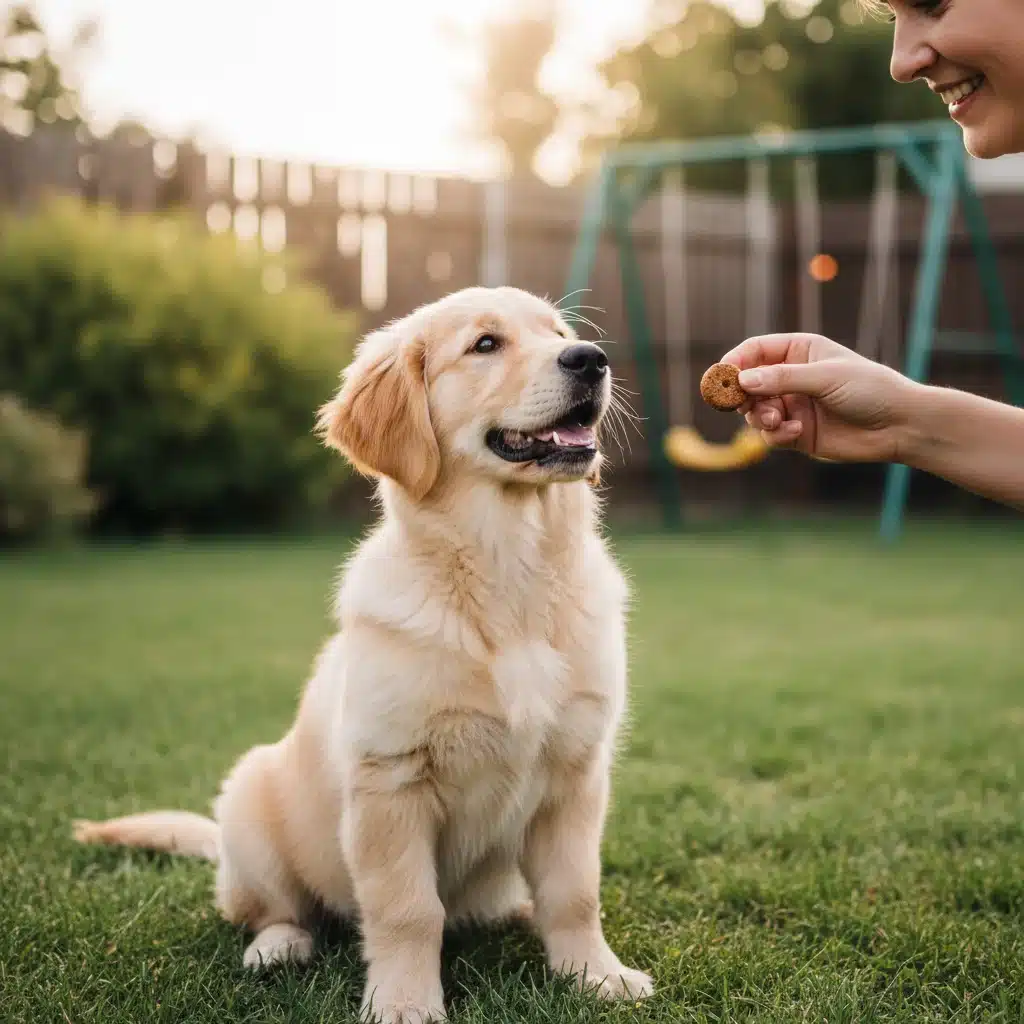
Start in a quiet area with minimal distractions. Hold a high-value treat close to your dog’s nose. Let them sniff it to get their attention and interest.
Step 2: The Lure
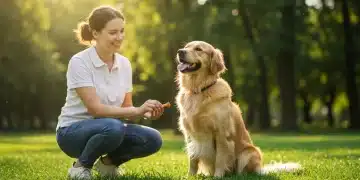
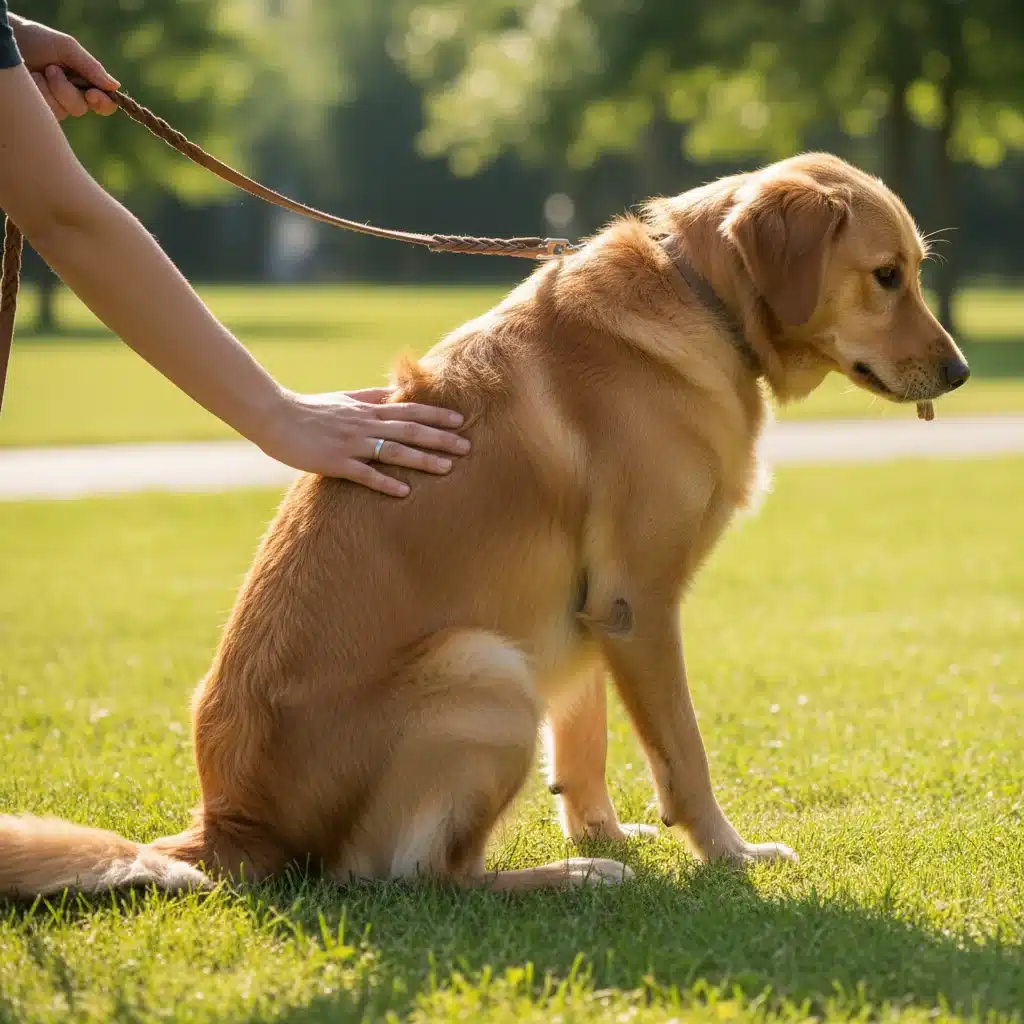
Slowly move the treat up and back over your dog’s head, towards their tail. As their nose follows the treat, their rear end will naturally lower to the ground. The moment their rear touches the ground, say ‘Yes!’ or click your clicker and immediately give them the treat and praise. Repeat this several times until your dog consistently sits when lured.
Step 3: Add the Verbal Cue
Once your dog is consistently sitting with the lure, start adding the verbal cue. Just as you move the treat over their head, say ‘Sit.’ The moment their rear touches the ground, ‘Yes!’ or click, treat, and praise. Your dog will begin to associate the word ‘Sit’ with the action.
Step 4: Fade the Lure
Gradually reduce your reliance on the treat lure. Instead of holding the treat to their nose, make the same hand motion but with an empty hand. If they sit, immediately reward them. If they don’t, go back to using the treat lure a few more times. Eventually, your hand signal will become a subtle cue, or you can even transition to just the verbal command.
Step 5: Practice and Generalize
Practice ‘Sit’ in different locations, with varying levels of distraction. Start in quiet environments and slowly introduce more stimulating settings. Always reward success generously. This helps your dog understand that ‘Sit’ means ‘Sit’ everywhere, not just in your living room.
Troubleshooting ‘Sit’
- My dog jumps for the treat: If your dog jumps, hold the treat lower and move it back more slowly. Don’t reward jumping; wait for all four paws on the ground before luring.
- My dog backs up instead of sitting: You might be moving the lure too far back. Try moving it just above their head, directly backwards.
- My dog isn’t interested in treats: Experiment with different high-value treats (cheese, cooked chicken, hot dogs) or use a favorite toy as a reward.
Teaching the ‘Stay’ Command: Building Patience
Once ‘Sit’ is solid, you can introduce ‘Stay.’ This command requires patience from both you and your dog. Remember, it’s a gradual process.
Step 1: Start with a Sit
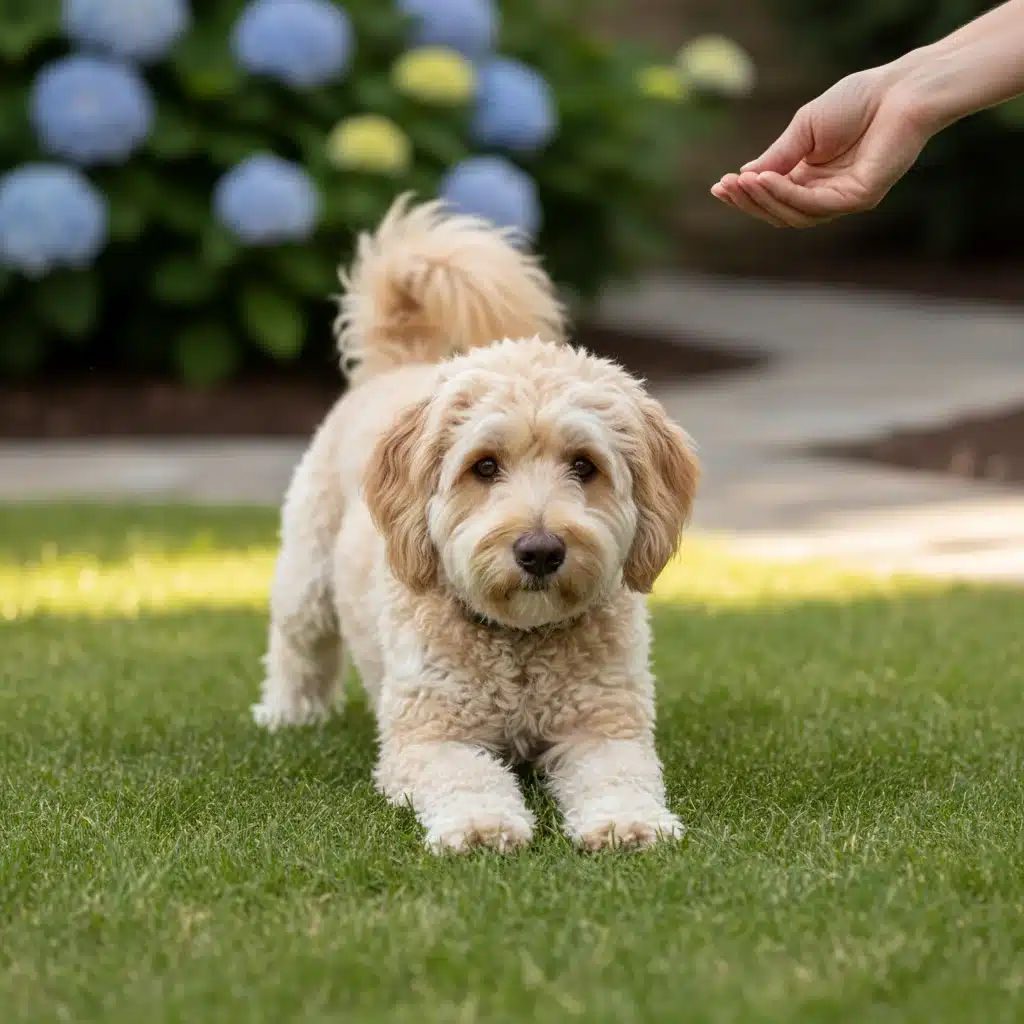
Ask your dog to ‘Sit.’ Once they are sitting, hold your hand up in a ‘stop’ signal (palm facing your dog) and clearly say ‘Stay.’ Immediately take one tiny step back, then step forward and reward your dog while they are still in the ‘Sit’ position. If they move, gently put them back in the ‘Sit’ position and try again, making the duration and distance even shorter. Do not scold them, just reset.
Step 2: Increase Distance and Duration Gradually
Slowly increase the distance you step away and the duration your dog stays. Start with one step and one second. Then two steps and two seconds. Build up very gradually. Always return to your dog to reward them, rather than calling them to you during the initial stages of ‘Stay.’ This reinforces that ‘Stay’ means staying put until you release them.
Step 3: Introduce a Release Word
Once your dog can ‘Stay’ for a few seconds while you’re a few steps away, introduce a release word. A common release word is ‘Okay!’ or ‘Free!’ After your dog has stayed for the desired duration, say your release word with enthusiasm and invite them to move, often followed by a treat or playtime. This teaches them that they are allowed to break the ‘Stay’ only when given the cue.
Step 4: Practice with Distractions
Just like with ‘Sit,’ practice ‘Stay’ in various environments and with increasing distractions. Start with mild distractions (someone walking by) and gradually move to more challenging ones (a ball rolling past). Remember to always set your dog up for success by starting with easy scenarios and rewarding heavily.
Troubleshooting ‘Stay’
- My dog keeps breaking the stay: You’re likely asking too much too soon. Go back to shorter durations and distances. Ensure your release word is clear and consistent.
- My dog anticipates the release: Make your return to them unpredictable. Sometimes walk all the way around them before rewarding, other times just step one foot back.
- My dog gets up before I can reward: Your timing needs to be faster. Reward them the instant they complete the requested duration, or even before they break if you see them about to move.
Teaching the ‘Come’ Command: The Lifesaving Recall
A reliable ‘Come’ is invaluable. This command should always be associated with positive experiences. Never use ‘Come’ to scold your dog or do something unpleasant (like giving them a bath if they hate it).
Step 1: Make It a Party!
Start in a low-distraction environment. Get down low and enthusiastically call your dog’s name followed by ‘Come!’ (e.g., ‘Buddy, Come!’). Use an excited, happy tone of voice. As they approach, praise them lavishly and reward them with a high-value treat or a favorite toy. Make it the most exciting thing ever!
Step 2: The ‘Puppy Ping-Pong’ Game
If you have two people, stand a short distance apart. One person calls the dog, and when the dog reaches them, they get a reward. The other person then calls the dog, and so on. This makes ‘Come’ a fun game and builds a strong positive association with the command. Gradually increase the distance between the two people.
Step 3: Practice in Different Environments
Once your dog is reliably coming indoors, start practicing in a securely fenced yard or a long-line lead. Begin with minimal distractions and gradually introduce more. Always start with easy scenarios where you know your dog will succeed.
Step 4: The ‘Emergency Recall’
For a truly life-saving recall, consider teaching an ’emergency recall’ word that is *only* used for critical situations and is always rewarded with the absolute highest value treat (e.g., a piece of steak or chicken). This word should never be overused or associated with anything negative. It’s your ultimate insurance policy.
Step 5: Never Punish for Coming
This is crucial: never, ever punish your dog when they eventually come to you, even if it took a long time or they were doing something naughty. If you scold them, you teach them that coming to you leads to bad things, which will destroy your recall. Always make coming to you a positive experience.
Troubleshooting ‘Come’
- My dog ignores me: You might be practicing in too distracting an environment too soon. Go back to a quieter space. Ensure your rewards are high-value and your tone of voice is exciting.
- My dog comes part of the way then runs off: This is common. Make yourself more enticing! Get low, clap your hands, run backwards, make silly noises. Don’t chase them; that turns it into a game for them.
- My dog only comes when I have treats: This indicates they are associating ‘Come’ with the visual of the treat. Practice when you don’t have treats visible, but always have them hidden nearby to reward. Vary your rewards and sometimes use praise or a toy.
Integrating Dog Training Essentials into Daily Life
Teaching these commands in structured sessions is just the beginning. The real test and reinforcement come from integrating them into your everyday interactions. This is where practical dog training truly shines.
Opportunistic Training
Look for opportunities throughout the day to ask for a ‘Sit,’ ‘Stay,’ or ‘Come.’ Before putting down their food bowl, ask for a ‘Sit.’ Before crossing the street, ask for a ‘Sit’ and ‘Stay.’ If your dog wanders a little too far in the yard, call them with ‘Come!’ and reward them. These ‘real-life’ practice sessions are invaluable.
Consistency Across the Household
Ensure everyone who interacts with your dog uses the same commands and expectations. If one family member lets the dog jump on them, it undermines the ‘Sit’ training. Hold a family meeting to establish consistent rules and commands.
Proofing Your Commands
Proofing means practicing commands in a wide variety of environments, with different distractions, people, and objects. This helps your dog understand that a command is universal, not just tied to a specific location or context. Start small and gradually increase the difficulty.
Keep It Fun and Rewarding
Always strive to make training a positive and enjoyable experience for your dog. Use a happy tone of voice, generous praise, and high-value rewards. If training feels like a chore, your dog will disengage. End every session on a positive note, even if it’s just a simple ‘Sit’ they perform perfectly.
Beyond the Basics: What’s Next?
Once your dog has a solid grasp of ‘Sit,’ ‘Stay,’ and ‘Come,’ you’ve laid an incredible foundation. These fundamental dog commands will serve you well, but the training journey doesn’t have to end here. You might consider:
- ‘Down’ Command: Another excellent command for calmness and control.
- ‘Leave It’ Command: Crucial for preventing your dog from picking up potentially dangerous items.
- ‘Drop It’ Command: Teaches your dog to release an item they have in their mouth.
- Leash Training: Ensuring your dog walks politely on a leash without pulling.
- Socialization: Continuing to expose your dog to new people, places, and other dogs in a positive way.
- Enroll in Classes: Puppy classes, basic obedience classes, or even advanced training like agility or scent work can be incredibly enriching for both you and your dog.
Remember, continuous learning and engagement are vital for a happy and well-adjusted dog. Training isn’t a one-time event; it’s an ongoing dialogue that strengthens your bond and enhances your life together.
Conclusion: A Lifetime of Good Habits with Dog Training Essentials
Embarking on the journey of dog training essentials with your new pet owner is one of the most rewarding aspects of pet ownership. By focusing on the ‘Sit,’ ‘Stay,’ and ‘Come’ commands, you are not just teaching tricks; you are instilling vital life skills, ensuring your dog’s safety, and building a foundation of trust and communication that will last a lifetime. These commands are the pillars of responsible pet ownership, transforming a chaotic household into a harmonious one.
Remember the core principles: positive reinforcement, consistency, patience, and making every training interaction fun. Celebrate every small success and don’t get discouraged by setbacks. Every moment you spend teaching your dog is an investment in their well-being and your shared happiness. With dedication and love, you’ll soon have a well-behaved, confident, and joyful canine companion who understands and respects your guidance. So, grab those treats, get ready with your clicker, and enjoy the incredible journey of teaching your dog these invaluable essential dog training commands!