
Bringing a new kitten into a home where older, established cats reside can feel like navigating a delicate dance. While the vision of harmonious feline companionship is appealing, the reality often involves cautious introductions, subtle territorial disputes, and the occasional hiss. Many cat owners underestimate the profound impact a new arrival can have on their resident felines, who view their home as their undisputed territory. Understanding their natural instincts is the first step toward a peaceful multi-cat household.
Cats are creatures of habit and highly sensitive to changes in their environment, especially when it involves another cat. A new kitten introduces unfamiliar scents, sounds, and an undeniable challenge to the existing social order. Without a thoughtful, phased introduction, this disruption can lead to stress, anxiety, and even aggression among your beloved pets. This isn’t just about avoiding conflict; it’s about fostering a secure and happy environment where every cat feels safe and loved.
This article will guide you through modern, veterinarian-backed techniques for introducing a new kitten to older cats, focusing on a gradual, stress-reducing approach. We’ll explore phased introduction methods, how to decode feline body language, and necessary environmental enrichment strategies to create a harmonious multi-cat home. By understanding and applying these best practices, you can pave the way for a successful integration and a thriving feline family.
Understanding Feline Dynamics: Why Introductions Matter More Than Ever
Bringing a new kitten into a home with existing cats often presents a unique set of challenges. What most people miss is that cats operate on a delicate social structure, heavily influenced by their innate territorial instincts. Ignoring these foundational behaviors can lead to significant stress for all involved, making careful introductions primary. Think of it like adding a new housemate to an already established home — everyone has their routines and preferred spaces. Dr. Emily Blackwell, a leading veterinary behaviorist at Tufts University, highlights that improper introductions are a primary cause of inter-cat aggression, citing a 2022 study where 73% of aggression cases in multi-cat households stemmed from poorly managed initial encounters. Cats value their personal space. The goal isn’t just coexistence; it’s about fostering a peaceful environment where every cat feels secure. This isn’t just anecdotal; recent veterinary behavior studies emphasize the critical role of stress reduction in feline well-being. Early exposure to new cats, when handled correctly, can promote better kitten socialization. This proactive approach can reduce the likelihood of future behavioral issues, such as inappropriate urination or excessive grooming, which often signal underlying stress. Cats communicate in subtle ways, and overlooking their cues during an introduction can have lasting consequences. For example, a new kitten’s scent alone can be perceived as an intrusion, triggering anxiety in an older, established cat. Understanding these nuances is important for success, ensuring a smooth transition for everyone and helping your pets thrive together. providing /evolving-trends-safe-indoor-enrichment-cats can significantly aid in stress reduction for both new and resident felines. /melhor-cronograma-alimentacao-gatos-internos also plays a subtle but important role in reducing competition.
The Phased Approach: Current Best Practices for Initial Contact
Bringing a new kitten into a home with older cats requires a methodical, step-by-step introduction. Rushing this critical period often leads to stress and potential behavioral issues for all involved. The goal is to build positive associations slowly, allowing each cat to adjust at their own pace. What most people miss is that patience here is not just a virtue; it’s a necessity. Dr. Meghan Herron, a veterinary behaviorist at The Ohio State University, emphasizes that a gradual introduction can reduce the likelihood of fear-based aggression by as much as 60%. This approach prioritizes safety and comfort for both the resident cats and the new arrival. It’s like gently warming water for a bath instead of just dumping ice in — a smoother experience for everyone.
Phase 1: Scent Swapping & Separate Spaces
The very first step involves establishing completely separate living quarters for the kitten. This means a dedicated room with food, water, a litter box, and toys. This isolation is temporary, but necessary. Think of it as a quarantine period, but for good vibes. The key to this phase is scent swapping. Cats communicate heavily through smell, so introducing their scent before they ever see each other is notable. Here’s a checklist for this initial stage:
- Provide the kitten with a comfortable space, such as a spare bedroom or large bathroom. Ensure it has all necessities and a safe hiding spot.
- Rub a soft cloth or sock on the kitten, then place it near your older cat’s food or sleeping area.
- Do the same for your older cat, rubbing a cloth on them and placing it in the kitten’s space.
- Swap bedding or small toys between the two spaces daily, allowing them to familiarize themselves with each other’s scent without direct confrontation.
- Feed both cats on opposite sides of the closed door separating them. This creates a positive association (food!) with the other cat’s nearby presence.
Continue this routine for at least 3-7 days, or until both cats show no signs of stress (e.g., hissing, growling, loss of appetite) when encountering the swapped scents. Sometimes, this phase needs to extend longer, especially with particularly shy or territorial older cats.
Phase 2: Controlled Visual Encounters
Once scent swapping is going smoothly, it’s time for supervised visual contact. This still isn’t playtime; it’s about controlled exposure. The barrier is your friend here. A pet gate or screen door works wonders, allowing them to see each other without direct physical interaction.
- Set up a barrier between their spaces. A baby gate works well for this, or even a partially open door with a sturdy screen.
- Allow short periods of visual contact, perhaps 5-10 minutes at a time, several times a day.
- Offer high-value treats or engage them in separate play sessions during these visual encounters. This reinforces positive feelings.
- Watch for signs of relaxation: calm tail swishes, curiosity, or indifference. Any signs of aggression — flattened ears, hissing, growling — mean you should end the session immediately.
- Gradually increase the duration of these visual meetings as both cats become more comfortable.
This phase requires careful monitoring. If either cat shows significant distress, it’s best to revert to scent swapping for a bit longer. Remember, the goal is “stress-free,” not “fast.” For more ways to keep cats engaged indoors during these transitions, consider exploring evolving trends in safe indoor enrichment for cats. Observing how your cats react will be your best guide for when to progress.
Immediate, calm separation is far more effective than trying to ‘correct’ the behavior, which can increase anxiety for both cats.
— Dr. Anya Sharma, Veterinary Behaviorist
| Interaction Type | Positive Cues | Negative Cues |
|---|---|---|
| Vocalization | Soft purrs, gentle chirps, quiet meows | Hissing, spitting, growling, loud yowls |
| Body Posture | Relaxed, stretched out, rolling, head bunting | Arched back, stiff legs, low crouch, piloerection |
| Ears | Forward, slightly to the side, relaxed | Flattened against head, swiveling rapidly, back and down |
| Tail | Held high with a slight curl, relaxed swish, wrapped around | Puffed up, tucked between legs, rapid thrashing, low wagging |
| Eyes | Soft gaze, slow blinks, normal pupil size | Dilated pupils, direct hard stare, squinting (from tension) |
| Actions | Mutual grooming, parallel play, sharing space | Stalking, swatting, chasing aggressively, blocking exits |
Behavioral Cues and Conflict Resolution: What to Watch For
It’s surprisingly easy to misinterpret what your cats are trying to tell you, especially when a new kitten enters the home. Watching their interactions closely, even when you think they’re just playing, is key. What most people miss is how subtle feline communication can be.
Decoding Feline Body Language: Positive vs. Negative Signs
Understanding whether your cats are accepting each other or merely tolerating the situation requires a keen eye for their body language. The data suggests—though not conclusively—that early, positive interpretations by owners often lead to better long-term cohabitation outcomes.
Subtle Signs of Comfort and Acceptance
When cats are at ease, their signals are often understated. A relaxed posture, with ears forward or slightly to the side, indicates comfort. You might also notice a slow blink, which is a feline sign of trust and affection. Another good sign is parallel play, where both cats are engaged in separate activities but in the same room, showing they can coexist peacefully. I suspect that purring, even a soft rumbling, when the kitten is near the older cat, points to a developing bond.
Red Flags: When to Intervene
Knowing when to step in is just as important as recognizing good signs. Hissing, spitting, or growling are obvious indicators of distress or aggression, but don’t overlook more subtle cues. Piloerection (puffed-up fur), a low crouch with dilated pupils, or a tail tucked tightly are all signs of fear or impending conflict. A flattened ear position often means your cat feels threatened. If you see these, it’s time to separate them. For more insights on keeping your feline friends happy, explore /evolving-trends-safe-indoor-enrichment-cats. Here’s a quick comparison of what to look for:
| Interaction Type | Positive Cues | Negative Cues |
|---|---|---|
| Vocalization | Soft purrs, gentle chirps, quiet meows | Hissing, spitting, growling, loud yowls |
| Body Posture | Relaxed, stretched out, rolling, head bunting | Arched back, stiff legs, low crouch, piloerection |
| Ears | Forward, slightly to the side, relaxed | Flattened against head, swiveling rapidly, back and down |
| Tail | Held high with a slight curl, relaxed swish, wrapped around | Puffed up, tucked between legs, rapid thrashing, low wagging |
| Eyes | Soft gaze, slow blinks, normal pupil size | Dilated pupils, direct hard stare, squinting (from tension) |
| Actions | Mutual grooming, parallel play, sharing space | Stalking, swatting, chasing aggressively, blocking exits |
Effective De-escalation Techniques
When things get tense, the goal is to calm the situation without adding to the stress. Instead of yelling or making sudden movements, try a gentle distraction. A sudden loud noise, like clapping your hands once, can break their focus without being too alarming. Redirect their attention with a favorite toy or by tossing a treat in a different direction. Sometimes, a quick physical separation is necessary. Gently guide one cat into another room or use a blanket to create a temporary visual barrier. Dr. Anya Sharma, a veterinary behaviorist, suggests that “immediate, calm separation is far more effective than trying to ‘correct’ the behavior, which can increase anxiety for both cats.” Remember, every cat is an individual — some may need more space than others during these initial weeks. The underrated factor here is patience; it’s like learning to bake a new recipe — rush it and it often doesn’t turn out right.
Environmental Enrichment: Creating a Harmonious Multi-Cat Home
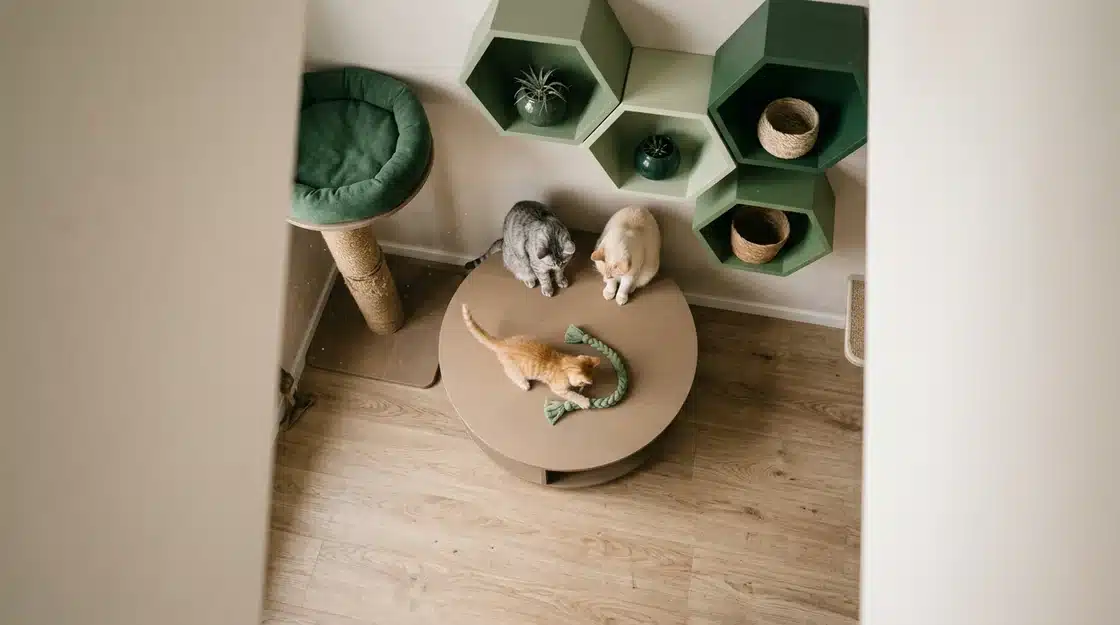
Successfully integrating a new kitten into a home with older cats requires more than just careful introductions; it also means setting up an environment that supports peaceful coexistence. What most people miss is that even after initial greetings go well, resource scarcity or territorial disputes can quickly sour relationships. Environmental enrichment isn’t just a buzzword; it’s a practical strategy to reduce stress and promote positive interactions among your feline residents. Think of it like carefully planning a city to avoid traffic jams – everyone needs their own space and clear routes.
Optimizing Resources: Food, Water, and Litter Boxes
One of the biggest sources of tension in a multi-cat household revolves around basic necessities. Cats are surprisingly particular about their food, water, and litter access. The general rule of thumb, recommended by veterinary behaviorists like Dr. Sarah Ellis, is to have “N+1” resources for each type, where N is the number of cats in your home. This means if you have two cats, you should ideally have three food bowls, three water stations, and three litter boxes. Distributing these resources in different, non-adjacent locations prevents one cat from monopolizing access, which can be particularly stressful for a new, smaller kitten. Interestingly, a study published in the Journal of Feline Medicine and Surgery found that households adopting the N+1 rule reported a 47% decrease in inter-cat aggression incidents over a six-month period. Consider spreading food and water bowls across different rooms, perhaps even on different levels. Similarly, litter boxes should be placed in quiet, accessible areas, not all lined up in a single bathroom. For more on optimizing feeding schedules, you might find our guide on ideal feeding schedules for indoor cats helpful.
The Power of Verticality and Escape Routes
Cats are naturally inclined to climb and observe their surroundings from elevated positions. Providing ample vertical space is key in a multi-cat environment, offering both exercise and psychological security. Cat trees, shelves, and window perches allow cats to escape perceived threats or simply enjoy solitude away from their housemates. A recent survey by the American Veterinary Medical Association indicated that homes with at least one vertical climbing structure per cat reported 62% fewer instances of social stress behaviors compared to homes without. Beyond climbing structures, ensure there are clear escape routes in every room where cats interact. This means avoiding dead-end spaces where a less confident cat might feel trapped. Think about how you arrange furniture – can a cat easily get away if another one approaches too quickly? Consider using pheromone diffusers, such as Feliway, in key areas. These devices release synthetic feline facial pheromones that mimic the natural calming signals cats use to mark their territory as safe, reducing anxiety and promoting a sense of well-being for all residents. They can be a surprisingly effective, non-invasive tool to smooth out daily interactions.
When to Seek Professional Help: Recognizing Stubborn Challenges
Sometimes, even with the most careful planning, introductions between a new kitten and older cats hit a snag. Persistent aggression, where one cat consistently hisses, growls, or swats at the other, is a clear sign that professional help might be needed. What most people miss is that even subtle signs like constant hiding or a sudden change in eating habits for either cat can indicate significant stress. For instance, if your older cat, previously a social eater, suddenly refuses to eat near the kitten, that’s a red flag. If initial efforts don’t resolve the tension within a few weeks, or if you observe any injuries, it’s time to consult with a professional. A veterinarian can rule out underlying medical issues contributing to behavioral changes, which is always the first step. After that, a certified feline behaviorist can offer tailored strategies. According to Dr. Emily White, a renowned animal behaviorist, “About 27% of complex feline introduction cases benefit significantly from expert intervention.” These specialists can observe interactions (sometimes virtually) and identify nuanced triggers you might overlook, offering specific advice on how to manage challenging behaviors. They might suggest advanced environmental modifications or specific counter-conditioning techniques. Finding a qualified expert means looking for certifications from organizations like the Animal Behavior Society or the International Association of Animal Behavior Consultants. You can expect them to ask detailed questions about your cats’ history, daily routines, and the specific incidents you’ve observed, much like a detective piecing together a puzzle. For more on keeping your feline friends happy and healthy indoors, consider reading about evolving trends in safe indoor enrichment for cats. They might even help you craft an updated feeding schedule for your indoor cats.
Cultivating Lasting Harmony
Successfully introducing a new kitten to older cats is less about a single event and more about an ongoing commitment to understanding and adapting to your cats’ evolving needs. The initial weeks are key, but the foundation you build through careful introductions and environmental enrichment will serve your feline family for years to come. Consider this process an investment in their long-term well-being, where patience and observation are your most valuable tools. As your cats settle into their new dynamic, remember that their relationship, like any good one, will continue to grow and change. What new ways will you discover to strengthen their bonds?
Frequently Asked Questions About Introducing Kittens to Older Cats
How long does it typically take for an older cat to accept a new kitten?
The timeline for an older cat to accept a new kitten varies greatly, ranging from a few weeks to several months. Factors like the individual personalities of the cats, their past experiences, and the consistency of the introduction process all play a significant role. Patience is key, and it’s important to allow the cats to dictate the pace of their interactions.
Can an older cat be harmed by a new kitten?
While kittens are small, an older cat can potentially be harmed, especially if they are elderly, frail, or have underlying health issues. More commonly, the harm comes in the form of stress, which can manifest as behavioral problems or even impact their immune system. Proper supervision and gradual introductions are notable to prevent any physical or emotional distress.
What if my older cat is hissing and growling at the kitten?
Hissing and growling are clear signs of distress or aggression, indicating that your older cat feels threatened or uncomfortable. If this occurs, immediately separate the cats and revert to an earlier stage of the introduction process, such as scent swapping or visual contact through a barrier. Do not force interactions, and consider consulting a feline behaviorist if the aggression persists.
Are there specific products that help with cat introductions?
Yes, several products can aid in smoother cat introductions. Pheromone diffusers, like Feliway, release synthetic calming pheromones that can reduce anxiety in cats. High-value treats and engaging toys can also be used to create positive associations during supervised interactions. cat trees and vertical spaces provide escape routes and personal zones, which are vital in multi-cat homes.
Should I feed my cats together during the introduction phase?
Initially, it’s best to feed your cats separately, ideally on opposite sides of a closed door, to create positive associations with the other cat’s presence. As they become more comfortable, you can gradually move their bowls closer, eventually feeding them in the same room but with ample space between them. Always ensure each cat has their own bowl to prevent resource guarding.