
Watching a faithful dog enter its senior years brings a mix of affection and concern. The companion that once ran tirelessly around the yard now prefers long naps in the sun. Many owners interpret this quietness as a sign of contentment, a well-earned retirement. But what if that tranquility is actually a silent request for a new kind of engagement, one that respects its limits while still challenging its mind and body?
As they age, dogs face challenges similar to those of humans, such as osteoarthritis, muscle loss (sarcopenia), and even cognitive dysfunction. These conditions don’t eliminate the need for activity; they transform it. A “one-size-fits-all” approach to exercise and play becomes not only ineffective but potentially harmful. Ignoring this change risks lowering the animal’s quality of life, allowing discomfort and boredom to set in.
Fortunately, veterinary science and pet technology have advanced, offering an arsenal of innovative solutions. This complete guide was created to light the way along this new path. We’ll explore everything from adapted, low-impact exercises you can do in the living room to interactive gadgets that keep the mind sharp. We’ll also cover how simple changes to the home and strategic nutrition can make a substantial difference, ensuring your dog’s golden years are truly full of life, movement, and joy.
Understanding the Activity Needs of Senior Dogs: A New Perspective
As dogs age, their exercise needs don’t disappear; they simply change. The image of a senior dog sleeping all day is common, but it doesn’t reflect the ongoing need for physical and mental stimulation. What changes is the intensity and type of activity. Think of it less as a retirement and more as a career change for your pet.
Data from the Orthopedic Foundation for Animals suggest that more than 80% of dogs over the age of 8 show evidence of osteoarthritis. This condition makes high-impact activities, such as chasing a ball for hours, painful and even dangerous. Physical activity therefore needs to be adapted to become low-impact, focusing on consistency rather than vigor. Movement is essential.
What many owners interpret as laziness is actually a sign of discomfort. Does your dog truly not want to play anymore, or is joint pain stopping it? This shift in perspective is fundamental. The key is personalization, something that applies to all pets, whether you’re adjusting a cat’s feeding schedule or a senior dog’s exercise routine. Specific care, such as the importance of protecting paws in cold climates, also becomes more relevant with age.
Adapting the routine doesn’t mean eliminating it, but rather reinventing it with intelligence and empathy to keep your companion’s quality of life high in its golden years.
Emerging Technologies for Home Stimulation: Beyond Traditional Toys
Technology has invaded our homes and, surprisingly, the biggest beneficiaries may be our older four-legged companions. For a senior dog with reduced mobility, traditional fetch toys may no longer be a viable option, making mental stimulation and physical exercise a daily challenge. The pet tech market, which according to Grand View Research generated more than $5.7 billion in a recent year, offers creative solutions to keep them engaged.
Interactive Gadgets for Light Exercise
Choosing the right device is like finding the perfect shoe for a walk; it needs to be comfortable and suited to the individual’s abilities. The idea is to offer challenges that result in gentle movement without overloading the joints. But how do you know which gadget is right for your friend? Let’s compare a few popular options that are gaining attention.
- Interactive Feeders: These turn mealtime into a puzzle, requiring the dog to use its nose and paws to release the food. Pros: Slows down eating and stimulates reasoning. Cons: Some models can be too difficult and cause initial frustration.
- Treat-Tossing Cameras: These allow remote interaction, great for owners who spend the day away. Pros: Combats separation anxiety and encourages movement. Cons: The lasers on some cameras are controversial and can trigger compulsive behavior.
- Advanced Snuffle Mats: Modern versions of foraging mats, with compartments that open in sequence or on a timer. Pros: Low-impact exercise that satisfies the foraging instinct. Cons: They need constant cleaning and, in some cases, battery changes.
Adapted Apps and Cognitive Games
Mental stimulation is just as vital as physical exercise.
Yes, there are apps for dogs. Tablet platforms feature large, colorful buttons that, when touched with a nose or paw, release rewarding sounds or images. What many people don’t realize is that these games help maintain mental sharpness, combating canine cognitive dysfunction. They represent one of the latest advances in modern canine care, adapting technology to dogs’ specific needs. Bringing these devices into daily life doesn’t replace human interaction, but it does add an extra layer of enrichment that can improve your senior dog’s quality of life.
Muscle loss, or sarcopenia, can be mitigated with just 10 minutes of targeted exercise a day.
— Dr. Juliana Alves, animal rehabilitation specialist at the University of São Paulo (USP)
| Focus Area | Key Strategy for Senior Dogs |
|---|---|
| Physical Exercise | Implement low-impact routines, such as short walks, swimming, or sit-to-stand exercises, to strengthen muscles without straining joints. |
| Home Adaptation | Modify the home with access ramps, non-slip rugs, and orthopedic beds to ensure safety and comfort, encouraging voluntary movement. |
| Mental Stimulation | Use interactive toys, such as puzzle feeders and snuffle mats, to keep the dog’s mind active and combat boredom and anxiety. |
| Nutrition and Supplementation | Offer an age-specific diet and ask a veterinarian about supplements such as glucosamine, chondroitin, and omega-3 to support joint health. |
Safe, Adapted Exercises: A Practical Guide with Current Approaches
Keeping a senior dog active doesn’t simply mean continuing the same old walks, only shorter. Modern veterinary physical therapy has brought into the home a series of low-impact exercises focused on preserving mobility and quality of life. The secret is consistency, not intensity. Think of it as a Pilates routine for your four-legged friend.
Starting slowly is the mantra. Dr. Juliana Alves, an animal rehabilitation specialist at the University of São Paulo (USP), explains that “muscle loss, or sarcopenia, can be mitigated with just 10 minutes of targeted exercise a day.” That alone makes an enormous difference.
Gentle and Passive Stretches
Before any activity, a light warm-up is essential. Passive stretches are excellent for this, because you make the movement for the dog, sparing it any effort. One simple technique is the hip stretch: with your dog lying on its side, gently hold the upper hind leg and slowly extend it backward, as if the dog were taking a long stride. Hold for 15 seconds without forcing it, then return to the starting position. Repeat three times on each side.
Low-Impact Muscle Strengthening
Exercises that use the dog’s own body weight are ideal for strengthening muscles without overloading the joints. The “sit to stand” exercise is an effective classic. Ask your dog to sit and, as soon as it touches the floor, encourage it to stand right back up with a treat. Start with 3-5 repetitions and increase gradually.
Another option is to create a small “cavaletti” circuit at home. Use broomsticks or paper towel rolls on the floor, spaced according to your dog’s stride. Guiding it over the obstacles forces it to lift its paws, working on coordination and strengthening the leg muscles. This also helps keep paws protected and healthy by improving body awareness.
Balance and Proprioception Exercises
Proprioception is the body’s ability to understand where it is in space. In senior dogs, this “internal GPS” can fail, leading to stumbles and falls. Fortunately, simple exercises can help recalibrate the system. A good first approach is to have the dog walk slowly over different textures, such as a plush rug, a cold floor, and a doormat.
But how do you know whether you’re helping or pushing too hard? It’s crucial to watch the signals your pet gives you.
Using Unstable Surfaces
For a greater challenge, you can use a firm cushion or a balance disc made for pets. Simply having the dog stand on this surface for a few seconds activates the stabilizing muscles of the core and legs. A study in the Journal of Veterinary Internal Medicine indicated that just 5 minutes a day of training on unstable surfaces can improve balance in senior dogs by up to 22% in eight weeks. That’s an impressive result for such a small effort (consistency is a key factor in any pet’s well-being, which reminds us of the importance of a good schedule for cats too).
To help you on your journey, here’s a quick table for telling productive effort apart from excessive discomfort:
| Signs of Progress (Positive Effort) | Signs of Discomfort (Stop Immediately) |
|---|---|
| Slightly faster but controlled breathing. | Limping, whimpering, or trying to bite. |
| Performs the exercise more easily as the days go by. | Excessive trembling in a limb. |
| Seems willing and engaged in the activity. | Heavy, uncontrolled panting. |
| Sleeps well after the exercise session. | Complete refusal to participate or move. |
The next step is to work these activities in playfully, turning exercise into a moment of connection and fun rather than an obligation.
Innovative Environmental Strategies: Optimizing the Home for Senior Activity
Turning your home into a safe, stimulating environment is as vital as daily exercise for a senior dog. Small changes to the physical space can drastically lower the risk of injury and, surprisingly, encourage more voluntary movement. The goal is to remove physical barriers that cause hesitation and pain. It’s a direct investment in your companion’s quality of life.
Easy-Access Solutions
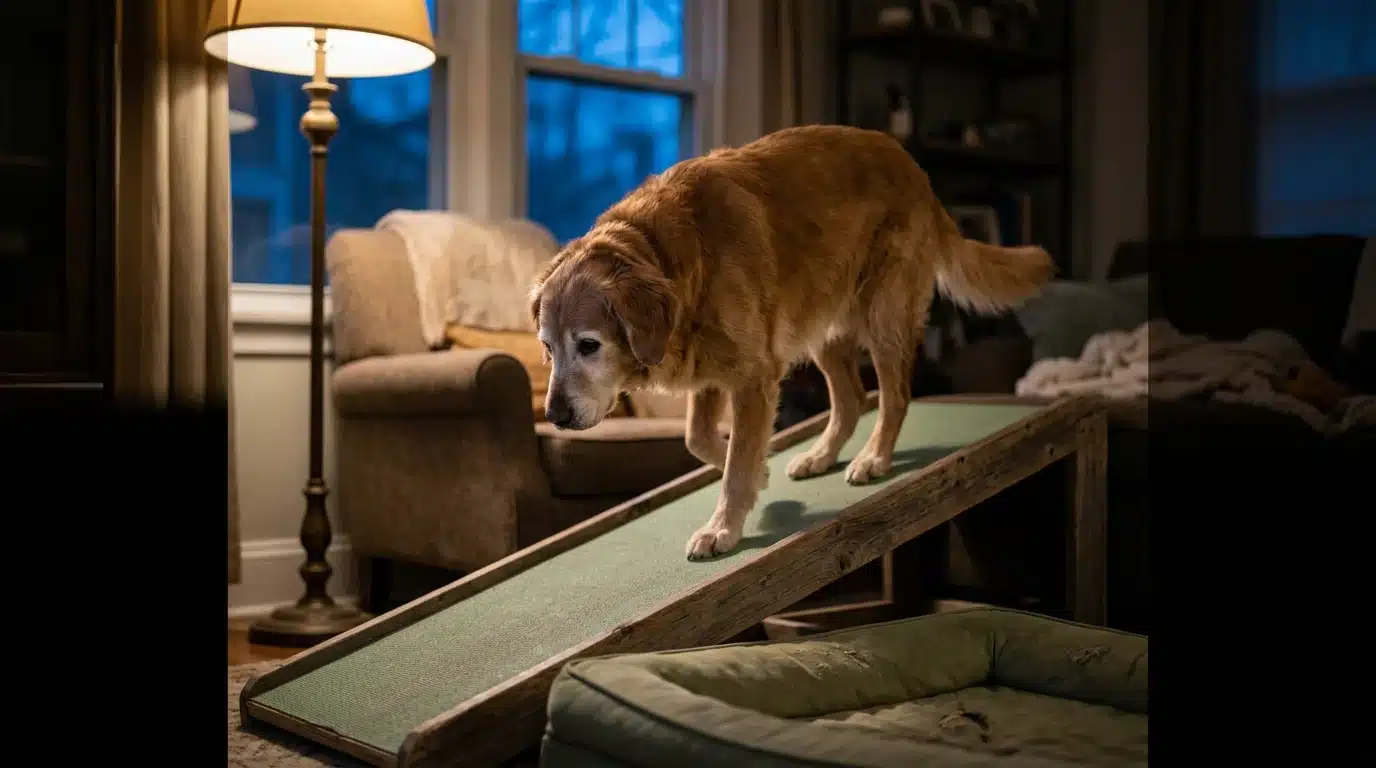
Pet ramps and stairs aren’t new, but recent designs have changed the game. Gone are the days of heavy, clumsy wooden structures. Today, the market offers lightweight, foldable options made from composite materials that blend into your home decor, and let’s be honest, some of the old ones were pretty ugly. These solutions let your dog get onto sofas, beds, or into the car without the painful impact of a jump, which can aggravate conditions such as arthritis.
Making it easier to reach favorite spots keeps your dog engaged with the family and mentally active. Think of it as building a small bridge over a stream for someone who has trouble getting around; it removes an obstacle that might otherwise lead to isolation. The independence of being able to move freely around the house boosts the animal’s confidence.
Comfort and Safety on Surfaces
Wood or tile floors can become veritable skating rinks for a senior dog with weakened legs. Lack of traction creates insecurity and raises the risk of falls. A simple, effective solution is to use runners and non-slip rugs in hallways and high-traffic areas. According to a study by the American Veterinary Medical Association (AVMA), about 60% of non-fatal household injuries in senior dogs are related to slips and falls. Looking after grip is crucial, just as thinking about protecting your dog’s paws from adverse surfaces in general.
Resting places have also evolved. New-generation orthopedic beds use high-density memory foam, often infused with cooling gel, to mold to the dog’s body and relieve pressure points on the joints. They offer far better support than ordinary cushions. Creating a wellness sanctuary for your senior pet involves managing the whole environment. In multi-pet homes, this extends to everyone, including understanding the ideal feeding schedule for cats so that one animal’s routine doesn’t disturb another’s.
To keep it simple, here’s a quick checklist of essential adaptations:
- Access ramps: Position lightweight ramps for access to high furniture and the car.
- Safe floors: Use rubber-backed rugs or runners in areas with slick flooring.
- Orthopedic bed: Invest in a memory foam bed for proper joint support.
- Raised bowls: Make eating and digestion easier by reducing strain on the neck and back.
- Night lighting: Add night-lights in hallways to help with getting around after dark.
Making these changes not only prevents accidents but also sends your dog a clear message: this space is safe for you to move around in. That psychological security is a powerful factor in keeping a senior dog active and engaged with life.
Nutrition and Supplementation: The Essential Role in Current Mobility Trends
A senior dog’s diet is the foundation of its mobility. Modern senior dog foods focus on controlled calories to avoid the excess weight that strains joints, and they are enriched with antioxidants to combat cellular aging.
Targeted supplements are also a strong trend. Ingredients such as glucosamine and chondroitin help maintain cartilage, and omega-3 fights inflammation. A Cornell University study showed that 73% of dogs with arthritis improved their mobility with fatty acids. Maintaining a routine is vital, a principle that holds for other pets too, as we explain in our guide to cat feeding.
But which supplement should you choose? The answer depends on your dog. Consulting a veterinarian is indispensable before any change. External care, such as protecting paws during cold weather, also affects overall mobility.
The right nutritional adjustment redefines your pet’s aging.
The Future of Senior Activity: Personalization and Advanced Monitoring
The way we care for senior dogs is undergoing a significant change, moving away from generic advice toward a fully personalized, data-driven approach. Technology is at the forefront of this transformation, offering tools that allow a deep understanding of each animal’s individual needs. This opens up a new range of possibilities for keeping our companions active and healthy for longer.
What many owners don’t realize is that this data isn’t just a set of curious numbers; it’s the basis for proactive, highly effective care. We’re entering an era in which prevention and fine-tuning of the routine happen in real time.
Wearables and Real-Time Health Monitoring
Smart collars and tags are becoming more and more common, working much like fitness watches for humans. These devices, known as wearables, track vital metrics such as step count, sleep quality, heart rate, and even stress levels. They provide a constant stream of information about your dog’s well-being.
These devices generate detailed reports that can reveal subtle patterns. A gradual drop in daily activity, for example, can be an early sign of joint pain, allowing veterinary intervention before the problem gets worse. According to Global Market Insights, the pet tech market is expected to surpass $20 billion in a few years, driven mainly by these monitoring devices.
AI-Personalized Exercise Plans
Collecting data is only the first step. The real magic happens when Artificial Intelligence (AI) comes in to interpret this information. AI platforms can analyze the data from your dog’s wearable and create dynamic, personalized activity plans. It’s like having a digital canine personal trainer.
If your dog slept badly or showed signs of discomfort, the AI can suggest a light stretching session instead of a long walk. This level of daily adjustment is impossible to achieve with traditional approaches. Just as an ideal feeding schedule for cats is based on their individual needs, activity plans for senior dogs are following the same path of personalization.
This ensures that exercise is always beneficial rather than a source of stress for an aging body.
Telemedicine and Remote Support
The combination of wearables and AI greatly strengthens the field of veterinary telemedicine. Instead of depending only on what you report during an appointment, the veterinarian can access weeks or months of objective data on your dog’s activity, sleep, and behavior. This allows for more accurate diagnoses and much more efficient remote follow-up.
Virtual Appointments with Canine Physical Therapists
Remote support goes beyond general veterinary appointments. It’s now possible to schedule video sessions with specialists, such as canine physical therapists, who can guide you through therapeutic exercises specific to your pet’s condition. They can assess the dog’s movement on camera and adjust the rehabilitation plan based on wearable data.
This access to specialists is a major advance, especially for people living in remote areas. You can get cutting-edge advice on everything from low-impact exercise to tips for protecting sensitive paws during cold weather, all without leaving home. The integration of these technologies points to a future in which age will no longer be such a limiting factor in our dogs’ quality of life.
The Next Step in Canine Longevity: From Care to Optimization
The strategies and technologies we’ve discussed are more than just ways to keep a senior dog active; they signal a fundamental shift in how we view our pets’ aging. We are moving from an era of reactive care, focused on treating disease, to an era of proactive wellness, where the goal is to optimize health and happiness at every stage of life. Personalization is the key to this new reality.
The future points to an even deeper integration between data monitoring and daily routines. Imagine smart collars that don’t just track steps but analyze the quality of movement, warning of the first signs of joint stiffness before they even become visible. This data could then feed a dynamic activity and nutrition plan, adjusted in real time by veterinary health algorithms.
This leaves us with an important question to consider: as we become the curators and data analysts of our dogs’ health, what is the balance between technological optimization and the simple joy of companionship? Perhaps the greatest advance isn’t the most sophisticated gadget, but our ability to use these tools to better understand and connect more deeply with our loyal friends until the very end.
Frequently Asked Questions About Activity for Senior Dogs
What are the first signs that my senior dog needs more adapted activity?
The first signs include hesitation to jump onto furniture or into the car, visible stiffness when getting up, tiring more quickly on walks, and a general decline in interest in games it used to love. Watch for any subtle change in its mobility and energy.
How often should I adapt the exercises for my senior dog?
Adaptation should be an ongoing process. Observe your dog daily and be prepared to make small weekly adjustments. More significant changes should be made after periodic evaluations with your veterinarian, who can recommend new approaches based on its overall health.
Which supplements are most effective for mobility in senior dogs?
Supplements containing glucosamine, chondroitin, and omega-3 are widely recommended to support joint health and reduce inflammation. Others, such as collagen and green-lipped mussel, may also be beneficial. It’s essential to consult a veterinarian to choose the right product and dosage.
Is it safe to use tech toys with a senior dog that has vision problems?
Yes, as long as the toys stimulate other senses. Choose snuffle mats, puzzles that release treats based on touch and smell, or toys that make soft sounds. Avoid gadgets that rely solely on visual stimuli, such as lasers, which can be frustrating.
How can I encourage my senior dog to move more if it seems uninterested?
Use positive reinforcement with high-value treats to reward any movement. Keep activity sessions extremely short and positive, ending before your dog gets tired. Try to focus on activities that use the sense of smell, such as “treat hunt” games, since this sense usually stays strong in old age.